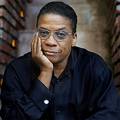
May 19, 2008

MONIKA HERZIG

Monika Herzig, was Born: June 12, 1964
In 1987, the pedagogical institute in Weingarten, Germany awarded a scholarship for a one-year exchange program at the University of Alabama to one of their students, jazz pianist Monika Herzig. Together with her partner and guitarist Peter Kienle, she arrived in the States on a one-way ticket, with one suitcase of belongings and one guitar in August 1988.

Since then she has completed her Doctorate in Music Education and Jazz Studies at Indiana University, where she is now a faculty member. As a touring jazz artist, she has performed at many prestigious jazz clubs and festivals, such as the Indy Jazz Fest, Cleveland's Nighttown, Louisville's Jazz Factory, the W.C.Handy Festival, Jazz in July in Bloomington and Cincinnati, Columbus' Jazz & Rib Fest, to name just a few. Groups under her leadership have toured Germany, opened for acts such as Tower of Power, Sting, the Dixie Dregs, Yes, and more.

Recently she has received her third “Individual Artist Grant” from the Indiana Arts Commission in support of her newest CD project. Her previous release In Your Own Sweet Voice �” A Tribute to Women Composers has received much praise. Thomas Garner from Garageradio.com writes, “I was totally awed by the fine musicianship throughout”. As a recipient of the 1994 Down Beat Magazine Award for her composition “Let's Fool One” and with several Big Band Arrangements published with the University of Northern Colorado Press, Herzig has also gathered international recognition for her writing skills.

The current repertoire of the Monika Herzig Acoustic Project includes originals and arrangements of standard repertoire, such as Carole King's “You've Got a Friend”, Kern/ Hammerstein's “The Song Is You”, and Charlie Parker's “Yardbird Suite”. The Monika Herzig Trio can be heard every Thursday and Saturday at Rick's Cafe Boatyard at Eagle Creek Reservoir in Indianapolis. For current tour listings and sound samples/ videos visit www.monikaherzig.com.

PRESS QUOTES; "Distinctive originals and well-chosen standards reveal Herzig's warmhearted, reflective side and her cleverly playful nature." Nancy Ann Lee Jazz Times contributor and co-editor of MusicHound Jazz: The Essential Album Guide

“A lovely example of a thoroughly schooled, thoroughly modern jazz pianist.”
Cherilee Wadsworth Walker, Eastern Illinois University

"The lady can get down and play!"
John W. Patterson, AAJ Fusion/ Progressive Editor

Her Awards include; 1994 Down Beat Magazine “Best Original Composition” Winner for Let's Fool One 1994-1996 Two times finalist with BeebleBrox and winner with Oliver Nelson jr. in WTPI Winter Jazzfest Competition, Indianapolis 2000, 2003, 2005 Individual Artist Grant recipient, Indiana Arts Commission

It was such a pleasure to feature this fantastic pianist, composer, arranger, on Spotlight On Jazz And Poetry!

May 08, 2008

VESSELS OF LOVE

MANDIKA


Mandika, born and raised in Knoxville, Tenn., has always been a poet even when it wasn’t an official title. She began writing poetry at a very young age and didn’t pick up a pen to write again until five years ago and she hasn’t looked back. She feels it’s liberating to write poetry, even more so to speak it. “To speak what rests on your mind and heart is one of the greatest gifts God gave us.” She says. “We were meant to be his vessel and share his message as an act of love for him.” This is what Mandika does with poetry and spoken word. She’s a vessel of his love.

Mandika Flow, is a jazz enthusiast, writes it, eats it and speaks it with every opportunity she has. her favorite artists are Miles Davis first, Jeff Bradshaw and Roy Hargrove. Favorite jazz vocalist, Al Jarreau, Maysa and Martine Girault but I have so many.

Mandika’s poetry has an affinity toward the spiritual realm. She feels that every one should learn and examine the higher being. In her case, a being Supreme over human beings She says, “It’s clear to me and the track record speak that we need guidance and don’t know what the heck we are doing.”

Mandika is warm and loving with people in general if they allow her, if not she’s all about hers and keeps it moving. The mortal heroes in her life are her Mother, her queen and her precious and beautiful, seventeen year old niece whom is beyond her years, intelligent and the sweetest young thing you could ever meet. She would be considered handicapped as she is sight impaired but if you met her you would see and understand differently.

"Being a poet is rewarding in that people gravitate toward you and feels your spirit, primarily because it appeals to a trait or quality in them." she says "I’ve received enough accolades in the manner of certificates, trophies, merits but the biggest reward is in being able to write in a way that makes anything translate into something special that everyone can relate to." Mandika has a collection of poetry books/short stories featured on: http://stores.lulu.com/mjaton04

As a spoken word artist she’s not especially fond of her tonal quality however, it bears a certain soulful, honesty and expressiveness that everyone who hears her would agree is truly special. Mandika is a member of the Poetic Voices family whom she credits with helping her to develop that voice. "Thank you Truth Theory, you really are the truth. Also, a special thanks to Ms. Safiyyah Amina Muhammad and Ms. Lovely Brown for being Sistah’s among Sisters. I got nothing but love for you."

May 07, 2008

ANIYA

Since the late '70s, the offshoot of Jazz known as "smooth jazz" has become increasingly popular with listeners. Because the style is somewhat "laid back", it is easy to fall into the old "groove into rut" routine; therefore, it is important for a band to know what it's doing in order not to bore the listener to death.

Aniya, on its' album In the Moment and their latest album "One Love", knows how to keep the listener engaged and entertained. These six musicians come from varying backgrounds--Jazz, R&B, Gospel--and they bring all that to the table to create sophisticated sounds for the head and heart.

This music is fronted by the nimble fret work of guitarist Delbert Boyer, and the sexy sax stylings of Mark Mitchell; while the rest of the boys lay down the solid, supple rhythms and keyboard colorings, Boyer and Mitchell weave in and out of the music with the skillful dynamics of old pros. "Up All Night" and "In the Moment" are typical of the latter approach, but each man gets some spotlight time--Boyer on "God's Blue Sky", Mitchell on "D's Groove"--in which to shine.

Late in the album, the groove merchants--Tyrone Blanford on bass, Glenn Williams and Tim Sessoms on keyboards, and Nate Jacobs on drums--get their moments to excell on the hip hop influenced "Check This Out" and the Jazz meets R&B of "Longevity". In lesser hands, both of these songs would have been just ordinary, but the rhythm crew give them the right amount of oomph to send them into exquisite orbit.

Make no mistake, Aniya is a force to be reckoned with, and In the Moment is one cool collection of early morning (or late nite) bliss.

May 01, 2008

An Evening With Omar Sosa by Celestial Dancer


On a quiet Friday night, the drive into San Francisco is eerily subdued and uneventful. It’s difficult to credit any importance to the other drivers or the sudden deep chill in the air. Nothing is as eventful as what awaits, an evening with Omar Sosa. This would be my first visit to a jazz set situated in a piano store, but what more befitting environment for Omar Sosa than a nest of beautiful and rare pianos…

The Piedmont Piano Company is an open loft of wood and glass that secures the circulating acoustic sound of the piano as Mr. Sosa begins to play. We the audience, are gently mesmerized as if strung together by the music on our potpourri bed of velvet and leather piano benches. Listening to Mr. Sosa’s music from a CD is a gift, but watching his performance live is an amazing experience that could never be encapsulated in an album. His fingers alight and dance on the keys of the Fazioli as if they were rhythmically charged raindrops tapping on a stage of welcoming glass, and infusing each ear with jazz euphoria. The Fazioli, referred to as the “Ferrari of pianos” by Mr. Sosa, was custom made by the Fazioli Company, named after founder and pianist, Paolo Fazioli, in the northeastern part of Italy. Some interesting characteristics of this grande grand piano are 18K gold fittings and hinges, and a soundboard of red spruce that is seasoned for two years before being assembled. With a price tag of about $200K, the Fazioli piano was brought to life in this evening’s spirited commune with Omar Sosa.

As we were drawn into Mr. Sosa’s purposeful and playful ballads and chorus, we were equally embraced by the strikingly crisp and alluring vocals of Mola Sylla, a gifted vocalist from Senegal, Childo Tomas, electric bass player from Mozambique, and the electronic drums genius of Marque Gilmore, from New York. After the set, Mr. Sosa and his fellow artists greeted and melded with the intimate sized audience as beautiful friends. Performing several concerts on six continents each year, Mr. Sosa performs with a variety of famous and local artists that bring a fresh and invigorating integration of talent that never disappoints. Having brought world renown and universal flavor back to a small piano store in downtown San Francisco without spilling a drop, Omar Sosa and his group planted a new seed of world jazz appreciation for some, and added new memories for others that will keep his name among the circle of jazz greats, and I was most fortunate to witness this one.

April 26, 2008

BRIDGING THE GAP MIDWEST STYLE


Shukura Zuwena Huggins, better known in the poetry world as Prahduct, and often referred to by family and friends as “Ku”, born June 20, 1988, is a native of Omaha, Nebraska. Born and raised in the heart of the Midwest, Prahduct found her love for writing, very early on, and in particular that love transformed into a passion for poetry. Prahduct began seriously writing her thoughts and ideas in the form of poetry, prose, and song during her freshmen year in high school in 2002. Always marked by creativity, Prahduct added along with her skill in visual arts, the art of written word. Writing, soon led to performance art and an interest in the spoken word movement.

The name Prahduct has several meanings to this young poet, she states “the name Prahduct kind of just stuck.” It started out as an online screen name, productoftha88, and other poets just started calling her “Product.” While making a new account to a blog website she had to alter the spelling in order to avoid a duplication of another screen name. “The name Prahduct is simply a reminder that everything I’m doing is not because I am who I am, but rather because I’m a product of those who’ve come before me and are here right now.”

Prahduct credits her involvement in the spoken word movement to a poetry workshop she attended in high school along with the Alive Poet’s Society, an online interest group that led her to a plethora of poets and writers that constantly encouraged her to continue her writing and expand, and the continued support and encouragement from family and friends. From there she became associated with an online poetry group, Po3tic Voices, moderated by Truth Theory, which uses multiply.com as a venue for spoken word artists to share recorded pieces and written works and also the Spoken Truth network which connects poets and listeners from everywhere through Blog Talk Radio, to involve in progressive talk shows as well as music and poetry as a form of “edutainment”.

Being known as the “quiet kid” Prahduct still finds it unbelievable to know she has found a voice through spoken word poetry and in return has performed at the 30th and 31st Midwest Regional Youth Conference, Black August Omaha 2007, and several other open mic venues. Prahduct has had the great opportunity to work along with poets and artists such as, Truth Theory, Staci Dennis, God’s Gift, and Nique.

Prahduct uses many things as subject matter, her poems usually include an array of word play and metaphoric parallels; she particularly enjoys writing social poems as well as love poems, but feels that it’s good to be able to touch on all aspects of life through poetry because poetry is life and doesn’t have to be done one way. The incorporation of song and poetry is also something Prahduct likes to include in her writing and performance. Blending the rhythms of spoken word and the melodies of song are two ingredients that make a piece enjoyable to perform.

Now, that Prahduct, as she puts it, “has been tied down to this here poetry thing,” she plans to continue to write, perform, and record her art because it is truly something that has proved to be a blessing in her life; allowing self growth, networking opportunities, and a positive impact on listeners. Being tagged the “Prada of Prose”, Prahduct plans to publish her work and continue to hone her skills. Prahduct is currently working on establishing a Poetry Movement with the X Poetry CommUNITY in the Omaha area that will provide a venue for art to be displayed on a continuous basis, providing a place for cultural development and exposure to the Omaha community.

When asked about the relationship between Jazz and Poetry and the importance of each to our culture she responded;

"Jazz and poetry both act as tools that tell a story. They create an image with qualities as simple as the way you say a word or hit a note and that goes on to not only be a word or a sound but a story. Words can be said one way and then said another and two totally different messages are delivered the same exists among jazz. I think both poetry and jazz are very influential as creative, educational, and informative tools that are not only meant to entertain but educate as well which are important in our communities and the contribution to our culture locally and universally."


Most of all Prahduct wants people to know that poetry is universal and that we all play a part in its presence being felt, no matter if we’re performers, writers, supporters, or listeners, the movement is here and WE are the movers and shakers.

PRAHDUCT is what I consider one of the "Young Lionesses" of Poetry. Be on the lookout for more of this fantastic young woman!

April 25, 2008

HERBIE HANCOCK

Because of his crossover work, Herbie Hancock is one of the more famous jazz musicians in history, second to only Miles Davis from 1960-present. Hancock had 11 albums chart during the '70s and 17 between 1973 and 1984, including three in 1974, figures that puts him well ahead of any other jazz musician in the '70s and beyond. He is also one of the finest eclectics in jazz history, playing free jazz, jazz-rock fusion, bebop, fun, hip-hop, dance, world fusion, and instrumental pop.

Herbert Jeffrey Hancock was born on April 12, 1940 in Chicago. He was a child prodigy and began studying classical piano at the age of seven. At 11, he performed the first movement of a Mozart concerto with the Chicago Symphony Orchestra. In high school, he moved to jazz, where he formed his own ensemble. By the time he had graduated college, he had worked in Chicago jazz clubs with such famous players as Donald Byrd and Coleman Hawkins. Hancock joined Byrd's quintet and moved to New York.

During this time, Hancock was beginning to develop his unique style - a lyrical style that blends gospel, bebop, and blues. While recording with Byrd, he was offered a contract as a leader with Blue Note Records. He recorded his first record in May of 1962. His supporting group included Dexter Gordon and Freddie Hubbard. His song "Watermelon Man" from that record became something of a hit.

Shortly after he joined Miles Davis legendary 1960s quintet and along with Tony Williams and Ron Carter, formed the rhythm section that allowed the Davis quintet to explore with a more flexible/less fixed music.

After playing five years with Davis, he left and formed a sextet that merged many different styles, such as jazz, rock, and African and Indian influences, but with an electric sound. After disbanding the sextet because of limited financial success (though they were an artistic success). In 1973, he formed The Headhunters, a group that merged funk, rock, and instrumental pop. They scored a very successful crossover with the album Headhunters. Afterward, he started playing more pop music, although he did a series of acoustic concerts with Chick Corea. During this time, he underwent heavy criticism for "selling out," and Hancock repeatedly defended his right to play other kinds of music.

During the 1980s, Hancock alternated between electric and acoustic music. He scored another big hit in 1983 with the song "Rockit", which utilized hip-hop (well ahead of its time) and heavy scratching. He received much airplay on MTV with his video. He spent the next two years performing traditional jazz music and won an Oscar for his score in the film Round Midnight. He collaborated with African musician Foday Musa Suso for a duet album. He hosted a variety show on Showtime and performed and lectured on public television.

Herbie Hancock continues to perform and record today.

April 12, 2008

JAZZMATAZZ HIPJAZZHOP

Keith Edward Elam better known as GURU, was born on July 17, 1966 in Boston Massachusetts. He is the lyrical half of legendary hip-hop group Gang Starr together with DJ Premier. With his Jazzmatazz series, he is also considered to be one of the pioneers of hiphop/jazz crossover. The name Guru is an acronym for "Gifted Unlimited Rhymes Universal"

Founded in 1987, Gang Starr built a sizable following in the early 90's, releasing classic albums like, Step in the Arena (1991) and Daily Operation (1992). Guru's lyrical style is based on battle rhymes delivered smoothly, modestly, and with sly wit; he typically avoids using overwhelming charisma, focusing instead on his rhyming ability. His formidable skills on the mic, has earned him legions of admirers.

In 1993, he released his first solo album, Jazzmatazz, Vol. 1 The album featured collaborations with Donald Byrd, N'Dea Davenport of the Brand New Heavies and Roy Ayers, while his second LP, Jazzmatazz, Vol. 2: The New Reality, featured Ramsey Lewis, Branford Marsalis and Jamiroquai. The Jazzmatazz albums are commonly considered some of the best rap of the early 90s, Guru's reputation was also bolstered through the continued success of Jazzmatazz, Vol. 3: Street soul (2000)
His "first proper solo album", in his own words, was Version 7.0: The Street Scriptures (2005), released with the help of super producer Solar. The album reached #1 on the college hip-hop charts. Guru's latest project is the fourth installment in the Jazzmatazz series, entirely produced by Solar. It was released in early June 2007

April 11, 2008

JASPECTS

Jaspects, being born during the hip-hop movement, integrates their youthfulness with the maturity of the jazz language. With their interest being the progression of music, they hope to serve as a bridge between the two genres and utilize both art forms for the purpose of innovation and not imitation. Established in February of 2003, Jaspects sole purpose has been to "redefine all aspects of jazz," by bringing jazz back to the forefront of poplar music by introducing it in a way that other generations can understand, appreciate, and digest. As sons of the illustrious ’’’Morehouse College’’’, they also attempt to fuse jazz and hip-hop WITHOUT compromise.

As students of jazz and children of hip-hop, we have been forced to live within two distinct worlds. Our goal is to create and perform music that can be appreciated by aficionados of both genres without compromising the musical integrity of either. We hope to draw hip-hop lovers into the world of jazz and do the same with fans of jazz.

Jaspects strives to merge the worlds of hip-hop and jazz so that listeners can get an exhaustive musical experience that involves TRUE freedom of expression on both ends of the spectrum. The freedom of expression in jazz is obviously linked to musical improvisation and creativity, whereas the freedom of expression in hip-hop is more closely linked to lyrical creativeness. Our aim is to rescue the struggling genre of jazz while breaking down the structural constraints of hip-hop. Jaspects attempts to make music of substance in every sense of the word. We create music that has depth creatively, lyrically, and musically without ostracizing the casual fan of either genre.

Jaspects uses music as an agent for change. Music is the mouthpiece out of which the band interprets and addresses broader ideas about African American society and how to efficiently affect change. In this vein, we make a point to be active in society. Jaspects is about ushering change in the way pioneers such as Miles Davis, James Brown, and Marvin Gaye have. Whether we’re playing at the legendary Bakers’ Keyboard Lounge in Detroit or talking to a group of high schoolers in southwest Atlanta, the message conveyed by our voice is the same, "make your voice through your music mean something to the world at-large."

The band operates out of Atlanta, GA and consists of pianist/music director Terrence Brown (Memphis, TN), bassist Jon-Christopher Sowells (Dallas, TX), drummer Henry C. Conerway III (Detroit, MI), tenor saxophonist D’Wayne Dugger (Queens, NY), alto saxophonist “Sir” Jaye Price (Anniston, AL), and trumpeter James E. King (Stamford, CT). The band has released three independent albums (2005’s “In ‘House’ Sessions", 2006’s "Broadcasting the Definition,” and 2007’s "Double Consciousness”) and conducted three self-promoted tours of the eastern United States.

Most of our fans are what we like to call tastemakers: they are either collegians or are young adults in the professional world who enjoy music of substance and want to be the first to experience an act. They have proved to be loyal with them supporting us in markets such as Detroit, Berea, KY, Connecticut, Knoxville, Memphis, Houston, Dallas, Orange, TX, and Clemson, SC. These fans provide overwhelming support at our average of 90 shows per year. This healthy show schedule is reflective of our dedication to the music, with three-of-six members still in undergrad.
Individually, band members’ works have appeared in the 2005 major motion picture “Hustle & Flow,” on Chamillionaire’s platinum album, “Sound of Revenge,” on Carlos Santana’s latest album, “All That I Am,” with platinum recording artist David Banner, and in the 2005 and 2006 HBCU All-Star Big Band. Collectively, the group has performed for Yolanda Adams, Ted Turner, Gerald Levert, Bilal, and Outkast. After playing for jazz lover Bill Cosby, the band was asked to perform during the Ray Charles Tribute held in Beverly Hills, California, where Samuel L. Jackson, Quincy Jones, and Stevie Wonder among others were in attendance.

April 05, 2008

UNA FIESTA DE JAZZ Y POESIA


Marea Alta, the very versatile Latin Jazz group, is currently based in the Atlanta Metro Area, Georgia, where it showcases a prime line of innovative musical entertainment. Prior to its establishment in the city of Atlanta, the group had been regularly performing in nightclubs and at many cultural events for the last seven years in the capital of the state of Florida, Tallahassee. Originally, Marea Alta had its headquarters in the Tampa Bay Area during the early 1980s. In 1984 the Marea Alta project achieved popularity overseas when one of its original compositions reached the top ten hit parade in Caracas, Venezuela (position number four for three consecutive weeks and seven months in a row within the Venezuelan musical charts). Presently, Marea Alta features an extensive inventory of original compositions which has seized and engaged the listeners in hundreds of live performances.

The Members of the band are professional musicians who have ample experience in the realms of recording and live performance. The musical style of Marea Alta is categorized as Latin Pop Jazz/Smooth Jazz. Marea Alta incorporates the improvisatory structure of Jazz into a scheme of multiple Latin rhythms and popular melodic arrangements. The end result of this musical blend is characterized by its ability to capture the musical taste of multiple audiences. The tropical and fresh music of the group has been described as a delightful beachfront style, like a cool breeze drifting off a high tide (Marea Alta) onto a warm sunny shoreline. The music of Marea Alta is designed to reach the attentive listener looking for an original and brighter sound. Marea Alta certainly offers a pleasant journey of contemporary rhythms and a fine musical expression.

April 04, 2008

MARIA TERESA FUSARI


María Teresa Fusari was born in Buenos Aires, Argentina from a Spanish mother who loved the sea and the mountains and an Argentine father passionate for nature. She inherited that love for life, the search for our origins, the defence of human values and the respect for all kind of life.

Being a teenager she read “Rimas” (Rhymes) by the romantic Spanish writer Gustavo Adolfo Bécquer. It awakened her to poetry. Since then, she became into the “rhyme writer” for every informal celebration.

Later on, at university, when studying to be a Public Translator she re-discoved her passion for poetry diving into the work of those she calls “our masters” which widened her vision of the world to unknown horizons and so fell in love for life with literature, mainly with poetry.
In that time she had the opportunity of meeting the great Argentine writer, Jorge Luis Borges, for whom she had always felt admiration and whose book “Moneda de Hierro” (Iron Coin) bearing his signature she keeps as one of her her most valuable personal treasures.

She started teaching English when she was sixteen years old, working at different levels, public and private.
Some years later she would combine both activities: teaching and being a translator, but her love for kids and teens and working with them had carved her deeply. Her choice was clear.

Meanwhile she started to discover internet and all the possibilities it offers. She made research and learnt how to design a webpage, building her own. That was the way a well-known Spanish Publishing House – Planeta de Agostini- got in touch with offering her to take over their page on Spanish poetry on the site they were to open, which was later known as “Temalia”. There she carried out tasks like writing articles on literature, answering visitors´ questions, leading a forum and a chat.
She got two awards that year for the tasks she carried out with the page and the chat.
That job was a good opportunity to get in touch with many well-known -and not so much- good poets and, some time later, together with a Spanish writer and critic she opened their own forum on literature.

A year later she was invited to moderate “El Fausto”, other forum of the same kind and in 2006 she was requested to take part in a judge for a literature contest.

As a teacher, she kept attending courses and seminars and trying to keep up to date with everything that could make the teaching process more interesting and dynamic.

The continuous need for new authentic material has found on.the internet an endless source of information and material.
Being very inquisitive she came to listen and enjoy the programme “Spotlight on Jazz and Poetry” so much that she immediately thought of it as a good way to make her students learn a bit more about good music and literature while practicing their English using authentic material.


Spotlight On Jazz And Poetry in the ESL CLASS


“Spotlight on Jazz and Poetry” in the ESL class.


The internet has become into an every day tool for teachers and students of English whenever they have access to it, offering a wide source of authentic material.

Personally I just try to keep a balance between their likes, which I use to the benefit of the language acquisition, and my purpose of showing that there is much more than chatting and games on the net.

Calling myself an “internet squirrel”, I keep searching for new challenging material. It was in this way that I came across “Spotlight on Jazz and Poetry”, the programme hosted by Clayton "Bigtrigger" Corley. I enjoyed it so much that I immediately felt I could use it with my students. It gave me the possibility of exposing them not only to the language but to good poetry and music on a cultural basis.

How do I use the programme?
It is excellent for practising listening comprehension, writing and speaking.
Some of the activities students carry out:

- They have to listen and get the gist which is discussed in pairs or the group.
In some cases they are encouraged to listen again to clear up different ideas.
Lower levels are helped through guides as it could be a set of questions, a true/false exercise or specific vocabulary given in advance.
- They are given a copy of part of the text –poem or biography- with some missing key words. They have to fill in the gaps while listening.
- They are given a set of true/false statements. They have to tick the right ones and correct the false ideas while listening.
- According to the student’s level they are textual sentences or they aim to the general comprehension of the verse/stanza/poem.

- Advanced students may be requested to listen and make a comment on the poem/s and the music and/or to give their opinion on the relation they find between the music as the background to the poems
- They are asked to identify specific vocabulary and explain and/or give synonyms in every day language or other type of English.
- They are encouraged to discuss the message of the poem in context and from a cultural basis.
- They may be challenge to role-play: taking the programme as a model, role-play a similar situation including poems and background music.

Working with this kind of material means a challenge to learners as they can see by themselves how proficient they are.

María Teresa Fusari
Teacher of English in Argentina


ESL: English as a Second Language

ALEJANDRO DREWES


Alejandro Drewes is writer, translator (Catalan, English, German and French) and poet. Born in Buenos Aires, Argentina in 1963.

He is also editor of the literary review AERA, www.AERArevistadepoesia.yahoogroups.com His poems and prose were published in various anthologies, including: Confluencia Poética. (collective anthology, vol. I). Buenos Aires, Nubla, 1997; Vivencias Secretas (collective anthology). Madrid, Centropoético, 2004; Antología 55° Aniversario del Ateneo Poético Argentino (1950-2005). Buenos Aires, Creadores Argentinos, 2005; Pura Luz Contra la Noche. Buenos Aires, Editorial De los Cuatro Vientos, 2006 (book presented in the National Library (Buenos Aires), September 2006, Uvas del Paraíso (to be published), Buenos Aires, Editorial Francachela, 2007.

Selected poems and prose of Alejandro Drewes have been published in the literary reviews Rampa (Colombia), Adamar (Spain), La Pájara Pinta (Mexico), Palabras Diversas (Florida, USA), LaLupe (Mexico), Añil and Ser en la Cultura (Argentina), and LaBarcadePapel (Austria)

Critic essays on a couple of poets, including Sjöstrand, Malinowski., Montale and Pizarnik, have been published in the literary reviews Gibralfaro, (University of Malaga) and Francachela (Buenos Aires). He has directed (Buenos Aires, 2005-2007), the cycle of AERA’s monthly poetry lectures in S.A.D.E. (Argentine Writers Society), and is also Honorary Member of the World Poets Society

Some of his distinctions include the National Award (Buenos Aires, Grupo Editorial Sur, 1999), in prose and poetry; the Prize Award “Hugo Paulo de Oliveira” (Rio das Ostras, Brazil, 2007) ; as well as designations as finalist in the poetry contests “Misescritos” (Buenos Aires, 2005), and “Cardo”. (México DF, 2006).

POEMS OF ALEJANDRO DREWES

HELLAS


Mis amargos guijarros cuento, me oyes
y es el tiempo una gran iglesia, me oyes
donde a veces en las imágenes, me oyes
de los santos
surgen lágrimas verdaderas, me oyes
y las campanas abren en lo alto, me oyes
un hondo pasaje que permita mi paso
Aguardan los ángeles con cirios y fúnebres salmos.

Odiseas Elitis: El monograma (fragmento)


Hunde tus dedos azules
en el anillo de las Islas,
y solamente calla:
porque la voz que me agita
no es ya ni un remo roto de mi voz,
ni vuelve Atenas a huir
de los persas al poniente.
Nada es como era,
ni sombra de alas
perdidas en el cielo, perdidas.

Hemos esperado a los bárbaros
hasta que subieron las aguas
sepultando los huesos de Jonia
y sólo esto queda: por eso
tú solamente calla,
y graba en la memoria
cada íntimo guijarro del mundo,
nuestro mundo que partió
al país de nunca jamás.
Y graba y graba, mar azul, en tu memoria.

Por todas las voces que suenan
en mitad del silencio
y por la oscura boca de los muertos
que viven aquí. Pero es tarde,
tan tarde, y se consume la última lámpara.
El viento y las zarzas sacuden
los viejos olivos de Lesbos:
donde la luna se ha ido a disgusto
y han caído las Pléyades,
errantes órbitas en tierra baldía.

Ya ni siquiera gritos de angustia
recorren las aguas celestes,
ni la cítara del viento en la noche
ilumina nuestro paso de polvo
entre tumbas egregias
y el mármol violado de Byron.
-Pero tú solamente calla-
Y escucha en demótico
la clave del tiempo
en relojes azules de estrellas.

Aquí vivieron sus sombras
oscuras o blancas,
entre sombras de zafiros.
-Y allí sobre la arena
una vez me diste tu mano-.
Extraños para otros oídos suenan
los números pares
en las múltiples rutas del arpa:
Pero tú calla: sí, calla y escucha crecer
azorado como ramas las columnas del silencio.


Translation

HELLAS

My bitter pebbles I count, do you her me?
and the time is a great church, do you hear me?
where sometimes in the icons, do you hear me?
of the saints
true tears appear, do you hear me?
and the bells open in the High, do you hear me?
a deep passage that allows me to pass
The angels wait, with candles and mournful chants.

Odysseas Elytis: The monogram (fragment)

Sink your blue fingers
in the ring of the Islands,
and then only shut up:
because the voice that agitates me
is not even a broken oar of my voice,
and won’t return Athens to shun
from the Persian to the west.
Nothing is now as it was,
any other wings’ shadow
lost in the sky, so lost.

We have waiting for the barbarians
until the waters went up
burying the bones of Ionia
and only this remains: then,
you must only shut up,
and then record in your memory
each innnermost world’s pebble,
from our world that departed
to the land of nevermore.
Let record and record, blue sea, in your memory.

For all the voices that are playing
in the very half of the silence
and for the dark mouth of dead men
who live here. But it’s late,
so late, and the last lamp consumes.
The wind and the blackberries shake now
the old olives of Lesbos:
where the moon has gone against its will
and the Pleiades dropped,
wandering orbits in a waste land.

Not even anguishing screams
pass over the heavenly waters,
nor the wind’s zither in the night
enlightens our step of dust
between all these eminent graves
and the violated Byron’s marble.
But you must only shut up-
And hear in Demotic
the key of the times
in the blue clocks of the stars.

Here did their shadows live,
the dark ones or the clear ones
between shadows of sapphire.
And there, over the sand
you gave me once your hand-
Strange for another ears
the even numbers are sounding
in the multiple routes of the harp:
But shut up: yes, shut up and hear
how do the columns of silence grow.

ENSAYO DE TINIEBLAS I


Y ahora esta suprema oscuridad
clavada en el madero del día.
Tres negaciones de palabras
que una vez te convocaron,
y ahora voces baldías apenas,
la ignorada por siempre
velada mitad de tu lecho.

Saber con la certeza más triste
que hoy comienza la oscura
noche insepulta del alma.
La larga, la dura, la lenta
implacable en los huesos
cuando ya nadie espera aquí,
como en tiempos esperara.

Sí, me pierden laberintos tan grises
como la hosca lluvia entre flores
arrancadas por fin de la tierra;
la vieja quebrada copa de oro
en vino trizado del último sueño,
bandera ignorada por el viento
en su melancólico paso,


y ahora la tensa calma contenida,
cristal de quebradas palabras
que una vez te soñaron, desnuda
y única en el difícil hotel de las horas;
porque suenan campanas oscuras
-en este instante agreste alguno ha partido,
alguien más, ayer entre los vivos-

Pero cómo decirle a la boca
que tú ya no estás, que me llevo
apenas la frágil ternura de tus pechos
en el preludio de la despedida,
que el tesoro de tus dedos
me arde en las manos, me lleva hasta nunca:
que me vuelvo nada, nada, nada.


Translation

ESSAY OF TENEBRAE I


And now it is this supreme darkness
nailed in the timber of day.
By three refusals of words
you have been once convoked,
and just now these waste voices,
the forever ignored
and veiled half of your bed.

To know with saddest certitude
That today is beginning the dark,
unburied, night for the soul.
The long and slow and hard one,
the inexorable night in the bones,
when there’s nobody here waiting for,
as in somewhere of the past it was.

Yes, I wander through a so gray mazes
like the sullen rain between the flowers
rooted out at last from the earth;
the old and rusted golden cup
with shredded wine of last dream.
Just like an ignored flag through the wind
in its long way of melancholy,

and now this sort of tense stillness,
the crystal of broken words
which once dreamed on you, nude
and unique in the hard hotel of hours;
because of this sound of dark bells
-in this wild minute somebody is departed,
and it was yesterday when still lived.

But how could I say to the mouth
that you are not still here, that I take
just your chest’s frail tenderness away
in the prelude of our farewell,
that your fingers’ treasure
is burning in my hands, and it drives me
to nevermore. That I became nothing, nothing.


A. POEMS IN ENGLISH


SOME TREES

A plain landscape
a probable vision of everness
with only three shadows.

No man's land under a high
vertical falling light,
just there, where the time

is still searching for the first mesh
of dark virginal woods,
for the days of grace.

I spoke about shadows
and light, about shadows
-and maybe not strictly about trees.


SHADOW OF THE EMPIRE

Lost in the far and hottest air,
the last clouds’ riders go.
Lead your food steps, that will go
from the night to the night, see
the slight footprint from those
before you. It’s unique this way
with yourself and its slow heavenly dust,

that’s all you have: any more for waiting,
any other changing signs under the sky.
But you have birth by a so gray belly given
in the times of great mechanical myths.
To a foggy borders of Empire you have come:
To the place where the mouth become dumb
and someone files your name under ‘nother despatch.


DEPTHS OF NIGHT


Just stay there, like the circular dream of this night passing by.
And hear: these growing shadows, beyond all of past lives
of believers and lovers, to the other side.
You can hardly know what's hidden in the darkness,
just a solitary crack loosing slowly from the burning house of love.

Words eternally flowing, like the song in a dark hearth.
Someone played a few notes on the piano - they softly fade,
like the blanks and the holes through the tent of this poem,
written by the naked moonlight, in the old-fashioned way.
They belong to the depths of night, so far from the fire days.

O beloved! Just stay there, tenderly rest over this uncertain bed of words
like other lovers did, before leaving.
Time is now -black pilgrim has come, from his no man's land-.
There is nobody out there, only the same traces of shadows on the grass,
the wind through the leaves, the hard question on God.


Words running so gently, from the I - land to the unknown,
from the scattered stones of the city to the next flood.
They will follow their heavenly way, under the last morning star.
As I said: Time is now, only now. Carpe diem.
Forgotten notes in a book of days, mystery waiting behind a closed door.

____________________________________________________________________________________

UNIQUELY THE OLD GREECE…

1

Uniquely the Old Greece could gave such a faces,
before the long days without greatness.


2
House of soul or land in the wind of a dream,
where all or maybe nothing is true,
so far from the breath, from Others’ footsteps

3

It’s surprising that so many looks
leaving any footprint in the mirror.
O you, silvery zero, ambiguous matter, so null !

_____________________________________________________________________________________

Trumpets of sun to silence fall
on house and barn and stack and wall.
Within the cottage, slowly wheeling,
the lamplight's gold turns on the ceiling.
Beneath the stark and windless vane
cattle stamp and munch their grain;
below the starry apple bough
leans the warped and clotted plow.
The moon rolls up, while far away
and thin with sorrow, the sheepdog' s bay
fills the valley with lonely sound.
Slow leaves of darkness steal around.
The watch the watchman, Death, will keep
and man in amnesty may sleep.

William Faulkner: A green bough


PASSING

Lord, so many times I walked
all around this place
-and it was not in those time
so dark as I can see it today-

could be this the same white house
where there was laugh, dazzling?
or terse house as a dream
in the book of the past days?

there became the pines,
so high in their fog,
a unique shadow of green,
waiting. And here, at sunset, a crystal

of hush is broken, beyond the birds,
in memory of the voices ready to leave
this night with myself,
with no other mercy nor return.


WE CALLED HIM...

We called Hans
to the fool of our town.
Nobody here forget
his big blue eyes,
the flourished pockets
of wild berries

-and just in these times,
his weak footsteps
had fear of us-

We called him…


IMAGES

1.
But in the house of love it’s late, so late.
There, where you leave your hearth, and thee was something brightening.
And finally the sun, like a fire against the Eastern windows.


2.
The poem and all that is can not be said.
The blanks and the holes dividing the words, as the air of the time in the net of the spider.

3.
One night, when the slow ship of the moon rolls up, just when the silence becomes a kind of everness.

4.
Somewhere, the water falls.
From time to time, the poet write some thing about its music.

RICARDO CAVALLI

After studying harmony and composition with the best Argentinean saxophone and clarinet teachers, Ricardo Cavalli obtained in 1995 a scholarship to study Jazz Composition in Berklee College of Music, Boston, USA. There, he meets and studies with Frank Tiberi (Woody Herman Band) and Greg Hopkins. They inspire and encourage him in his career and through their recommendation he receives important scholarships.

Ricardo was invited by Joe Maneri, microtonal music pioneer, to attend the New England Conservatory. He is also accepted in 1996 as a private student by a tenor sax Jazz titan, Jerry Bergonzi.

He was selected by the New York Lake Placid Institute to attend a seminar on composition and orchestral training. There he meets Bob Brookmayer, Jim Mc Neely, Maria Schneider among others.

After working professionally in the New York scene, he returns to Argentina to take part of the most important Jazz bands, being considered by the press as 1999 revelation artist. He wins a contest to teach in a public Music Conservatory. He also teaches both, privately and in a elementary and high school, sax lessons as well as clarinet up to these days.

In year 2000 he is selected by the press as the best saxophone player of the year and his band is considered one of the top five in the Jazz scene of Buenos Aires.

In 2002 his first work as a soloist was declared the best jazz album of the year by the local press (La Nación).

Currently, his own band performs music by his own, inspired by Afro-American roots, willing to express the spirit of the great musicians that inspired his style.

March 29, 2008

A TRIBUTE TO MAX ROACH


Max Roach, the dazzling drummer who helped create the rhythmic language of modern jazz while expanding the expressive possibilities of the drums, died Aug. 16, 2007 in New York. He was 83 and had been ill for several years.

Mr. Roach was a founding architect of bebop, the high-speed, harmonically advanced music of the 1940s that helped elevate jazz from dance-hall entertainment to concert-stage art. In dozens of landmark recordings with such musical giants as Dizzy Gillespie, Charlie Parker and Thelonious Monk -- including a 1953 performance that has entered legend as "the greatest jazz concert ever" -- he pioneered a new approach to jazz drumming that remains the standard to this day.

Jazz musician Max Roach attends Ossie Davis' funeral at Riverside Church in New York on Feb. 12, 2005. The master percussionist whose rhythmic innovations and improvisations provided the dislocated beats that defined bebop jazz, died Thursday, Aug. 16, 2007, at an undisclosed hospital in Manhattan after a long illness. He was 83.

An influential force in music for 60 years, Mr. Roach expanded the borders of improvised music by incorporating elements of other artistic traditions, including African and Asian music, dance, poetry and hip-hop. He led performances with as many as 100 percussion instruments on stage, but he also played minimalist solos using only the high-hat, a pair of cymbals mounted on a metal stand and worked with a pedal.

"Nobody else ever had the nerve to come out on stage with a cymbal under his arm and say, 'This is art,' " jazz critic Gary Giddins told the Los Angeles Times in 1991. "Max Roach's whole bearing says he is a musician to be treated like any great virtuoso. No drummer before him had ever achieved that."

He later became a strong voice for racial equality through his compositions and his recordings with singer Abbey Lincoln, to whom he was married for several years.In 1988, he was among the first jazz musicians to receive a MacArthur Fellowship, or so-called "genius grant."

Mr. Roach's most significant innovations came in the 1940s, when he and another jazz drummer, Kenny Clarke, devised a new concept of musical time. By playing the beat-by-beat pulse of standard 4/4 time on the "ride" cymbal instead of on the thudding bass drum, Roach and Clarke developed a flexible, flowing rhythmic pattern that allowed soloists to play freely. The new approach also left space for the drummer to insert dramatic accents on the snare drum, "crash" cymbal and other components of the trap set.

By matching his rhythmic attack with a tune's melody, Mr. Roach brought a newfound subtlety of expression to his instrument. He often shifted the dynamic emphasis from one part of his drum kit to another within a single phrase, creating a sense of tonal color and rhythmic surprise.

Virtually every jazz drummer plays in that manner today, but when Clarke and Mr. Roach introduced the new style in the 1940s, it was a revolutionary musical advance.

"When Max Roach's first records with Charlie Parker were released by Savoy in 1945," jazz historian Burt Korall wrote in the "Oxford Companion to Jazz," "drummers experienced awe and puzzlement and even fear."

One of those awed drummers, Stan Levey, summed up Mr. Roach's importance: "I came to realize that, because of him, drumming no longer was just time, it was music."

Maxwell Lemuel Roach was born Jan. 10, 1924, in Newland, N.C., and moved with his family to Brooklyn, N.Y., when he was 4. He sang in a children's church choir, played in a drum-and-bugle corps and had his first drum set at 12.

He played briefly with Duke Ellington's orchestra when he was 16 and studied at the Manhattan School of Music, but his real education came in the all-night clubs of Harlem.

"When I was young in New York, we worked seven days a week, around the clock," he said in a 1977 interview. "We'd play downtown from 9 p.m. to 3 a.m. Then we'd pack our gear and go uptown to an after-hours club from 4 a.m. until 9 a.m. During the day there were house-rent parties where you could see [pianist] Art Tatum and [drummer] Sid Catlett. That was our teaching. It was the most marvelous way to learn."

In 1944, Mr. Roach played drums with trumpeter Dizzy Gillespie and tenor saxophonist Coleman Hawkins on Gillespie's "Woody 'n' You," widely acknowledged to be the first true bebop record. Working with alto saxophonist Parker a year later, Mr. Roach performed on such benchmark bebop tunes as "Billie's Bounce," "Koko" and "Now's the Time."

He worked off and on with Parker until 1953 and for a time acquired Parker's taste for narcotics. Mr. Roach overcame his addiction and in the 1950s helped trumpeter Miles Davis kick his own heroin habit.

In 1949, Mr. Roach appeared on pianist Bud Powell's groundbreaking "Tempus Fugit" and "Un Poco Loco," then turned up on the influential 1949-50 sessions led by Davis and Gerry Mulligan called "Birth of the Cool." In 1951, he was the drummer on "Genius of Modern Music, Vol. 2," an important work by pianist and composer Thelonious Monk.

Taken together, these recordings defined the vibrant language of bebop, which remains the predominant form of modern jazz. In the view of many fans, bebop reached its zenith on May 15, 1953, when Mr. Roach joined Parker, Gillespie, Powell and bassist Charles Mingus in Toronto for "the greatest jazz concert ever." It was captured on the album "Live at Massey Hall," released on the Debut record label, founded by Mingus and Mr. Roach. (The two later feuded over money after the company folded.)

In California in 1954, Mr. Roach and trumpeter Clifford Brown formed a widely admired quintet that came to include saxophonist Sonny Rollins. They created a sensation with their earthy but elegant music, which became the foundation of the jazz style known as hard bop.

When Brown was killed in a car accident in 1956 at the age of 25, a distraught Mr. Roach fell into an alcoholic depression. He recovered through hard work, exploring new projects with Rollins, Monk and trumpeter Kenny Dorham. He also formed a musical and personal alliance with Lincoln, a singer and actress who abandoned her early sex-kitten image for a stance of black pride.

Their 1960 recording, "We Insist! Max Roach's Freedom Now Suite," with music by Mr. Roach and lyrics by Oscar Brown Jr., featured Lincoln's sometimes anguished vocals and became an important musical milepost in the civil rights movement. Lincoln and Mr. Roach, who were married from 1962 to 1970, recorded two other albums and continued to live in the same Manhattan apartment building for years.

Beginning in 1972, Mr. Roach taught at the University of Massachusetts and lectured on music throughout the country. He worked with avant-garde musicians Cecil Taylor, Anthony Braxton and Archie Shepp; formed a 10-member drum ensemble, M'Boom Re: Percussion'; and appeared with gospel choirs, symphony orchestras, brass quintets and Japanese drummers. He also composed music for dance pieces by Alvin Ailey and for plays by Sam Shepard.

In the 1980s and '90s, Mr. Roach often performed with a string quartet that included his daughter Maxine Roach on viola. He played drums in spoken-word concerts with writers Toni Morrison and Amiri Baraka and sometimes accompanied hip-hop artists.

When asked why he would perform with rappers, Mr. Roach replied, "The world of organized sound is a boundless palette." (He drew the line at jazz fusion, however, because of his disdain for electronic music.)

The trim, dapper Mr. Roach, typically attired in a suit and tie, was a man of dignity who demanded respect for his art. Late in his career, he rejected the term "jazz," saying it relegated his music to second-rate venues and low pay.

"For some time now," critic Giddins wrote in 1985, "it has been insufficient to say of Max Roach that he is the most widely admired drummer since the advent of modern jazz. He's become something more -- a tough-minded monitor of the music's best instincts."

He made his final recording, with trumpeter Clark Terry, in 2002.

He was married and divorced three times -- Lincoln was his second wife -- and had relationships with several other women.

Mr. Roach's survivors include his daughter Maxine and a son, actor Daryl Roach, from his first marriage, to Mildred Roach; a son, Raoul Roach, from another relationship; and twin daughters, Ayodele Roach and Dara Roach, from his third marriage, to Janus Adams Roach.

March 26, 2008

"AZIZA"

Aziza grew up in the 1960's. Born in Harlem where we lived for a while, then The Bronx then queens. Family consisted of 4 members, mom, dad, me and my brother. It was a good environment Dad played some piano and mom loved the arts. We attended church and always ate Sunday breakfast and dinners together and week nights also. Mom raised my brother and me and dad worked. We were a close family. Mom was a great cook and raised us well and Dad was an easy going loving father.

Growing up as Linda( not Aziza) there were many many musical styles influencing in my life. Such as; Jazz, soul, blues, r&b, calypso, salsa, afro-cuban, classical, negro spirituals( Tuskegee Institute Choir, Mahalia Jackson), anthems, gospel, rap, hip hop. While attending The High School Of Music and Art, those of us who loved jazz would meet in the practice rooms after school and jam, playing songs by Herbie Hancock, MongoSantamaria, Horace Silver, Oliver Nelson, John Coltrane, to name a few.

Legendary pianist Kenny Barron was my mentor and teacher at The Jazzmobile Workshop in Harlem in the early 1970's. He would recommend me for gigs and that is how I became Cecil Payne's pianist before I was hired by Natalie Cole. Bassist Paul West was the Director of Jazzmobile at the time and some of the other teachers back then were Jimmy Heath, Curtis Fuller and Lee Morgan. When Mr. Morgan died we all attended the funeral services, if memory serves me correctly, I think it was in Philadelphia.
In the 1960's & 70's we were able to call in to a radio station and actually speak to the artist being interviewed 'live' on the air. This is how Horace Silver and I became good friends. He was a guest on WLIB, I phoned in because he was and still is one of my fav. composers.

We met, talked about music and maintained a friendship to this day! I can remember always wanting to know who the composer was as much as knowing the song itself!
Coming from the projects, I was surrounded by a lot of black music and latin music too.

When I attended Music & Art H.S. and The Manhattan School Of Music, I was immersed into the European Classical music. I really liked the impressionistic period the best. In College is where I met Yusef Lateef. He and I were in the same ear-training and sight singing class. I started studying Alto Sax and blues with this master musician for almost 2 years....The piano won out, but the influences of the horn is still in my head, in my heart and in my arrangements. My particular vocal instrument to me is definitely a saxophone.

I am a single mom. I raised my son, Brandon in Brooklyn. He is a Naval Pilot, musician and composer and the joy of my life!! He is starting to write some beautiful music. He is a real Jazz head and a great human being. He and his lovely wife are very happy.

In terms of obstacles, when I really really think about it, the biggest obstacle in my life was me. There was a time when I compared myself with others because I allowed myself to be persuaded by an industry that does just that. They want you to sound like what is 'hot ' at the moment or the particular 'flava' of the month, year, week , day or minute... ya feel me? So when I was invited to perform at The Jazz Cafe in London in 2006 and these people were groovin to my music, my style, my voice, my essence, that is when I knew that if they could dig me and songs that I had written almost 30 years ago, then it was time for me to wake up and embrace and accept the gifts that The Creator had blessed me with. So I freed myself and got out of my way and I LOVE what I do now and my message is not going to be for everyone, but it is going to be for the ones that it's supposed to be for and for that I say thank you God!

And I continue to give God the praise every single time He gives me a song or a word or a message or a lyric I look up and say THANK YOU!! And to my parents who are both gone from this earthly plane now, I say I will continue to represent and make you proud so you will know that all your faith, effort and sacrifices were well worh it!!!

Musical influences

Horace Silver, Earth Wind & Fire, Jazz Messengers, Stevie Wonder, Isley Brothers, Sarah Vaughn, Ella Fitzgerald, Nina Simone, Tania Maria, Nikki Giovanni, Herbie Hancock, Maya Angelou, Joe Cuba, MongoSantamaria, Kenny Barron, Yusef Lateef, John Coltrane, Eddie Palmieri, Cal tjader, McCoy Tyner, Ray Charles, James Brown, Sly Stone, Graham Central Station, Johnny Mathis, Nat king Cole, Ahmad Jamal, Art Blakey...and on and on........

March 09, 2008

A TRIBUTE TO JOE ZAWINUL


Joe Zawinul belongs in a category unto himself — a European from the heartland of the classical music tradition (Vienna) who learned to swing as freely as any American jazzer, and whose appetite for growth and change remains insatiable. Zawinul's curiosity and openness to all kinds of sounds made him one of the driving forces behind the electronic jazz-rock revolution of the late '60s and '70s — and later, he would be almost alone in exploring fusions between jazz-rock and ethnic music from all over the globe. He is one of a bare handful of synthesizer players who actually learned how to play the instrument, to make it an expressive, swinging part of his arsenal. Prior to the invention of the portable synthesizer, Zawinul's example helped bring the Wurlitzer and Fender-Rhodes electric pianos into the jazz mainstream. Zawinul also has become a significant composer, ranging (like his idol Duke Ellington) from soulful hit tunes to large-scale symphonic-jazz canvases. Yet despite his classical background, he now prefers to improvise compositions spontaneously onto tape, not writing them out on paper.

At six, Josef Erich Zawinul started to play the accordion in his native Austria, and studies in classical piano and composition at the Vienna Conservatory soon followed. His interest in jazz piano, initially influenced by George Shearing and Erroll Garner, led to jobs with Austrian saxophonist Hans Koller in 1952 and gigs with his own trio in France and Germany. He emigrated to the United States in late 1958 after winning a scholarship to Berklee, yet after just one week in class, he left to join Maynard Ferguson's band for eight months, where Miles Davis first took notice of him. Following a brief stay with Slide Hampton, Zawinul became Dinah Washington's pianist from 1959 to 1961, and then spent a month with Harry "Sweets" Edison before Cannonball Adderley picked him to fill the piano chair in his Quintet. There Zawinul stayed and blossomed for nine years, contributing several compositions to the Adderley bandbook — among them the major pop hit "Mercy, Mercy, Mercy," "Walk Tall" and "Country Preacher" — and ultimately helping to steer the Adderley group into the electronic era. While with Adderley, Zawinul evolved from a hard bop pianist to a soul/jazz performer heavily steeped in the blues, and ultimately a jazz/rock explorer on the electric piano. Toward the end of his Adderley gig (1969-1970), he was right in the thick of the new jazz-rock scene, recording several pioneering records with Miles Davis, contributing the title tune of Davis' In a Silent Way album.

After recording a self-titled solo album, Zawinul left Adderley to form Weather Report with Wayne Shorter and Czech bassist Miroslav Vitous in November 1970. Weather Report gave the increasingly self-confident Zawinul a platform to evolve even further as his interest in propulsive grooves and music from Africa and the Middle East ignited and developed. He gradually dropped the electric piano in favor of a series of ever-more-sophisticated synthesizers which he mastered to levels never thought possible by those who derided the instruments as sterile, unfeeling machines. Weather Report eventually became a popular group that appealed to audiences beyond jazz and progressive rock, thanks in no small part to Zawinul's hit song "Birdland."

When Zawinul and Shorter finally came to a parting of the ways in 1985, Zawinul started to tour all by himself, surrounded by keyboards and rhythm machines, but resurfaced the following year with a short-lived extension of Weather Report called Weather Update (which did not leave any recordings). Weather Update quickly evolved into another group, the Zawinul Syndicate, which over the span of a decade has been tilting increasingly toward groove-oriented world music influences. Zawinul has also shown renewed interest in his European roots, collaborating with fellow Viennese classical pianist Friedrich Gulda from 1987 to 1994, producing a full-blown classical-based symphony Stories of the Danube in 1993 and following the near-disastrous Malibu fires of 1994, moving from California to New York City in order to be closer to Europe. In 2002 he released Faces & Places, his first studio album in several years and one that boasted an international roster of supporting musicians.

JOE ZAWINUL crossed over on September 11, 2007. This jazz legend will surely be missed.

March 08, 2008

THE ESSENCE OF COOL

THE NXT LVL

The NxT LvL aka Mario Coleman hails from Chicago Ill. where he grew up to until age 15. From there he moved to Erie PA. This is where his journey into music began.

Nxt got his first exposure to Jazz, by hanging out with his uncles and listening to cats like Wes Montgomery, and the Jazz Crusaders. But it wasn’t until Grover Washington’s Mr. Magic dropped, that his interest peaked. From there, It was George Benson’s Breezing, by the time Ronnie Laws came out with the Friends and Strangers album, it was pretty much a wrap as far me moving between Jazz, and R&B for inspiration. I remember at one point Reading the back of albums covers like magazines just to see who was playing on them.

Poetry came from the ability to listen deeply to love songs and get lost in the flow and imagery they created. Not to mention how much the ladies love to hear a brother say something sweet to them. As a matter of fact the first poetry piece that was posted was to his X Girlfriend entitled In Silence. My Girl was so moved by the piece she posted in a poetry website, the response was overwhelming and from there it all began.

The name The Nxt LeveL was an epiphany that came to him one day. He felt that he needed a name that represented his continual desire to continue to strive on a daily basis to grow and as individual and an artist. He felt that no matter where he was or what he had accomplished, all they had to do was say his name, and it would set into motion a whole set of methodologies to keep him striving to reach The Nxt LeveL.

March 07, 2008

BILL EVANS

Bill Evans was born in Plainfield, New Jersey on August 16, 1929 and began his music studies at age 6. Classically trained on piano; he also studied flute and violin as a child. He graduated with a degree in piano performance and teaching from Southeastern Louisiana College (now University) in 1950, and studied composition at Mannes College of Music in New York. After a stint in the Army, he worked in local dance bands, and with clarinetist Tony Scott, Chicago-area singer Lucy Reed and guitarist Mundell Lowe, who brought the young pianist to the attention of producer Orrin Keepnews at Riverside Records.
Evans' first album was New Jazz Conceptions in 1956, which featured the first recording of his most loved composition, "Waltz for Debby". Its follow-up, Everybody Digs Bill Evans was not recorded for another two years; the always shy and self- deprecating pianist claiming he "had nothing new to say." He gradually got noticed in the NYC jazz scene, for his original piano sound and fluid ideas, when in 1958, Miles Davis asked him to join his group (which also featured John Coltrane and Cannonball Adderley) He stayed for nearly a year, touring and recording, and subsequently playing on the all-time classic “Kind Of Blue” album -- as well as composing "Blue in Green", now a jazz standard. His work with Miles helped solidify Bill's reputation, and in 1959, Evans founded his most innovative trio with the now-legendary bassist Scott LaFaro and Paul Motian on drums. The trio concept of equal interplay among the musicians was virtually pioneered by Evans, and these albums remain the most popular in his extensive catalog. They did two studio albums together in addition to the famous 'live" sessions at NYC's Village Vanguard in 1961. LaFaro's tragic death in a car accident a few weeks after the Vanguard engagement -- an event which personally devastated Bill -- sent the pianist into seclusion for a time, after which he returned to the trio format later in 1962, with Motian again, and Chuck Israels on bass.
His 1963 Conversations With Myself album , in which he double and triple-tracked his piano, won him the first of many Grammy® awards and the following year he first toured overseas, playing to packed houses from Paris to Tokyo, now solidifying a worldwide reputation. The great bassist Eddie Gomez began a fruitful, eleven year tenure with Bill in 1966, in various trios with drummers Marty Morell, Philly Joe Jones, Jack DeJohnette and others -- contributing to some of the most acclaimed club appearances and albums in Evans's career. His recorded output was considerable (for Riverside, Verve, Columbia, Fantasy and Warner Bros) over the years, and he also did sessions (especially early on) with some of the top names in jazz. Musicians like Charles Mingus, Art Farmer, Stan Getz, Oliver Nelson, Jim Hall, George Russell, Shelley Manne, Toots Theielmans, Kai Winding /J.J. Johnson, Hal McKusick and others all featured Evans. In the seventies, he recorded extensively-- primarily trio and solo piano now and then, but also including several quintet albums under his own name as well two memorable dates with singer Tony Bennett.

His last trio was formed in 1978, featuring the incomparably sensitive Marc Johnson on bass and drummer Joe LaBarbera, which rejuvenated the often-ailing pianist, who was elated with his new line-up, calling it "the most closely related" to his first trio (with LaFaro and Motian). He suffered yet more family problems and upheavals in his personal life, (often due to bouts with narcotics addiction) and yet brought a new dynamic musical vitality, a surer confidence, fresh energy and even more aggressive interplay to the trio's repertoire. Evans' health was deteriorating, however, though he insisted on working until he finally had to cancel midweek during an engagement at Fat Tuesday's in New York. He finally had to be taken to Mount Sinai Hospital on September 15, 1980, where he died from a bleeding ulcer, cirrhosis of the liver and bronchial pneumonia. He is buried next to his beloved brother Harry, in Baton Rouge, Louisiana.

February 28, 2008

TYRSA PRATCHER and KERSTEN STEVENS

Tyrsa Pratcher

Tyrsa Fawn Pratcher, a true Stamford native, was born in the Stamford hospital in 1965, and received her education throughout the Stamford public school system. She holds a Bachelor of Arts degree from The University of Connecticut, where she received the “Stamford Campus Scholar in English,” and the “Award for Excellence” in English. She has served her country through an enlistment in the United States Marine Corps, where she received the Navy Achievement medal, and an honorable discharge. During “Operation Desert Storm” in 1991, she was recalled to active duty and later discharged at the rank of Sergeant.

Tyrsa is the author of “Keeping the Store,” an increasingly popular book of poetry, that is inspiring, truthful, funny, and real. As one reader put it, “it has teeth!” She published this first book through her own company Fawn Publishing. Tyrsa expects to release her much anticipated, second book of poetry, entitled “Broken in Pieces” in 2007, and is at work on her third book. Another one of her goals is to help other aspiring authors pursue their dream of publishing. Her book is available through BORDERS bookstores, UCONN Co-op downtown Stamford, and on her website www.fawnpublishing.com.

When I asked Tyrsa to name her favorite jazz musician she said, "Kersten Stevens God-given gift as a violinist serves as an awesome inspiration to me as a poet. This is a divine connection, which I am delighted to be paired with. When she plays, my poetry is taken to new levels. To put it poetically: the poetry is given wings of an eagle – which allows it to soar into the heart of the listener."

What is the relationship between jazz and poetry, and what is the importance of each to our culture? I asked.

"Jazz and poetry are related in the sense that they are very deep expressions of the heart, birth out of the pain and joys of the human experience. Jazz reaches the soul of man through the ear, while poetry is absorbed through the eye as well as the ear. Both jazz and poetry cause us to look beyond the surface,
which is essential in raising societal awareness in our culture."


Kersten Stevens

Kersten Stevens, the musically gifted, beautiful, virtuosic & poised professional violinist, is truly a gift. Being blessed with a talent for jazz, gospel and classical performance, she has excelled from a local star hailing from Stratford, Connecticut to a national buzzworthy artist! A recent graduate of the Yale University Class of 2006 with a B.A. in Music and African American Studies, KERSTEN’s musical journey began with classical violin instruction at the age of three. She began studying and performing jazz, gospel and contemporary styles at age fourteen! Kersten has since been the opening act for the late Ray Charles, made a 2004 appearance for the National Boys and Girls Clubs at the request by Denzel Washington, appeared in 2005 as a featured soloist with Dionne Warwick and the New Haven Symphony Orchestra, performed with world-renowned jazz violinist Regina Carter, has studied with violinist John Blake, Jr., and has twice taken Showtime at the Apollo by storm, winning competitions in 2003 and 1999!

KERSTEN’s stirring violin improvisational skills have received a number of awards and recognitions. In 2007 she was awared Gospel Instrumentalist of the Year by Connecticut's Holla Back Video Awards. She was crowned the Hal Jackson's Talented Teen Miss Connecticut 2000 and International 1st runner up and in 2002 was the Gold Medal winner of the NAACP Afro-Academic, Cultural, Technological and Scientific Olympics in the Music/Instrumental Contemporary category. Also in 2002, she received awards from the Greater Bridgeport Symphony Youth Orchestra for musical excellence and from Vivian Ayers-Allen and Phylicia Ayers-Allen Rischad for her musical accomplishments. Recently, she was awarded for artistic excellence by the Afro- American Cultural Center at Yale University.

Kersten has completed two solo projects. The Beginning, released in 2002, features jazz classics like Duke Ellington’s “In A Sentimental Mood” and funk charts like Stevie Wonder’s “Master Blaster.” September 2005 celebrated the release of Kersten’s highly anticipated sophomore gospel album entitled Walks of Faith. A fusion of contemporary jazz and gospel, the project features such legendary musicians such as bassist Lonnie Plaxico and is complete with gospel standards “The Lord’s Prayer,” contemporaries like “Shabach” and spirituals like “Sometimes I Feel Like A Motherless Child.” The album is truly an electrifying musical and spiritual experience!

The dynamic virtuosity of Violinist Kersten Stevens distinguishes her as one of the most uniquely gifted artists to hit the scene today! She continues to perform across the country and looks forward to sharing her music across the world.

February 27, 2008

A CONVERSATION WITH NIKKI GIOVANNI


Nikki Giovanni is a Black American poet, essayist, and lecturer, whose work influenced many throughout the years of the BAM. Giovanni was born Yolande Cornelia Giovanni, Jr., in Knoxville, Tennessee in 1943. She attended Fisk University where she received her degree in 1967. Giovanni has since further studied at the University of Pennsylvania's School of Social Work and Columbia University's School of Fine Arts. In 1970 Giovanni founded a publishing company called Niktom Limited. She now works as a professor in the English department of Virginia Polytechnical Institute.

Giovanni believes that change is necessary for growth. Her poetry is renowned for its call of urgency for Black people to realize their identities and understand their surroundings as part of a white-controlled culture. She is considered a leader in the Black poetry movement. Her collection of poetry, Black Feeling, Black Talk, Black Judgement, captures the militant attitude of the civil rights and Black Art movements of that time. In other works, Giovanni also focuses on her family and personal relationships. She is known for her recordings of her conversations with prominent African-American writers James Baldwin and Margaret Walker. Giovanni continues to write, speak and teach about the history and future of Black people and has become a symbol of the BAM, as well as for Black women and women writers today.

Awards and Honors
1970 Ebony Magazine, Woman of the Year
1971-99 Keys to more than a dozen cities, including Dallas, Miami, New York, New Orleans, Baltimore, and Los Angeles
1971 Mademoiselle Magazine, Woman of the Year
1972 Ladies Home Journal, Woman of the Year

National Association of Radio and Television Announcers (N.A.T.R.A.) Award for Best Spoken Word Album, for Truth Is On Its Way
1973 Life Membership & Scroll, The National Council of Negro Women

National Book Award Nomination for Gemini
1974 Delta Sigma Theta Sorority (Honorary Member)
1983 YWCA Woman of the Year, Cincinnati Chapter
1985 The Ohio Women's Hall of Fame

Outstanding Woman of Tennessee
1986 The Post-Corbett Award

Distinguished Recognition Award, Detroit City Council

Duncanson Artist in Residence, The Taft Museum
1988 Cincinnati Bi-Centennial Honoree

Silver Apple Award, Oakland Museum Film Festival

The Ohioana Library Award (for Sacred Cows)

McDonald's Literary Achievement Awards: Poetry Award to be presented in the name of Nikki Giovanni in perpetuity

Spin A Soft Black Song selected by the United States Information Agency for Inclusion in the Exhibition to the Soviet Union

The Children's Reading Roundtable of Chicago Award (for Vacation Time)

National Festival of Black Storytelling Initiates the Nikki Giovanni Award for Young African American Storytellers
1991 Utrecht International Poetry Festival, Featured Poet

The Cecil H. and Ida Green Honors Chair, Texas Christian University, April 16-19

"Two Friends." Incorporated as a Permanent Tile Wall Exhibit by the Oxnard Public Library, California
1992 Martin Luther King, Jr., Visiting Professor, University of Oregon, January 15-22

Portland Art Beat, Featured Poet

Community Volunteer of the Year Award, Warm Hearth Village

Delta Sigma Theta Sorority (Roanoke Chapter) initiates The Nikki Giovanni Annual Artistic Award

The Beach Lecturer, University of Minnesota

The John Tate Lecture for Excellence in Academic Advising, University of Minnesota
1993 The Hill Visiting Professor, University of Minnesota
1994 Keys to the cities of Kokomo, Indiana; Mobile, Alabama; and Morgantown, West Virginia

Black Women's Honor Society Award, University of Southern California

Tennessee Writer's Award, The Nashville Banner
1995 Visiting Professor of English, University of Indiana/Kokomo

The Jeanine Rae Award for the Advancement of Women's Culture, National Women's Music Festival
1996 1996 Tennessee Governor's Award In the Humanities.

The Tennessee Humanities Council.

Honorary Citizenship, City of Baltimore. 27 January 1996.

Selected Poems of Nikki Giovanni nominated for NAACP Image Award. 6 April 1996.

Featured Writer. Literacy Partners Benefit Reading. Lincoln Center. New York. 29 April 1996.

Keys to the Cities of Natchez, Mississippi and Birmingham, Alabama.

Outstanding Humanitarian Award. The House of Representatives of the Commonwealth of Kentucky. 25 June 1996.

Artist-in-Residence. The Philadelphia Clef Club of Jazz and Performing Arts. Philadelphia, Pennsylvania. 28-29 June 1996.

Knowledge Heritage Award. The Knowledge Afrocentric Empowerment Coalition, Augusta Correctional Center. 27 September 1996.

Contributor's Arts Award, The Gwendolyn Brooks Center for Black Literature and Creative Writing. 26 October 1996.

The Langston Hughes Award for 1996. City College of New York. 7 November 1996.

Selected Author for The Literacy Letters Auction. Sponsored by Literacy Partners, Inc. Sotheby's. 5 December 1996.

Parents' Choice Award for The Sun Is So Quiet.
1997 Esther Eberstadt Baldwin Scholar. College of Notre Dame of Maryland. 9-10 February 1997.

Gloria D. Smith Professor of Black Studies. Virginia Tech.
1998 NAACP Image Award for Love Poems.

Belle Ringer Image Role Model Award. Bennett College. 20 March 1998.

Distinguished Visiting Professor, Johnson & Wales University. 1-2 April 1998.

Robert E. Dennard Visiting Scholar. St. Mark's School of Texas. Dallas, Texas. 15-17 April 1998.

Invited Guest. Millenium Evening at the White House. 22 April 1998.

Living Legacy Award. Juneteenth Festival of Columbus, Ohio. June 1998.

National Literary Hall of Fame for Writers of African Descent. The Gwendolyn Brooks Center of Chicago State University. 16 October 1998.

The Appalachian Medallion Award. University of Charleston. 3 December 1998.

The 1998 Tennessee Governor's Award in the Arts
1999 Invited Participant at Children's Defense Fund Symposium. Organized by Marian Wright Edelmann. Other participants included Hillary Rodham Clinton, Secretary of Education Donna Shalala, Toni Morrison. March 1999.

University Distinguished Professor. Virginia Tech. Blacksburg, VA. August 1999.

Blues: For All the Changes. Nominated for Library of Virginia 2000 Poetry Award. September 1999.

Blues: For All the Changes. NAACP Image Award for Literature. 12 February 2000.

Membership in The Order of the Long Leaf Pine, The State of North Carolina. 5 November 1999.

Capitol Citation. State of North Carolina Department of the Secretary of State. 5 November 1999.

Voted Ohio's Favorite Author of Poetry by Ohioans. Ballot sponsored by Ohioana Library Association. October 1999.

Black Feeling, Black Talk. Included in "Some 100 classic millennial books," Kwame Okoampa-Ahoofe, Jr., The New York Amsterdam News, 30 December 1999 – 5 January 2000, p. 20.
2000 N.A.A.C.P. Image Award for Blues: For All the Changes

Member, 2000 Council of Ideas, The Gihon Foundation

Virginia Governor's Award for the Arts.

Judge, Poetry Panel. The National Book Awards.

Distinguished Member Recognition Award. Delta Sigma Theta Sorority Wilberforce Alumnae Chapter. Wilberforce, Ohio.

Appreciation given to Nikki Giovanni by the Virginia Dept. of Correctional Education.

Certificate of Appreciation. The Black Caucus of Virginia Tech.

City Council Resolution Honoring and Welcoming Nikki Giovanni. City of Youngstown, Ohio. Proclamation of welcome by Mayor George M. McKelvey. City of Youngstown, Ohio.

Member. Council on Ideas. Gihon Foundation. Santa Fe, New Mexico.

Commendation. State of California.

Certificate of Appreciation. City of Los Angeles.

Commendation. County of Los Angeles.

United States Senate Certificate of Commendation. Presented by Senator Barbara Boxer.

Hollywood Walk of Fame. A Celebration of Poetry, Art, & Music. Los Angeles, California.

Official Welcome. Resolution, Erie County Legislature. Buffalo, NY. Resolution: Nikki Giovanni Day. City of Buffalo Common Council. Plaque of Appreciation. Nu Kappa Chapter of Delta Sigma Theta Sorority, Inc. University of West Florida.

Selected Poems of Nikki Giovanni. Top 10 Books on MosaicBooks.Com.
2001 Keys to the Cities of Saginaw, Michigan and Dallas, Texas.


2002 The SHero Award for Lifetime Achievement.

Rosa Parks Women of Courage Award. (First recipient.)
2003 American Library Association's Black Caucus Award for Non-fiction (for Quilting the Black-Eyed Pea)

NAACP Image Award for Outstanding Literary Work (for Quilting)

Honorary Citizen of Louisville, Kentucky

Inducted into Phi Beta Kappa, Delta of Tennessee Chapter, Fisk University

Honored in a Proclamation from the Mayor of Hartford which proclaimed that 10 April 2003 was "Nikki Giovanni Day In the City of Hartford".

"Quilting the Black-Eyed Pea." Selected as one of Top 10 Adult Picks in the 2003 African American Booklist. Detroit Public Library.

Name one of the "HistoryMakers" in 2003.


2004 Nominated for a Best Spoken Word Grammy in the 46th Annual Grammy Awards for her album "The Nikki Giovanni Poetry Collection."

Nominated in the poetry category for the 7th Annual Library of Virginia Literacy Awards.

Nominated for NAACP Image Award for Literature.

Honored by Robert Baker from Texas Tech University by naming a species of bat in her honor (Micronycteris giovanniae).

Named one of "Women of Strength & Courage." American Legacy. New York, NY. 26 February 2004.

Featured in the "African American Wisdom Knowledge Cards" compiled and illustrated by Bob Johnson and Mary Margolies. Rohnert Park: Pomegranate Communications Inc.

Featured in the "Literacy Encounters" 2004 Calendar by Jill Krementz. New York: Barnes & Noble, Inc. 15-21 November 2004.

Featured in the "Freedom Forum's First Amendment Calendar" for 2004. 17 August 2004.

Featured in "The Ohio Reading Road Trip".

Elected to membership in Phi Beta Kappa, Delta Chapter of Tennessee as an alumnae member.

Winner of the Atlanta Daily World 2nd Atlanta Choice Awards. The East Tennessee Writers Hall of Fame Award for Poetry. 27 Apr. 2004.

Quilting the Black-Eyed Pea selected for the 2004-05 Adelante! Book Club of the American Association of University Women.


2005 Key to the City – City of Grambling. Grambling, LA. 2005.

Walt Whitman Birthplace Association, Poet-In-Residence Award. 2005.

Virginia Arts Celebration in NYC. Special guest of the Governor. 09 Apr. 2005.

The Mu Zeta Chapter of Delta Sigma Theta Sorority Inc., Certificate of Appreciation. 14 Apr. 2005.

"The Legends" designation from The Oprah Magazine. Aug. 2005.

Iowa State Representative Wayne Ford, Fourth Humanitarian Award. 06 Aug. 2005.

The 2005 John Henry "Pop" Lloyd Humanitarian Award. Atlantic City, New Jersey. 1 Oct. 2005.

The Federal City Alumnae Chapter Delta Sigma Theta Sorority, Inc., Certificate of Commendation. 20 Nov. 2005

The 2005 ALC Lifetime Achievement Award. 01 Dec. 2005.


2006 Kappa Omicron Chapter of Delta Sigma Theta Sorority, Inc., Certificate of Appreciation. 18 Jan. 2006.

University of Virginia Women's Center, HUES Leadership Network for Women of Color Award. 18 Mar. 2006.

Theta Mu Chapter of Delta Sigma Theta Sorority, Inc., Certificate of Appreciation. 26 Jan. 2006.

Delta Sigma Theta Sorority, Inc., Texas A & M University – Commerce, Certificate of Appreciation. Spring 2006.

Oppenheim Toy Portfolio Best Book Award for Rosa. 2006.

Rosa named Child Magazine's Best Children's Book of the Year, Oct. 2005.

Rosa selected as the Anchor Book for Celebrate with Books. Cleveland Public Library.

Rosa is #3 on New York Times bestseller list. 12 Feb. 2006.

Rosa named a Caldecott Honor Book.

Rosa receives the Coretta Scott King Award for Illustration.