March 18, 2012

The Artistry of Monet


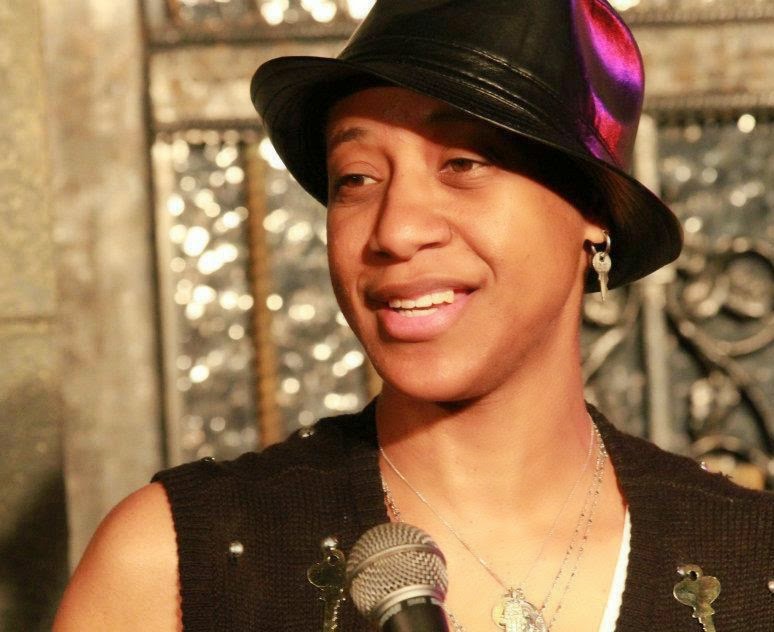
Monet was born and raised in New York City surrounded by multiple genres of music by both parents - her mother a doo-wop singer who performed at the Apollo Theater and her father a manager of jazz and Latin artists and by the legendary Betty Carter who was a very close family friend, so you see Monet's musical roots run deep. Monet also plays guitar, oboe, piccolo and piano as well as her signature instrument the flute, for which she was offered a scholarship to attend Cornell University at the age of 14 due to her amazing proficiency. Lifesize Mirror, the title of Monet’s brand new project was released by the Purpose Music Group through Nia Distribution in Oct. LifeSize Mirror makes a bold revealing statement about how profoundly life’s journey has touched her. The thick, golden brown locs that once graced her crown – very much the signature image of her debut release ESSENCE six years ago - are gone. You almost don’t recognize her. But that unmistakable voice buried deep in her chest, almost as if coming directly from her heart is ever present. Her flute that teases and soars, bouncing in the air like a wondrously, hypnotic tribal spell – is pronounced, only finer, richer and more knowing. This couldn't be more evident than in "VAIN," which uniquely combines jazz, classical and instrumental soul " VAIN" is an account of a reflective journey - Monet’s flute like a snake charmer, beautifully intricate which starts out with moments of calm, coaxing gently until it deepens to a throaty rasp, becoming more complex and intriguing.

Monet’s musical repertoire is diverse with influences drawn from jazz, soul, latin, classical, folk, house and funk. Fundamentally, however, her sound is purely rooted in organic soul. The influences are a glorious amalgamation of Marvin Gaye, Joni Mitchell, Bob Marley, Sade and Hubert Laws. One would be remiss not to mention Monet’s various film credits including acting and directing. This is a resume full of aesthetic discovery.

While in between projects, leading up to the actual production of LIFESIZE MIRROR, Monet was quite busy at work fine tuning her craft, contributing her signature flute work, songwriting and vocals to recent projects by Angela Johnson “That's Just The Way"(which is also on Lifesize Mirror), Nigerian world soul artist Siji "Fantasy" and "Ekundayo,” and singer/songwriters Kendra Ross "Has to Be,” and La Sonya Gunther, " How we Livin." Monet is involved in upcoming projects by the Revelations featuring Tre Williams “Don’t Wait ", Abby Dobson "Fly," Tarrah Reynolds and Collette. Monet also contributed to club hits by Melena Perez, "Confession,” and Tortured Soul, "Don't Hold me Down,” flute and vocals respectively.

LIFESIZE MIRROR promises to be rich with what we expect from Monet. However some surprising alternative twists to her sound abound. There is more orchestration in the arrangements, and the addition of violin, cello, trumpet and soprano sax on various cuts are welcome. Her reggae dub influence is present on, “Ever Want.” Then there’s the Monet that many are definitely familiar with in “Hold me Sweetly,” a quivering ode to desire that Monet admittedly calls baby making music. Other cuts from this effort seem to convey odes of promise, hope, inspiration and transformation like “Walk with Me,” and “It’s Your Life,” which is an anthem to one being a master of one’s own destiny. Jeff Smith (Family Stand), violinist Tarrah Reynolds, keyboardist Nick Rolfe, vocalists Tricia Angus, Saundra Williams, Martha Redbone, and Abby Dobson, are all contributors to LIFESIZEMIRROR. The producers of the project include Steve Wallace, Angela Johnson, Sijii, Prez, Jesse Fischer (Soul Cycle),Ticklah and Ethan White (Tortured Soul).

Monet is an explorer. Through her musical expression we witness her seeking the highest level of self awareness and realization which is often referred to as LIFESIZE MIRROR. I n this project she freely moves through her existence fearlessly, balancing both the pain and the pleasure, the heartache and the rapture making sure we feel it too, spiritually, intellectually and physically. Conveying this is no easy feat – and as we bear witness to Monet’s creativity as she continues to document her journey through her music. We know that we’re all the better to be an audience to such a gift.

Lifesize Mirror has charted for three weeks on the Billboard Jazz Chart , reaching a high of #41 in December , a rarity for an artist who is also part of the independent honest soul movement.

To visit Monet on Reverbnation CLICK HERE

To Visit Monet on Purpose Records CLICK HERE

March 09, 2012

"COLLECTIONS"


Odean Pope was born October 24, 1938 in Ninety‐Six, South Carolina to musical parents who rooted him in the sounds of the Southern Baptist Church. After moving to Philadelphia at the age of ten, his lifelong study of music began in earnest and was buttressed by The Graniff School of Music and Benjamin Franklin High School's music program.

Odean grew up in jazz rich territory with other Philadelphia notables such as: John Coltrane, Lee Morgan, Clifford Brown, Benny Golson, McCoy Tyner, Jimmy and Percy Heath, Ray Bryant, Bill Barron, Kenny Barron, Archie Shepp, Jymie Merritt, Jimmy Garrison, Philly Joe Jones and Dizzy Gillespie. Coltrane chose Odean to replace him in Jimmy Smith's Group when he left for New York to join Miles Davis. Although he was close to Coltrane and continues to revere his artistry, Odean was always searching for his own musical sound. This led him to study with Ron Rubin, the principal woodwind player in the Philadelphia Orchestra. At a later time he studied at The Paris Conservatory for Music under Kenny Clarke. It was there that he received his Certificate in Orchestration, Modern harmony, African rhythms, Be‐Bop Art Forms and Arrangement. He studied with the pianist, Ray Bryant, bassist, Jymie Merritt and was significantly influenced by the brilliant, if not eccentric pianist, Hasaan Ibn Ali. Odean added, "Then being able to study with Max (Roach) from '79 up until '02, was like going to one of the highest institutions in the whole world."


Integrating several musical influences including the church choir of his youth, Philadelphia jazz and R&B of the 50's and classical woodwind chamber music, led Odean in the early 70's to help form Catalyst, a collective of musicians and music representing his new aesthetic. A two‐CD set was reissued in 1999 on 32 Records as: "Catalyst: The Funkiest Band You Never Heard." It was music ahead of its time. In 1979, Odean joined the Max Roach Quartet as a regular member for more than two decades. It was as the tenor man with Max Roach that Odean perfected the techniques of circular breathing and multiphonics, both allowing him to stretch his solo improvisations from dazzling elevations to the throbbing, husky sounds for which he is so well known, to all kinds of delicacy in getting from one to the other. Odean won acclaim from Australia to Japan, even winning "Best Tenor Saxophone Player" at the North Sea Jazz Festival.

Odean works with his trio, (Lee Smith, Craig McIver) quartet and saxophone choir. The saxophone choir is formatted with nine saxophones, and was established by Odean in 1977 and premiered in 1985 with a Soul Note album called "The Saxophone Shop."

The saxophone choir has been the realization of his southern legacy; a medium for creating the richly textured harmonic sound that has permeated his musical soul since childhood. Even though he plays clarinet, oboe, piccolo, flute and piano, Odean feels an affinity for the tenor saxophone because it most closely mimics the human voice. He constructs layers of melodic sound by playing within the fourth system in different tone scales using multiphonics, achieving several pitches together, for which he is well known. The choir reaches a stunning intensity that is simultaneously one voice and is also, as described by Francis Davis, "harmonically engorged."


Odean has led two musical lives. Whereas his musical legion left for New York, Odean kept Philadelphia as his home base. Having grown up in North Philadelphia, Odean has always felt a strong commitment to his community through working musically with the children. He was musical director of a Philadelphia cultural initiative, "Model Cities." He started the jazz studies program at the Settlement Music School and he continues to give master classes in the School District of Philadelphia, as well as nationally and internationally.

Odean Pope's artistry as a performer, composer and arranger has earned him many
Citations from the City of Philadelphia. Among his many awards are, The Pew
Fellowship in the Arts for Music Composition (1992), The Rockefeller Foundation
(1992) and several from Chamber Music America.

Photos by John Abbott Photography

To visit the website of Odean Pope CLICK HERE

February 08, 2012

LOVE NOTES


Valentine's Day is upon us, the magic of Adoration fills the air. Let the sweet sounds of SOJP enhance the mood and guide Cupid's arrow into your hearts.

The music of Karen Francis, Little Jimmy Scott, Nancy Wilson, Dr. John, Gloria Lynne along with the poetry of Bigtrigger, NeoSouljah, Yumenyeti, Celestial Dancer, just to name a few will set the tempo for the evening.

ENJOY

SPOTLIGHT ON JAZZ AND POETRY'S

LOVENOTES

January 20, 2012

"Soulful Beginnings" SOJP's 4th Anniversary Program


Wynton Marsalis is an internationally acclaimed musician, composer, bandleader, educator and a leading advocate of American culture. He is the world’s first jazz artist to perform and compose across the full jazz spectrum from its New Orleans roots to bebop to modern jazz. By creating and performing an expansive range of brilliant new music for quartets to big bands, chamber music ensembles to symphony orchestras, tap dance to ballet, Wynton has expanded the vocabulary for jazz and created a vital body of work that places him among the world’s finest musicians and composers.

Early Years

Wynton was born in New Orleans, Louisiana, on October 18, 1961, to Ellis and Dolores Marsalis, the second of six sons. At an early age he exhibited a superior aptitude for music and a desire to participate in American culture. At age eight Wynton performed traditional New Orleans music in the Fairview Baptist Church band led by legendary banjoist Danny Barker, and at 14 he performed with the New Orleans Philharmonic. During high school Wynton performed with the New Orleans Symphony Brass Quintet, New Orleans Community Concert Band, New Orleans Youth Orchestra, New Orleans Symphony, various jazz bands and with the popular local funk band, the Creators.

At age 17 Wynton became the youngest musician ever to be admitted to Tanglewood’s Berkshire Music Center. Despite his youth, he was awarded the school’s prestigious Harvey Shapiro Award for outstanding brass student. Wynton moved to New York City to attend Juilliard in 1979. When he began to pick up gigs around town, the grapevine began to buzz. In 1980 Wynton seized the opportunity to join the Jazz Messengers to study under master drummer and bandleader Art Blakey. It was from Blakey that Wynton acquired his concept for bandleading and for bringing intensity to each and every performance. In the years to follow Wynton performed with Sarah Vaughan, Dizzy Gillespie, Sweets Edison, Clark Terry, Sonny Rollins, Ron Carter, Herbie Hancock, Tony Williams and countless other jazz legends.

Wynton assembled his own band in 1981 and hit the road, performing over 120 concerts every year for 15 consecutive years. With the power of his superior musicianship, the infectious sound of his swinging bands and an exhaustive series of performances and music workshops, Marsalis rekindled widespread interest in jazz throughout the world. Wynton embraced the jazz lineage to garner recognition for the older generation of overlooked jazz musicians and prompted the re-issue of jazz catalog by record companies worldwide. He also inspired a renaissance that attracted a new generation of fine young talent to jazz. A look at the more distinguished jazz musicians of today reveals numerous students of Marsalis’ workshops: James Carter, Christian McBride, Roy Hargrove, Harry Connick Jr., Nicholas Payton, Eric Reed and Eric Lewis, to name a few.

Classical Career

Wynton’s love of the music of Bach, Beethoven, Mozart and others drove him to pursue a career in classical music as well. He recorded the Haydn, Hummel and Leopold Mozart trumpet concertos at age 20. His debut recording received glorious reviews and won the Grammy Award® for “Best Classical Soloist with an Orchestra.” Marsalis went on to record 10 additional classical records, all to critical acclaim. Wynton performed with leading orchestras including the New York Philharmonic, Los Angeles Philharmonic, Boston Pops, The Cleveland Orchestra, Saint Louis Symphony Orchestra, English Chamber Orchestra, Toronto Symphony Orchestra and London’s Royal Philharmonic, working with an eminent group of conductors including: Leppard, Dutoit, Maazel, Slatkin, Salonen and Tilson-Thomas. Famed classical trumpeter Maurice André praised Wynton as “potentially the greatest trumpeter of all time.”

Record Production

To date Wynton has produced over 70 records which have sold over seven million copies worldwide including three Gold Records. His recordings consistently incorporate a heavy emphasis on the blues, an inclusive approach to all forms of jazz from New Orleans to modern jazz, persistent use of swing as the primary rhythm, an embrace of the American popular song, individual and collective improvisation, and a panoramic vision of compositional styles from dittys to dynamic call and response patterns (both within the rhythm section and between the rhythm section and horn players). Always swinging, Marsalis blows his trumpet with a clear tone and a unique, virtuosic style derived from an encyclopedic range of trumpet techniques.

The Composer

Wynton Marsalis is a prolific and inventive composer. The dance community embraced Wynton’s inventiveness by awarding him with commissions to create new music for Garth Fagan (Citi Movement-Griot New York), Peter Martins at the New York City Ballet (Jazz: Six Syncopated Movements and Them Twos), Twyla Tharp with the American Ballet Theatre (Jump Start), Judith Jamison at the Alvin Ailey American Dance Theatre (Sweet Release and Here…Now), and Savion Glover (Petite Suite and Spaces). Marsalis collaborated with the Lincoln Center Chamber Music Society in 1995 to compose the string quartet At The Octoroon Balls, and again in 1998 to create a response to Stravinsky’s A Soldier’s Tale with his composition A Fiddler’s Tale. With his collection of standards arrangements, Wynton reconnected audiences with the beauty of the American popular song (Standard Time Volumes I-VI). He re-introduced the joy in New Orleans jazz with his recording The Majesty Of The Blues. He extended the jazz musician’s interplay with the blues in Levee Low Moan, Thick In The South and other blues recordings. With Citi Movement, In This House On This Morning and Blood On The Fields, Wynton invented a fresh conception for extended form compositions. His inventive interplay with melody, harmony and rhythm, along with his lyrical voicing and tonal coloring assert new possibilities for the jazz ensemble. In his dramatic oratorio Blood On The Fields, Wynton draws upon the blues, work songs, chants, call and response, spirituals, New Orleans jazz, Ellingtonesque orchestral arrangements and Afro-Caribbean rhythms; and he uses Greek chorus-style recitations to move the work along. The New York Times Magazine said the work “marked the symbolic moment when the full heritage of the line, Ellington through Mingus, was extended into the present.” The San Francisco Examiner stated, “Marsalis’ orchestral arrangements are magnificent. Duke Ellington’s shadings and themes come and go but Marsalis’ free use of dissonance, counter rhythms and polyphonics is way ahead of Ellington’s mid-century era.” Wynton extended his achievements in Blood On The Fields with All Rise, an epic composition for big band, gospel choir, and symphony orchestra - a classic work of high art - which was performed by the New York Philharmonic under the baton of Kurt Masur along with the Morgan State University Choir and the Lincoln Center Jazz Orchestra (December 1999). Marsalis collaborated with Ghanaian master drummer Yacub Addy to create Congo Square, a groundbreaking composition combining elegant harmonies from America’s jazz tradition with fundamental rituals in African percussion and vocals (2006). For the anniversary of the Abyssinian Baptist Church’s 200th year of service, Marsalis blended Baptist church choir cadences with blues accents and big band swing rhythms to compose Abyssinian 200: A Celebration, which was performed by the Jazz at Lincoln Center Orchestra and Abyssinian’s 100 voice choir before packed houses in New York City (May 2008). In the fall of 2009 the Atlanta Symphony Orchestra premiered Marsalis’ composition Blues Symphony. By infusing blues and ragtime rhythms with symphonic orchestrations Wynton creates a fresh type of enjoyment of classical repertoire. Employing complex layers of collective improvisation, Marsalis further expanded his repertoire for symphony orchestra with Swing Symphony, premiered by the renowned Berlin Philharmonic in June 2010, creating new possibilities for audiences to experience a symphony orchestra swing. The New York Philharmonic, Los Angeles Philharmonic and the Barbican have all signed on to perform Swing Symphony. Marsalis’ rich and expansive body of music for the ages places him among the world’s most significant composers.

Television and Radio

In the fall of 1995 Wynton launched two major broadcast events. In October PBS premiered Marsalis On Music, an educational television series on jazz and classical music. The series was written and hosted by Marsalis and was enjoyed by millions of parents and children. Writers distinguished Marsalis On Music with comparisons to Leonard Bernstein’s celebrated Young People’s Concerts of the 50s and 60s. That same month National Public Radio aired the first of Marsalis’ 26-week series entitled Making the Music. These entertaining and insightful radio shows were the first full exposition of jazz music in American broadcast history. Wynton’s radio and television series were awarded the most prestigious distinction in broadcast journalism, the George Foster Peabody Award. Marsalis has also written five books: Sweet Swing Blues on the Road, Jazz in the Bittersweet Blues of Life, To a Young Musician: Letters from the Road, Jazz ABZ (an A to Z collection of poems celebrating jazz greats), and his most recent release Moving to Higher Ground: How Jazz Can Change Your Life.

Awards and Accolades

Wynton Marsalis has won nine Grammy Awards® in grand style. In 1983 he became the only artist ever to win Grammy Awards® for both jazz and classical records; and he repeated the distinction by winning jazz and classical Grammy Awards® again in 1984. Today Wynton is the only artist ever to win Grammy Awards® in five consecutive years (1983-1987). Honorary degrees have been conferred upon Wynton by over 25 of America’s leading academic institutions including Columbia, Harvard, Howard, Princeton and Yale (see Exhibit A). Elsewhere Wynton was honored with the Louis Armstrong Memorial Medal and the Algur H. Meadows Award for Excellence in the Arts. He was inducted into the American Academy of Achievement and was dubbed an Honorary Dreamer by the “I Have a Dream Foundation.” The New York Urban League awarded Wynton with the Frederick Douglass Medallion for distinguished leadership and the American Arts Council presented him with the Arts Education Award. Time magazine selected Wynton as one of America’s most promising leaders under age 40 in 1995, and in 1996 Time celebrated Marsalis again as one of America’s 25 most influential people. In November 2005 Wynton Marsalis received The National Medal of Arts, the highest award given to artists by the United States Government. United Nations Secretary-General Kofi Annan proclaimed Wynton Marsalis an international ambassador of goodwill for the Unites States by appointing him a UN Messenger of Peace (2001).

In 1997 Wynton Marsalis became the first jazz musician ever to win the Pulitzer Prize for Music for his epic oratorio Blood On The Fields. During the five preceding decades the Pulitzer Prize jury refused to recognize jazz musicians and their improvisational music, reserving this distinction for classical composers. In the years following Marsalis’ award, the Pulitzer Prize for Music has been awarded posthumously to Duke Ellington, George Gershwin, Thelonious Monk and John Coltrane. In a personal note to Wynton, Zarin Mehta wrote, “I was not surprised at your winning the Pulitzer Prize for Blood On The Fields. It is a broad, beautifully painted canvas that impresses and inspires. It speaks to us all ... I’m sure that, somewhere in the firmament, Buddy Bolden, Louis Armstrong and legions of others are smiling down on you.”

Wynton’s creativity has been celebrated throughout the world. He won the Netherlands’ Edison Award and the Grand Prix Du Disque of France. The Mayor of Vitoria, Spain, awarded Wynton with the city’s Gold Medal – its most coveted distinction. Britain’s senior conservatoire, the Royal Academy of Music, granted Mr. Marsalis Honorary Membership, the Academy’s highest decoration for a non-British citizen (1996). The city of Marciac, France, erected a bronze statue in his honor. The French Ministry of Culture appointed Wynton the rank of Knight in the Order of Arts and Literature and in the fall of 2009 Wynton received France’s highest distinction, the insignia Chevalier of the Legion of Honor, an honor that was first awarded by Napoleon Bonaparte. French Ambassador, His Excellency Pierre Vimont, captured the evening bestwith his introduction:

“We are gathered here tonight to express the French government’s recognition of one of the most influential figures in American music, an outstanding artist, in one word: a visionary…
I want to stress how important your work has been for both the American and the French. I want to put the emphasis on the main values and concerns that we all share: the importance of education and transmission of culture from one generation to the other, and a true commitment to the profoundly democratic idea that lies in jazz music.
I strongly believe that, for you, jazz is more than just a musical form. It is tradition, it is part of American history and culture and life. To you, jazz is the sound of democracy. And from this democratic nature of jazz derives openness, generosity, and universality.”

Jazz at Lincoln Center

In 1987 Wynton Marsalis co-founded a jazz program at Lincoln Center. In July 1996, due to its significant success, Jazz at Lincoln Center was installed as new constituent of Lincoln Center, equal in stature with the New York Philharmonic, Metropolitan Opera, and New York City Ballet - a historic moment for jazz as an art form and for Lincoln Center as a cultural institution. In October 2004, with the assistance of a dedicated Board and staff, Marsalis opened Frederick P. Rose Hall, the world’s first institution for jazz. The complex contains three state-of-the-art performance spaces (including the first concert hall designed specifically for jazz) along with recording, broadcast, rehearsal and educational facilities. Jazz at Lincoln Center has become a preferred venue for New York jazz fans and a destination for travelers from throughout the world. Wynton presently serves as Artistic Director for Jazz at Lincoln Center and Music Director for the Jazz at Lincoln Center Orchestra. Under Wynton’s leadership, Jazz at Lincoln Center has developed an international agenda presenting rich and diverse programming that includes concerts, debates, film forums, dances, television and radio broadcasts, and educational activities.

Jazz at Lincoln Center is a mecca for learning as well as a hub for performance. Their comprehensive educational programming includes a Band Director’s Academy, a hugely popular concert series for kids called Jazz for Young People, Jazz in the Schools, a Middle School Jazz Academy, WeBop! (for kids ages 8 months to 5 years), an annual High School Jazz Band Competition & Festival that reaches over 2000 bands in 50 states and Canada, and online learning tools.

Giving Back

Wynton Marsalis has devoted his life to uplifting populations worldwide with the egalitarian spirit of jazz. And while his body of work is enough to fill two lifetimes, Wynton continues to work tirelessly to contribute even more to our world’s cultural landscape. It has been said that he is an artist for whom greatness is not just possible, but inevitable. The most extraordinary dimension of Wynton Marsalis, however, is not his accomplishments but his character. It is the lesser-known part of this man who finds endless ways to give of himself. It is the person who waited in an empty parking lot for one full hour after a concert in Baltimore, waiting for a single student to return from home with his horn for a trumpet lesson. It is the citizen who personally funds scholarships for students and covers medical expenses for those in need. Immediately following Hurricane Katrina, Wynton organized the Higher Ground Hurricane Relief Concert and raised over $3 million for musicians and cultural organizations impacted by the hurricane. At the same time, he assumed a leadership role on the Bring Back New Orleans Cultural Commission where he was instrumental in shaping a master plan that would revitalize the city’s cultural base. Wynton Marsalis has selflessly donated his time and talent to non-profit organizations throughout the country to raise money to meet the many needs within our society. From My Sister’s Place (a shelter for battered women) to Graham Windham (a shelter for homeless children), the Children’s Defense Fund, Amnesty International, the Sloan Kettering Cancer Institute, Food For All Seasons (a food bank for the elderly and disadvantaged), Very Special Arts (an organization that provides experiences in dance, drama, literature, and music for individuals with physical and mental disabilities) to the Newark Boys Chorus School (a full-time academic music school for disadvantaged youths) and many, many more - Wynton responded enthusiastically to the call for service. It is Wynton Marsalis’ commitment to the improvement of life for all people that portrays the best of his character and humanity.

Wynton Marsalis Honorary Degrees

1988 Brown University (Doctor of Music)
Southern University at New Orleans (Doctor of Music)
1990 University at Buffalo - State University of New York
(Doctor of Music)
1992 Boston University (Doctor of Music)
1994 University of Miami (Doctor of Music)
1995 Hunter College (Doctor of Humane Letters)
Manhattan School of Music (Doctor of Music)
Princeton University (Doctor of Arts)
Yale University (Doctor of Music)
1996 Brandies University (Doctor of Humane Letters)
Columbia University (Doctor of Music)
Governors State University (Doctor of Humane Letters)
Rensselaer Polytechnic Institute (Doctor of Fine Arts)
University of Scranton (Doctor of Fine Arts)
1997 Amherst College (Doctor of Music)
Howard University (Doctor of Music)
Long Island University (Doctor of Music)
Rutgers University (Doctor of Fine Arts)
1998 Bard College (Doctor of Fine Arts)
Haverford College (Doctor of Humane Letters)
1999 University of Massachusetts Amherst (Doctor of Fine Arts)
2000 Middlebury College (Doctor of Arts)
University of Pennsylvania (Doctor of Music)
2001 Clark Atlanta University (Doctorate of Humane Letters)
Connecticut College (Doctor of Fine Arts)
2004 Bloomfield College (Doctor of Fine Arts)
2007 New York University (Doctor of Fine Arts)
2009 Harvard University (Doctor of Music)
Northwestern University (Doctor of Arts)


Courtesy of wyntonmarsalis.com


Eddie Oliver, a native of Orlando, Florida, Spoken Word Artist left home in 1999 to pursue his dreams of writing. While searching for more national exposure for his art form, he stumbled across the Atlanta poetry scene where he has strived and succeeded in earning the respect of being called one of the top spoken word artists in the country. A former rapper turned poet, Eddie has graced many stages with his resonating sultry voice that can be felt in the soul and melts the hearts and ears of its listeners. He has captivated fans from all walks of life while performing at grand events throughout the country. His smooth yet melodic, urban poetry has blessed audiences from The National Black Arts Festival, to The Nuyorican Poets Cafe, and everything in between. He has been featured on the television special POESY, and The Soul Lounge Groovenation Tour. Eddie has shared countless stages with a variety of soulful stars including India.Arie, Musiq Soulchild, and Malcolm Jamal Warner just to name a few. His song I Just Want to Live was featured on the CD compilation FUSION: A BLEND of POETRY and MUSIC distributed by Malaco Records. His intoxicating lyrical gift is also featured on all 11 songs of the Lee Williams and The Spirtual QC’s, God’s Groove! The Remix CD. His very own spoken word CD entitled POETIC SOUL: MIRROR IMAGES OF EDDIE OLIVER is laced with Hip-Hop, Jazz, and soulful rhythms. It is exalted by many as a masterpiece, a certified classic. His follow up CD entitled STREET CORNER SOUL is just as masterful. He is without question one of the most influential, and up and coming spoken word artists of our time.

Eddie is also a rising star on the theatrical scene. Among his countless honors was his directorial debut of the hit musical stage play, Little Black Girl’s Blues which received rave reviews. Mr. Oliver also received a best supporting actor nomination for his role as Neland in the stage play, The Apartment by Shut Up And Act Productions. He has also played the lead role in the hit Gospel stage play Daddy If You Only Knew, A Dance of Fatherhood, and Diante’s Hell where his smooth yet melodic urban poetry was featured. His poetry has also been on display in Rolling Out Magazine, The Creative Loafing, and The Orlando Times. Feature articles have been written about this new age, renaissance artist in Profound Word Magazine, The Poetry Papers, and Music 2 Showcase Magazine. This is only the beginning, now that his first poetry book entitled REFLECTIONS has been released, Eddie aspires to someday be catapulted amongst the poetry elite, along side his idol, the great Mr. Langston Hughes.

A gifted and advanced English student, Eddie fell in love with words at a very young age. All through his school years writing came easy to him. 9 times out of 10 if he was given a writing assignment he would get an A on it, and the teacher would always certainly read his paper in front of the class as an example of excellence. But the writing didn’t stop inside the classroom, behind clothes doors his creativity was blossoming. A shy young man, Eddie would sit in his room for hours just writing songs, raps, screenplays, and just random thoughts not really knowing what to do with any of it. Writing came so easy to him that he thought everyone could do it and to him writing was no big deal. Until one day after doing some soul searching because he was really unsure about what he wanted to do with his life. He thought about one question, ‘What is my gift?’ Believing that everyone has a gift, it finally hit him. ‘I’m a writer. That’s why the teachers always read my papers in front of the class, because I’m a writer.’ From that moment on Eddie became serious about his gift of writing which suddenly transitioned into an art of word play. A gifted lyricist, he fell in love with rap which almost landed him a deal with MCA Records, but fell through because of bad management. Sour about the rap industry, Eddie rebirth himself as a poet/spoken word artist where he felt there was no limitations on how he could express himself creatively. Thus Eddie Oliver the poet/spoken word artist was born from the rugged hood of Carver Shores in Orlando, Florida.

A lover of words, a lover of music, a lover of creativity, and a lover of life, Eddie believes that anything is possible once you realize what’s your gift? ‘Find it, explore it, nurture it, and master it. Then sit back and watch it grow,’ is Eddie’s advice to anyone searching for there purpose. For more info please feel free to visit www.eddieoliver.com or look for Eddie Oliver on facebook.

January 10, 2012

SOJP 2011 REVISITED


This is Spotlight On Jazz and Poetry's review of some of the fantastic programs and wonderful artists in the worlds of Jazz and Poetry. So many of our loyal listeners wrote in to us to let us know what show they enjoyed the most and what artists were their favorites.

Each program received rave reviews, therefore we decided to highlight ALL of the shows and artists which were featured during the year. We sincerely hope that you enjoy this special program!

We would also like to thank each and every one of you for your continued support. We here at SOJP will continue to strive for excellence in the programs that we'll be presenting for your enjoyment during the upcoming year of 2012 and beyond!!

Spotlight On Jazz and Poetry "Jazz as Poetic Inspiration"

December 17, 2011

"A JAZZY CHRISTMAS 2011"


Spotlight On Jazz & Poetry's

"A Jazzy Christmas 2011"


will showcase some of your all time favorite musicians as well as some new and exciting faces such as, Wynton Maralis, Kenny Burrell, Vince Guaraldi, Monika Herzig, Eartha Kitt, Rob Juice, Dinah Washington, Lou Rawls, Ella Fitzgerald, Louis Armstrong, Rod Tate and many others playing and singing some of your favorite Christmas music.


On behalf of the SOJP family,
I would like to wish each and every one of you

A Very Merry Christmas, Happy Kwanza and a
Safe, Healthy and Prosperous New Year!


December 07, 2011

Light In The Sky


Omar Sosa is one of the most versatile jazz artists on the scene today: composer, arranger, producer, pianist, percussionist, and bandleader. He fuses a wide range of world music and electronic elements with his native Afro-Cuban roots to create a fresh and original urban sound - all with a Latin jazz heart. On stage, Mr. Sosa is a charismatic figure, inspiring his fellow musicians with his dynamic playing and improvisational approach to the music - an approach full of raw emotional power and humor. Mr. Sosa invariably inspires audiences to their feet and to join him in chorus vocals, heightening the sense of spontaneity and connection.

Omar Sosa was born (April 10, 1965) and raised in Camagüey, Cuba, the largest inland city of the island nation, with a current population of about 300,000. The city lies at the center of a large prairie, junction point of railroads and highways, commercial center for trade in cattle and sugar produced in the province, and home of many beautiful churches, cathedrals and mansions. His father, Sindulfo Sosa, was a teacher of history and philosophy, as well as an administrator of the local school system. His mother, Maricusa Palacios, now retired and living in Havana, was a telex operator for the local electric company.

At the age of eight, Omar began studying percussion, including marimba, at the music conservatory in Camagüey. After passing a rigorous musical exam, Omar moved his studies to the prestigious Escuela Nacional de Musica in Havana. Here, as a teenager, not finding his first choice instrument – the marimba – readily available, he began to focus on the piano, finishing his formal education in 1983 at the Instituto Superior de Arte, also in Havana.
Growing up in Camaguey, Omar listened to music at home – Nat King Cole, Orquesta Aragon, Pacho Alonso, Benny More, and much classical music. He was impressed early on by one of his father’s records – a set of Cuban descargas - but had no idea that this was Latin jazz. He was touched profoundly by the music’s freedom and expressiveness. It was the group Los Amigos, with Frank Emilio Flynn, Tata Guines, Cachao, and Barreto, et al. Another album constantly on the family’s record player was called Pianoforte, a recording by Chucho Valdes. Omar was also impressed by a recording of Afro-Cuban songs by the Conjunto Folklorico Nacional – so much so that he briefly toyed with the idea of becoming a dancer.

Later, at the conservatory in Havana, influenced by his classmates, Omar became familiar with the music called jazz. He listened to a radio program hosted by the father of drummer Horacio “El Negro” Hernandez. Students would stay up late to hear the show, and compare notes at the school the next day. At the time, this radio show was one of the main sources of information about jazz.

As some of his peer’s musician parents began to travel, Omar received records and information about many of the great American artists like Oscar Peterson, Herbie Hancock, Chick Corea, Keith Jarret, Coltrane, Charlie Parker. At the same time, Omar was influenced by progressive Cuban artists like Chucho Valdez, Irakere, and Emiliano Salvador. It was also as he finished his studies in 1983 that he was introduced to the music of Thelonious Monk, whose legacy of expressive freedom has left a strong mark on Omar’s creative approach. By the late ‘80’s, having studied everything from Afro-Cuban folkloric traditions to European classical music, he began working with two Cuban pop singers - first Vicente Feliu, then Xiomara Laugart – serving as musical director for various of their touring and recording ensembles.

Moving to Quito, Ecuador for several years beginning in 1993, Sosa discovered the folkloric music of Esmeraldas, a pocket of African-rooted culture on the northwest coast of that country known especially for its use of the marimba. In addition to launching his own jazz fusion ensemble, Entrenoz, Sosa produced Andarele, a recording by the Afro-Ecuadorian group Koral y Esmeralda.

After a brief stint in Palma Mallorca, Spain, Omar moved to the San Francisco Bay Area in late 1995 where he quickly invigorated the local Latin jazz scene with his explosive playing and adventurous writing. The next year Sosa made his U.S. recording debut on Ota Records with the solo piano Omar Omar, followed in 1997 with the first in a trilogy of groundbreaking large-ensemble, World-Jazz recordings: Free Roots, Spirit Of The Roots (1998) and Bembon (2000).

In 1998 Omar began his collaboration with noted Bay Area percussionist and educator John Santos. The duo released a live recording, Nfumbe, in conjunction with their appearance at the San Francisco Jazz Festival that year. The following year, revealing more of the contemplative side of his musical sensibilities, Omar released his second solo piano recording, Inside, a Top 20-selling CD in France for distributor Night & Day. Capping an extraordinarily productive period, Omar also traveled to Ecuador in 1999 to record his critically acclaimed CD, Bembon.

To visit the website of OMAR SOSA click here