July 18, 2008

"HUMMIN IN THE SUN"


Roy Ayers was born on September 10, 1940 in Los Angelos, Ca. One of the most visible and winning jazz vibraphonists of the 1960s, then an R&B bandleader in the 1970s and '80s, Roy Ayers' reputation s now that of one of the prophets of acid jazz, a man decades ahead of his time. A tune like 1972's "Move to Groove" by the Roy Ayers Ubiquity has a crackling backbeat that serves as the prototype for the shuffling hip-hop groove that became, shall we say, ubiquitous on acid jazz records; and his relaxed 1976 song "Everybody Loves the Sunshine" has been frequently sampled. Yet Ayers' own playing has always been rooted in hard bop: crisp, lyrical, rhythmically resilient. His own reaction to being canonized by the hip-hop crowd as the "Icon Man" is tempered with the detachment of a survivor in a rough business. "I'm having fun laughing with it," he has said. "I don't mind what they call me, that's what people do in this industry."


Growing up in a musical family — his father played trombone, his mother taught him the piano — the five-year-old Ayers was given a set of vibe mallets by Lionel Hampton, but didn't start on the instrument until he was 17. He got involved in the West Coast jazz scene in his early 20s, recording with Curtis Amy (1962), Jack Wilson (1963-1967), and the Gerald Wilson Orchestra (1965-1966); and playing with Teddy Edwards, Chico Hamilton, Hampton Hawes and Phineas Newborn. A session with Herbie Mann at the Lighthouse in Hermosa Beach led to a four-year gig with the versatile flutist (1966-1970), an experience that gave Ayers tremendous exposure and opened his ears to styles of music other than the bebop that he had grown up with.


After being featured prominently on Mann's hit Memphis Underground album and recording three solo albums for Atlantic under Mann's supervision, Ayers left the group in 1970 to form the Roy Ayers Ubiquity, which recorded several albums for Polydor and featured such players as Sonny Fortune, Billy Cobham, Omar Hakim, and Alphonse Mouzon. An R&B-jazz-rock band influenced by electric Miles Davis and the Herbie Hancock Sextet at first, the Ubiquity gradually shed its jazz component in favor of R&B/funk and disco.


In the 1980s, besides leading his bands and recording, Ayers collaborated with Nigerian musician Fela Anikulapo-Kuti, formed Uno Melodic Records, and produced and/or co-wrote several recordings for various artists. As the merger of hip-hop and jazz took hold in the early '90s, Ayers made a guest appearance on Guru's seminal Jazzmatazz album in 1993 and played at New York clubs with Guru and Donald Byrd.


Today, the dynamic music man is an iconic figure still in great demand and whose music has been sampled by music industry heavyweights, including Mary J. Blige, Erykah Badu, 50 Cent, A Tribe Called Quest, Tupac, and Ice Cube. Ayers recently recorded with hip-hop artist Talib Kweli (produced by Kanye West) and jazz/R&B singer Will Downing. Many of Ayers’ songs including “Everybody Loves the Sunshine,”, “Searchin”, “Running Away” have been frequently sampled and remixed by DJ’s worldwide.


Jean-Claude Toran, was born in June of 1944. He is your poet. He is your playwright. He is your actor. He is your Clown. He is your ultimate entertainer. a man of universal talents, with global presence and he deserves the right to be your entertainer. As the man puts it so eloquently, "Every place that I have ever been, I'm still there." And oh yes, the man has been "there";. From the halls and walls of the White House, to the streets and alleys of the black houses of the ghettos, he's been there. He's been a Preacher and a prisoner. He's been a leader and a follower. He's been up to the towers in New York and Philadelphia. And he's been down in the gutters of Los Angeles and DC. He can recognize the smell of the Australian wilderness and distinguish the taste of a Jamaican morning. He's performed on a grand stage, and walked in the footsteps of Bob Marley and Marvin Gaye. He's written love songs and movies. He plays a Yidaki also called a didgeridoo. It's a wind instrument that was given to Jean-Claude by the Indigenous Australians, the Aboriginese.


"Jean-Claude's first touring experience was with Sun Ra. "He was an entertainer and made everyone with him perform to the max. Sun Ra taught me about touching the audience...I wore a pair of tights with a cape as I went in the audience saying, Space is the place, Space is the place, You're on the Good Ship Earth, but you haven't met the captain of the space ship yet."
Roy Ayers is another total entertainer with whom Jean-Claude has worked with. "It's always a pleasure to perform with him; the video we did some years back still pops up every now and then on BET...Going to places like South Africa, Europe, and Australia with Isaac Hayes as his personal aide, also helped to build me as an entertainer. Those experiences last until this day in terms of the impact it had upon me. As an entertainer, I feel very comfortable where I am right now."


For many years Jean Claude refused to write poetry for people to read. He would write it, learn it, and tear the paper up. His standard was that he would not go on stage with a piece of paper to read a poem that I had written. The poems that he recites on the stage are very special. Today a lot of things are being called, 'poetry' just because they rhyme. Just because a person can rhyme words does not mean that he or she is a poet. Back in the 70's (1974), Jean Claude challenged himself to go to Los Angeles from Philadelphia and make a living as a performing poet, but before he could do that, he had to go to New York City and be a street performer. He had several spots to perform; in front of the Ed Sullivan Theatre, under the arch in Washington Square Park, and the steps of Carnage Hall. "I did not make a lot of money, just enough to eat and on some days get a room." Jean Claude's CD 'The Best of Jean-Claude Toran' celebrates twenty-five years of his performing spoken word.


Come to the SOJPradio website and listen to a wonderful conversation with Jean-Claude Toran and Roy Ayers

July 13, 2008

"HOPE"

SHENOLE LATIMER


THE BEGINNING:
Shenole Latimer was born on June 21, 1973, at Huntington Hospital on Long Island, NY. The very same hospital that John Coltrane passed away in. In his early years, Shenole grew up in a household that included his mother, grandmother, and one of his aunts. As his mother would tell you, one had to enter the house with care because Shenole was known to be a "head hunter", throwing any nearby object at visitors' heads. From an early age, Shenole showed a strong interest towards music. His aunt, who lived with he and his grandmother at the time, owned an electric organ that she would play every day. Fascinated by the sound that the instrument would produce, Shenole often would sneak up the stairs to listen to his aunt play. Eventually, Shenole grew bold enough to even reach his 3 year old hand through the cracked door to try and play the organ with his aunt. This gesture, though cute at first, soon became annoying and when the time came for his aunt to move away, she left Shenole a gift - a brand new electric organ just like the one she owned. He quickly taught himself how to play.

THE FAMILY: Many members of Shenole's family are musically inclined. His mother was a violinist in her youth and gained much acclaim on Long Island for her skill and the fact that she was the only left handed violinist in any of Long Island's school districts at the time. Aside from the aunt that lived with him, he had another aunt that was a very talented pianist. Then, there are several of his cousins who are purcussionists. One of them, Emile Latimer, or "The Distinguised One" as Shenole likes to call him, has recorded and performed with legends like Stevie Wonder, Spyra Gyra, Nina Simmone, Richie Havens, and a host of others. Shenole always enjoys any family gatherings because the festivities are almost brought up several notches when everyone takes out their instruments and spontaneous jam sessions errupt.

THE PATH OF MUSIC: As mentioned earlier, Shenole Latimer had a very early interest towards music. When he was 9 years old, Shenole attended a school assembly where the school's band director was demonstrating the various band instruments for the children, in the hopes of gaining new recruits for his band. The children in the auditorium sat in quiet awe at the various instruments were brought out and performed by the band director. But, this silence was suddenly broken when the director took out a saxophone and Shenole, unable to hold back his excitement, yelled out, "oh my God, what's that thing?". About a month later, Shenole found himself in the school's band, playing the alto saxophone. Later, Shenole would admit that the reason he wanted to learn the saxophone was because it was shiny and looked complicated to play because of all of the keys that it had. Shenole's interest in jazz, though always present, found a new level of intensity when he met jazz bassist Todd Coolman during his undergraduate studies at Stony Brook Unversity on Long Island. Coolman's professionalism and breadth of knowledge about jazz fascinated Shenole and made him give consideration towards pursuing jazz for a living. This feeling was cemented, however, when a friend loaned Shenole a CD by Chick Corea called "Three Quartets", which featured Michael Brecker on the tenor saxophone. All it took was Michael Brecker's solo on the very first track of the CD to have Shenole make up his mind that jazz was what he wanted to do with his life. Shenole had never, up until that point, heard a saxophone played in such a manner.

SHENOLE'S OTHER SIDE: Aside from music, Shenole is known for his love of movies. He and his wife Renee, own nearly 400 DVD titles. They are both self professed "geeks", being huge fans of sci-fi films like Star Wars and also of director Peter Jackson and his "Lord of the Rings" films. Additionally, Shenole often will perform for charity events to help raise awareness about certain issues. In addition to years of support for organizations like the NAACP and the National Council of Negro Women, Shenole has also donated his time to do performances for The Marcie Mazzola Foundation, which is an organization with a mission to, "help better the lives of abused and at-risk children; and to build community awareness regarding the needs of children". Shenole also give a lot of himself to family members. He recently had an aunt on his wife's side of the family run for a democratic seat in New Jersey's 2nd congressional district. Her name is Viola Thomas-Hughes. Though she lost to her republican opponent, Viola Thomas-Huhges miraculously managed to go from being a complete unknown in the field, to gaining nearly 40% of the vote from the voters in her congressional district. A feat that she credits to the website that Shenole designed for her, which boasted advanced features such as Flash animation and interactive surveys.

Shenole's DEBUT CD "FRONT and CENTER" Is available NOW!!


TABITHA DeGRUY

Tabitha DeGruy aka Poetic SunShyne, was born August 1, 1971 in New Orleans, Louisiana is a mother, spoken word artist, music lover and founder of CreoleGyrl Productionz. CreoleGyrl Productionz is the umbrella which holds under it two of the most popular Internet radio shows. Da Nawlinz Groove, which was conceived in 2004 with the hope of bringing REAL MUSIC back to the world. The show features and highlights Indie artists of various genres. The Second Show titled Rhyme Or Reason is a monthly segment featuring some of the greatest and newest spoken word artists hitting the scene today.

Poetic SunShyne also uses her entrepreneurial and artistic talents to help promote another very important cause, a relief fund for survivors of Hurricane Katrina. A survivor of the 2005 hurricane disaster herself, Poetic Sunshyne knows first hand the challenges to rebuild a life and your family from such destruction. With the help of 17 talented artists including a dynamic duo musical production team (DaWonda Twinz), Poetic Sunshyne has created, “Perfect Reality,” a Hurricane Katrina Benefit CD. “This CD was created out of love and commitment for those who were deeply affected by Katrina. 100% of the proceeds are being used to help surviving families get on their feet and hopefully mend some very deep and hurtful wounds,” Poetic Sunshyne explains.

She is founder of The Second Wind Club, which helps those less fortunate stand upon their own two feet by offering help of various levels. Having numerous goals and having achieved nearly half of them already you can rest assure you will be hearing many more wonderful things from this New Orleans bred entrepreneur.

July 05, 2008

"IN THE MIND" Celestial Dancer & Pat Martino


Donna Kirven, better known in the poetry world as “Celestial Dancer,” was born and raised in Philadelphia, Pa., but currently lives in Northern California with her husband and two daughters. Coping with life through love, laughter, music and her passion for writing, she has found a way to combine the beautiful arts of poetry and music and invites the world to share the joyous blend.. She has written poetry since age 10, and had her first poem published in her high school newspaper. Donna attended Temple University, and is currently a master’s candidate in organizational psychology. Her first book, When a Band-Aid Isn't Enough, and other poetic perspectives was released in February 2005, and offers a eclectic compilation of traditional and non-traditional poetry that provokes soul deep images of any given moment in time, ones that we all, or someone close to us, have experienced but often have been unwilling or unable to express. Just as in her first book, she remains true to her mission of sculpting life with words and painting feelings that touch souls. She continues to capture unspoken moments of love, laughter, mood and passion in poetic verse.

She has just released her second book of poetry, The Alchemy of Understanding, Poetic Soul Therapy, released December 2007, where she has included a collection of poems that reveal facets of living where understanding is, isn’t, was or wished for. Reflecting on her latest book, Celestial writes that her poetry is delicately crafted to leave readers breathless, not just because it sifts your breath away through shock or extracts it with sudden expressive impact, but because the potency of human emotion and speed with which these portraits of feeling have been painted have entered the deepest realm of your heart, mind and soul at a pace that pulls your breath inward in its wake, allowing you to experience the most cherished and often unspoken human sentiment.

Celestial Dancer has been featured several times on IndieFeed Radio, here on Spotlight on Jazz and Poetry, and in many cafes throughout Northern California. She hopes that on some level, at least one part of her poetry will touch the life of another and bring peace of understanding and comfort of kinship. Her life’s mantra is live simply, love generously, care deeply,
speak kindly, and leave the rest to God.


Pat Martino, born Pat Azzara in Philadelphia in 1944, was first exposed to jazz through his father, Carmen "Mickey" Azzara, who sang in local clubs and briefly studied guitar with Eddie Lang. He took Pat to all the city's hot-spots to hear and meet Wes Montgomery and other musical giants. "I have always admired my father and have wanted to impress him. As a result, it forced me to get serious with my creative powers."

He began playing guitar when he was twelve years old. and left school in tenth grade to devote himself to music. During Visits to his music teacher Dennis Sandole, Pat often ran into another gifted student, John Coltrane, who would treat the youngster to hot chocolate as they talked about music.

Besides first-hand encounters with `Trane and Montgomery, whose album Grooveyard had "an enormous influence" on Martino, he also cites Johnny Smith, a Stan Getz associate, as an early inspiration. "He seemed to me, as a child. to understand everything about music," Pat recalls.

Martino became actively involved with the , early rock scene in Philadelphia, alongside stars like Bobby Rydell, Chubby Checker and Bobby Darin. His first road gig was with jazz organist Charles Earland, a high school friend. His reputation soon spread among other jazz players, and he was recruited by bandleader Lloyd Price to play hits such as Stagger Lee on-stage with musicians like Slide Hampton and Red Holloway.

Martino moved to Harlem to immerse himself in the "soul jazz" played by Earland and others. Previously, he had "heard all of the white man's jazz. I never heard that other part of the culture," he remembers. The organ trio concept had a profound influence on Martino's rhythmic and harmonic approach. and he remained in the idiom as a sideman, gigging with Jack McDuff and Don Patterson. An icon before his eighteenth birthday, Pat was signed as a leader for Prestige Records when he was twenty. His seminal albums from this period include classics like Strings!, Desperado, El Hombre and Baiyina (The Clear Evidence), one of jazz's first successful ventures into psychedelia.

In 1976, Martino began experiencing the excruciating headaches which were eventually diagnosed as symptoms of his aneurysms. After his surgery and recovery, he resumed his career when he appeared in1987 in New York, a gig that was released on a CD with an appropriate name, The Return. He then took another hiatus when both of his parents became ill, and he didn't record again until 1994, when he recorded Interchange and then The Maker.

Today, Martino lives in Philadelphia again and continues to grow as a musician. As the New York Times recently noted, "Mr. Martino, is back and he is plotting new musical directions, adding more layers to his myth." His experiments with guitar synthesizers, begun during his rehabilitation, are taking him in the direction of orchestral arrangements and they promise groundbreaking possibilities. Musicians flock to his door for lessons, and he offers not only the benefits of his musical knowledge, but also the philosophical insights of a man who has faced and overcome enormous obstacles. "The guitar is of no great importance to me," he muses. "The people it brings to me are what matter. They are what I'm extremely grateful for, because they are alive. The guitar is just an apparatus."

Pat began playing professionally in 1961. He has performed with a wide variety of artists including Sonny Stitt, Gene Ammons, Richard Groove Holmes, John Handy, Bobby Hutcherson, Chick Corea, Jack McDuff, Don Patterson, Stanley Clark, Eric Kloss, Trudy Pitts, Willis Jackson, Lloyd Price, Woody Herman, Chuck Israels, Charles Earland, Barry Miles and Joe Pesci. Since 1967, Pat has been touring as a leader.

He has been a Recording Artist for Vanguard, Prestige, Warner Brothers, Muse, Columbia, King, Paddlewheel, Evidence, Sony, 32 Jazz, High Note, Milestone, Polydor, Concord, Fantasy, House of Blues, Mythos, Mainstream, Cobblestone, Atlantic and, most currently, Blue Note Records.

Pat has given Guitar and Music Therapy Seminars, Clinics and Master Classes throughout the world, at locations including North Texas State University, G.I.T., Berklee College (Boston and Perugia, Italy), Duquesne University, Teatro Rasi (Ravenna, Italy), LeCentre Culturel (D’Athis Mons, France), University of Washington School of Music, Skidmore College, Musicians Institute, National Guitar Workshop, New York University, Pennsylvania University, Stanford University, The University of Missouri, Roosevelt University (Chicago), Patti Summers Jazz Club (Seattle), Music Tech College (St. Paul), The New School (New York City), Southern Illinois University, The Conservatory of Amsterdam (The Netherlands), Cork Festival (Cork, Ireland), Washington University (St. Louis, MO), Wisconsin Conservatory of Music, Musictech College (St. Paul, MN), Nordoff-Robbins Center for Music Therapy at NYU (New York, NY), Greater Hartford Academy of the Arts (Hartford, CT), and the University of Maryland.

Pat is currently on the adjunct faculty at the University of the Arts in Philadelphia, PA.

Since the mid 1990s, Pat has received the following awards:

1995 Mellon Jazz Festival / Dedicated in Honor
1996 Philadelphia Alliance "Walk of Fame Award"
1997 National Academy of Recording Arts & Sciences "Songs from the Heart Award"
2002 Grammy nominations for Best Jazz Instrumental Album, "Live at Yoshi's", and Best Jazz Instrumental Solo on 'All Blues'
2002 National Academy of Recording Arts & Sciences "2nd Annual Heroes Award"
2003 Grammy nominations for Best Jazz Instrumental Album, "Think Tank", and best Jazz Instrumental Solo on 'Africa'.
2004 Guitar Player of the Year, Downbeat Magazine's 2004 Reader's Poll

July 03, 2008

ASTROTRAVELIN'


Pharoah Sanders was born October 13, 1940 in Little Rock, Arkansas, under the name of Farrell Sanders. He possesses one of the most distinctive tenor saxophone sounds in jazz. Harmonically rich and heavy with overtones, Sanders' sound can be as raw and abrasive as it is possible for a saxophonist to produce. Yet, Sanders is highly regarded to the point of reverence by a great many jazz fans. Although he made his name with expressionistic, nearly anarchic free jazz in John Coltrane's late ensembles of the mid-'60s, Sanders' later music is guided by more graceful concerns.

The hallmarks of Sanders' playing at that time were naked aggression and unrestrained passion. In the yearsafter Coltrane's death, however, Sanders explored other, somewhat gentler and perhaps more cerebral avenues -- without, it should be added, sacrificing any of the intensity that defined his work as an apprentice to Coltrane.

Pharoah Sanders (his given name, Ferrell Sanders) was born into a musical family. Sanders' first instrument was the clarinet, but he switched to tenor sax as a high school student, under the influence of his band director, Jimmy Cannon. Cannon also exposed Sanders to jazz for the first time. Sanders' early favorites included Harold Land, James Moody, Sonny Rollins, Charlie Parker, and John Coltrane. As a teenager, he played blues gigs for ten and 15 dollars a night around Little Rock, backing such blues greats as Bobby "Blue" Bland and Junior Parker. After high school, Sanders moved to Oakland, CA, where he lived with relatives. He attended Oakland Junior College, studying art and music. Known in the San Francisco Bay Area as "Little Rock," Sanders soon began playing bebop, rhythm & blues, and free jazz with many of the region's finest musicians, including fellow saxophonists Dewey Redman and Sonny Simmons, as well as pianist Ed Kelly and drummer Smiley Winters. In 1961, Sanders moved to New York, where he struggled. Unable to make a living with his music, Sanders took to pawning his horn, working non-musical jobs, and sometimes sleeping on the subway. During this period he played with a number of free jazz luminaries, including Sun Ra, Don Cherry, and Billy Higgins. Sanders formed his first group in 1963, with pianist John Hicks (with whom he would continue to play off-and-on into the '90s), bassist Wilbur Ware, and drummer Higgins. The group played an engagement at New York's Village Gate. A member of the audience was John Coltrane, who apparently liked what he heard. In late 1964, Coltrane asked Sanders to sit in with his band. By the next year, Sanders was playing regularly with the Coltrane group, although he was never made an official member of the band. Coltrane's ensembles with Sanders were some of the most controversial in the history of jazz. Their music, as represented by the group's recordings -- Om, Live at the Village Vanguard Again, and Live in Seattle among them -- represents a near total desertion of traditional jazz concepts, like swing and functional harmony, in favor of a teeming, irregularly structured, organic mixture of sound for sound's sake. Strength was a necessity in that band, and as Coltrane realized, Sanders had it in abundance.

Sanders made his first record as a leader in 1964 for the ESP label. After John Coltrane's death in 1967, Sanders worked briefly with his widow, Alice Coltrane. From the late '60s, he worked primarily as a leader of his own ensembles. From 1966-1971, Sanders released several albums on Impulse, including Tauhid (1966), Karma (1969), Black Unity (1971), and Thembi (1971). In the mid-'70s, Sanders recorded his most commercial effort, Love Will Find a Way (Arista, 1977); it turned out to be a brief detour. From the late '70s until 1987, he recorded for the small independent label Theresa. From 1987, Sanders recorded for the Evidence and Timeless labels. The former bought Theresa records in 1991 and subsequently re-released Sanders' output for that company. In 1995, Sanders made his first major-label album in many years, Message From Home (produced by Bill Laswell for Verve). The two followed that one up in 1999 with Save Our Children. In 2000, Sanders released Spirits -- a multi-ethnic live suite with Hamid Drake and Adam Rudolph. In the decades after his first recordings with Coltrane, Sanders developed into a more well-rounded artist, capable of playing convincingly in a variety of contexts, from free to mainstream. Some of his best work is his most accessible. As a mature artist, Sanders discovered a hard-edged lyricism that has served him well.


Kamal Imani was born Terrence Karlton Oats on September 17th, 1966 in Harlem NY . At the age of 3 after his parents divorced his mother moved to the Bronx , NY with his 2 younger sisters. He was recruited by the Junior Black Spades gang at the age of 7 and started witnessing situations that he didn’t desire or expect. He later moved to Teaneck NJ at the age of 9 with the assistance of his Grandmother Mrs. Mary C. Webb AKA “Sugarpie” and his Grandfather Henry C. Webb AKA “Pop” whom many would mistaken for Gladys Knight and Redd Foxx.
Watching his mother struggle working overtime for Ma Bell/AT&T and being a latch key kid, Kamal developed a sense of responsibility and protectiveness. He also developed a early sense of entrepreneurship and hustle. After school he would help ladies take their packages home for a few dollars.
One of his favorite quotes is “Everybody wants me to be what they want me to be, I’m not happy when I try to fake it” by Lionel Ritchie of the Commodores from the song “Easy like Sunday Morning”. This is due to Kamal’s many pressured influences. At 11 years old his grandmother worked for the NAACP and when asked by her and his aunt what he wanted to be when he grew up he said “either in communications, broadcasting or an astronomer” His grandmother said “you should want to be the first black president” which bothered him, but he remained determined to pursue communications and also developed a love for poetry and hip hop (his Grandmother gave him African American poetry anthologies to read).
His stepfather Shaka Zulu was and is a Harlem based Garveyite and was very strong with his instilling of his Pan African ideology. Kamal’s father was and is a Jehovah’s Witness and constantly attempted to pull him into that religion. His mother and grandmothers sides of the family went to both Baptist and Methodist churchs.

At the age of 16 Kamal’s 2 female cousins from the Bronx gave him the Autobiography of Malcolm X. His best friends taught him about the 5% Nation of Islam teachings and Kamal started hearing Minister Farrakhan on WWRL AM radio in NYC. This started him reading hundreds of books on spirituality, religion and African history. This is at a time when hip hop was new and on the rise and where Kamal use to write poems to please the young girls, now he was putting it to music.
He was invited to perform at high schools and house parties with his various hip hop crews. He later started promoting talent showcases at various Masonic lodges and making a good deal of money for a teenager. He learned a lot from those days and host several open mics to this day. He is also a radio host of the “Revolutionary Art Show” on Vocalized Ink Radio.

During hip hop’s Golden or Conscious age, Kamal was spitting fiery and conscious lyrics with a message. When he noticed the industry moving towards gangster music and he noticed that Russell Simmons was bringing a new wave of poetry back, he decided to let his message be heard through the poetry venue. In just 4 years he has emerged as a well known, loved and respected poet.

Kamal has been happily married for 12 years to his Bajan (From Barbados) wife and has a 2 year old son. His strong sense of responsibility for his family has caused him to approach the entertainment business with professionalism. He refuses to be viewed as anything but a top notch professional and rising star. He is a graduate of Teaneck High School , Bergen Community College , and Computer Career Training Center and is currently going for his Bachelors online via New York Institute of Technology with the goal of teaching in the inner city. Kamal is doing all of this while holding down a fulltime job at the Penguin Book Publishing Group where he is a Title Release Coordinator.

One of the open mics that Kamal host is at the Technology Resource/Khepera Center in Englewood NJ which houses the home offices and bases for infamous African historians Drs. Leonard and Rosalind Jeffries, Rev. Herbert and Dawn Daughtry, B.W.A.R.E (Black Women Against Racism Empowered) in which he is an advisor and lecturer for, African Medicine Women, Circle of Colors, African Drummers and Martial Arts Circle, The NOI Study Group and Mary K Cosmetics. He constantly participates with fundraising, marketing and networking efforts in his interactions with all of these groups.
He has poems such as “Lynch the N Word” which is primarily aimed at the youth and is being used by classes in the Paterson NJ school system as an educational tool. Also “You a Armchair Revolutionary” which encourages all of us to walk the walk and not just talk the talk. He helps keep the sister’s heads up with his dedication
“Ms. Melanin."

June 30, 2008

WOMEN IN JAZZ VOL 2


COURTNEY BRYAN


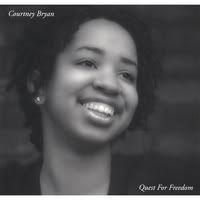
Courtney Bryan, a native of New Orleans, Louisiana, is a prolific and eclectic composer, pianist, and arranger. Her overall ambition in life is the "creation of uninhibited beauty." Her compositions are wide-ranging, including Solo Works, Jazz Quartet, Jazz Orchestra, Symphonic Orchestra, and even collaborations of dancers, visual artists, writers, and actors.

Courtney Bryan currently performs in and around New York with the Courtney Bryan Trio at venues like St. Nick's Pub, Nuyorican Poets Café, The Jazz Spot, Cecil's Jazz Club, A Gathering of Tribes Gallery, and Casa Frela Gallery. The Courtney Bryan Trio has also headlined at the Snug Harbor Jazz Bistro and Sweet Lorraine's Jazz Club of New Orleans, Louisiana. Courtney Bryan co-leads Duet, with vocalist TreZure Mone performing a mix of Jazz and Rhythm and Blues. She co-developed and co-leads the Courtney Bryan/Ez Weiss Jazz Orchestra in New York, a Big Band organization that is composed of volunteer musicians who are particularly interested in the revival of Big Band. Courtney works frequently with Rome Neal and the Marvtastic Ladies. In addition, she freelances with various jazz and R & B artists.


Recently, the Courtney Bryan Trio featuring saxophonist Donald Harrison opened for the Curtis Fuller/Louis Hayes Quintet and the Chico Hamilton Sextet at the Guild Hall in East Hampton, New York. Also, Courtney performed as part of Stanley Cowell's Piano Choir in the spring of 2006. Courtney's compositions have been performed at Lincoln Center’s Rose Studio and commissioned by Cleveland State University's Jazz Heritage Orchestra, Dennis Reynolds’s Brass Choir, Conrad Herwig's Scarlet Knight Trombone Ensemble, and by saxophonist Devin Phillips for his 2006 release Wade in the Water, which was titled after her arrangement. She was featured as composer with Kathy Randel's Artspotproductions in The New Orleans Suite performed at the Contemporary Arts Center of New Orleans, Louisiana in 2005. Courtney was also recently a finalist in the Beyonce Knowles All-Girl Band competition for her B-Day tour. Courtney Bryan has recently released her debut recording entitled Quest for Freedom featuring famed trumpeter Marcus Belgrave.


Courtney, a proud graduate of the Louis "Satchmo" Armstrong Jazz Camp of New Orleans, has academic degrees from the New Orleans Center for the Creative Arts (NOCCA) '00, Oberlin Conservatory '04 (bachelors in music composition), Rutgers University '07 (masters in jazz piano). Currently, Courtney is a Faculty Fellow at Columbia University of New York pursuing a doctorate of musical arts in music composition.

Courtney was featured along with Jason Marsalis and Irvin Mayfield in Geoffrey Poister's documentary Jazz Dreams. Courtney Bryan has performed in the New Orleans Jazz and Heritage Festival 2000-2002, in the Detroit Ford International Jazz Festival 2003 and 2004, in the Lansing Jazz Festival 2004, and in the Detroit Taste Fest 2005. She has also performed at the Cleveland Bop Stop and Nighttown of Cleveland, Ohio; the Serengeti Gallery of Detroit, Michigan, among other venues. In 2002, Bryan was selected as a NOCCA (New Orleans Center for the Creative Arts) All-Star along with such musicians as Nicholas Payton, Donald Harrison, Adonis Rose, and Clyde Kerr, Jr.


DOROTHY ASHBY


Every generation or so, some enterprising soul comes along determined to haul the concert harp out of the orchestra pit. Today, there's Joanna Newsom, the anti-folk singer and songwriter who just released the characteristically harp-intensive Ys. Before her, there was the mellow Debra Hanson-Conant, and before her, the New Age freak Andreas Vollenweider. Go back another few generations, and you run into the late Dorothy Ashby, the Detroit-born harp master who stands as one of the most unjustly under-loved jazz greats of the 1950s.
Ashby swings, plain and simple. When she plays some mid-tempo scooting-along tune, like her own
"Rascallity" (audio) all the stock riffage and jazz bravado common on so many records of this era disappears. Leading her chamber group, Ashby operates in an unassuming way, leaping through intricate arpeggios that no other jazz instrumentalist could attempt. Her single lines may not be terribly fancy, but she selects her notes carefully, and plays each one with a classical guitarist's stinging articulation. Ashby accompanies flautist Frank Wess on "You'd Be So Nice To Come Home To" (audio), sometimes snapping off chords as if the harp were just a bigger guitar, and at other times using its immense range to conjure an enveloping wash of sound in the background.
Given all the peak jazz experiences recorded around 1957 and '58 (Sonny Rollins' Live at the Village Vanguard, Miles Davis' Milestones, and so on), it's easy to understand why Ashby's In A Minor Groove didn't attract a massive audience. She and her groups of the day including Roy Haynes on drums, play pleasant, utterly typical and hardly earth-shattering chamber jazz. Still, it's a notably smart and polished version of typical, and anyone who can make a massive instrument like the concert harp dance — and use it to swing in such a cool, low-key way — deserves to be more than a footnote.

Born Dorothy Jeanne Thompson on
August 6, 1932 in Detroit, Michigan, Ashby grew up around music in Detroit where her father, guitarist Wiley Thompson, often brought home fellow jazz musicians. Even as a young girl, Dorothy would provide support and background to their music by playing the piano. She attended Cass Technical High School where fellow students included such future musical talents and jazz greats as Donald Byrd, Gerald Wilson, and Kenny Burrell. While in high school she played a number of instruments (including the saxophone and string bass) before coming upon the harp.
She attended
Wayne State University in Detroit where she studied piano and music education. After she graduated, she began playing the piano in the jazz scene in Detroit, though by 1952 she had made the harp her main instrument. At first her fellow jazz musicians were resistant to the idea of adding the harp, which they perceived as an instrument of classical music and also somewhat ethereal in sound, into jazz performances. So Ashby overcame their initial resistance and built up support for the harp as a jazz instrument by organizing free shows and playing at dances and weddings with her trio. She recorded with Ed Thigpen, Richard Davis, Jimmy Cobb, Frank Wess and others in the late 1950s and early 1960s. During the 1960s, she also had her own radio show in Detroit.
Ashby's trio, including her husband John Ashby on
drums, regularly toured the country, recording albums for several different record labels. She played with Louis Armstrong and Woody Herman, among others. In 1962 Downbeat magazine's annual poll of best jazz performers included Ashby. Extending her range of interests and talents, she also worked with her husband on a theater company, the Ashby Players, which her husband founded in Detroit, and for which Dorothy often wrote the scores.
In the late 1960s, the Ashby’s gave up touring and settled in
California where Dorothy broke into the studio recording system as a harpist through the help of the soul singer Bill Withers, who recommended her to Stevie Wonder. As a result, Dorothy was called upon for a number of studio sessions playing for such popular recording artists as Dionne Warwick, Diana Ross, Earth, Wind & Fire, and Barry Manilow. Her harp playing is featured in the song "Come Live With Me' which is on the soundtrack for the 1967 movie, Valley of the Dolls. One of her more noteworthy performances in contemporary popular music was playing the harp on the song "If It's Magic" on Stevie Wonder's 1976 album Songs in the Key of Life. She is also featured on Bill Withers' 1974 album, +'Justments.
Her albums include The Jazz Harpist, In a Minor Groove, Hip Harp, Fantastic Jazz Harp of Dorothy Ashby with (Junior Mance), Django/Misty, Concerto De Aranjuez, Afro Harping, Dorothy's Harp, The Rubaiyat of Dorothy Ashby, and Music for Beautiful People. Between 1956-1970, she recorded 10 albums for such labels as Savoy, Cadet, Prestige, New Jazz, Argo, Jazzland and Atlantic. On her "Rubaiyat" album, Ashby played the Japanese musical instrument, the
koto, demonstrating her talents on another instrument, and successfully integrating it into jazz.

Dorothy Ashby, died from cancer on April 13, 1996 in Santa Monica, California.

June 25, 2008

"MERGE"


Ahmad Jamal (born Frederick Russell Jones, was born on July 2, 1930, in Pittsburgh, Pennsylvania. A child prodigy who began to play the piano at the age of 3, he began formal studies at age 7. While in high school, he completed the equivalent of college master classes under the noted African-American concert singer and teacher Mary Caldwell Dawson and pianist James Miller. He joined the musicians union at the age of 14, and he began touring upon graduation from Westinghouse High School at the age of 17, drawing critical acclaim for his solos. In 1950, he formed his first trio, The Three Strings. Performing at New York's The Embers club, Record Producer John Hammond "discovered" The Three Strings and signed them to Okeh Records (a division of Columbia, now Sony, Records). He began using the name 'Ahmad Jamal' after his conversion to Islam in the early 1950s.

Considering his trio "an orchestra", Mr. Jamal not only achieves a unified sound, but subtly inserts independent roles for the bass and drums. The hallmarks of Mr. Jamal's style are rhythmic innovations, colorful harmonic perceptions, especially left hand harmonic and melodic figures, plus parallel and contrary motion lines in and out of chordal substitutions and alterations and pedalpoint ostinato interludes in tasteful dynamics. He also incorporates a unique sense of space in his music, and his musical concepts are exciting without being loud in volume. Augmented by a selection of unusual standards and his own compositions, Mr. Jamal impressed and influenced, among others, trumpeter Miles Davis. Like Louis Armstrong, Mr. Jamal is an exemplary ensemble player -- listening while playing and responding, thus inspiring his musicians to surpass themselves. Audiences delight in Mr. Jamal's total command of the keyboard, his charasmatic swing and daringly inventive solos that always tell a story.

In 1951, Mr. Jamal first recorded Ahmad's Blues on Okeh Records. His arrangement of the folk tune Billy Boy, and Poinciana (not his original composition), also stem from this period. In 1955, he recorded his first Argo (Chess) Records album that included New Rhumba, Excerpts From The Blues, Medley (actually I Don't Want To Be Kissed), and It Ain't Necessarily So -- all later utilized by Miles Davis and Gil Evans on the albums "Miles Ahead" and "Porgy and Bess." In his autobiography, Mr. Davis praises Mr. Jamal's special artistic qualities and cites his influence. In fact, the mid-to-late 1950's Miles Davis Quintet recordings notably feature material previously recorded by Mr. Jamal: Squeeze Me, It Could Happen To You, But Not For Me, Surrey With The Fringe On Top, Ahmad's Blues, On Green Dolphin Street and Billy Boy.

In 1956, Mr. Jamal, who had already been joined by bassist Israel Crosby in 1955, replaced guitarist Ray Crawford with a drummer. Working as the "house trio" at Chicago's Pershing Hotel drummer Vernell Fournier joined this trio in 1958 and Mr. Jamal made a live album for Argo Records entitled But Not For Me. The resulting hit single and album, that also included Poinciana -- his rendition could be considered his "signature". This album remained on the Ten Best-selling charts for 108 weeks -- unprecedented then for a jazz album. This financial success enabled Mr. Jamal to realize a dream, and he opened a restaurant/club, The Alhambra, in Chicago. Here the Trio was able to perform while limiting their touring schedule and Mr. Jamal was able to do record production and community work.

Clint Eastwood featured two recordings from Jamal's album But Not For Me — "Music, Music, Music" and "Poinciana" — in the 1995 movie The Bridges of Madison County.


Renair Amin was born September 13, 1975 in Philadelphia, Pa. Renair wears many hats. A prolific author, her works have appeared in various publications including GBF (Gay Black Female) Magazine, SABLE Magazine (of which she is a board member) and DEEP HUES e-zine. She has also been a featured columnist on the Nghosi Books, Femme Noir, Sistahs for Sistahs and Soulful Pen Xpressions websites and also appears in the Nghosi Books anthology, Longing, Lust & Loving.

As a spoken word artist, Renair has performed nationally, gracing the stage in cities including Rochester, NY, New York City and her hometown of Philadelphia, PA. She is also active in her church’s ministry. A member of Unity Fellowship in Brooklyn, N.Y., Renair is co-chair of the Performance Arts Ministry and chair of the David’s Poetry Ministry.

Recently, Renair Amin added entrepreneur to her list of talents with the forming of Pmyner, Ltd., a company created to provide services to the Lesbian, Gay, Bisexual and Transgender literary community. The website includes an online community forum and a radio station, Invisible Verse Radio, on which she hosts Myne Myc, a talk show showcasing LGBT spoken word artists, musicians and other community-related issues.

When I asked Renair what inspires her writing she responded, “My inspiration for writing is living. Whenever I had no one, I always had a pen.”
She currently resides in Bronx, NY.

June 22, 2008

"WOMEN IN JAZZ"

Jeanette Harris


Jeanette Bertha Harris, was born on March 9, 1979 in Fresno, California, to Floyd and Annette Harris. She showed an interest in music at an early age and by her 5th birthday she was playing the guitar in the church she attended. At age 6, she began taking piano lessons, and at age 9, during her 4th grade year, she started playing the saxophone. While other kids were spending their time playing video games and watching television, Jeanette could be found in her room practicing her saxophone.


Jeanette’s interest in music was supported and encouraged by her parents and her older brother Michael. Her father, Floyd Harris, Sr. plays the tuba and her brother, Michael, is a percussionist. In 1994, Jeanette, along with her father and her brother formed “The Harris Family Ragtime Band”. The band performed throughout California, from homeless shelters to big Dixieland festivals.


Jeanette was introduced to Latin Jazz while attending Roosevelt High School where she played the lead alto in the school’s Latin Jazz Band. She also played the piano in the Fresno City College Latin Jazz Band. During her high school years, she auditioned and was chosen to play in various honor bands, and while attending Bullard High School, she was the featured Saxophonist at one of Bullard’s appearances at the Monterey Jazz Festival. Upon graduation from high school, Jeanette received a number of scholarships which enabled her to pursue her dream of attending the prestigious Berklee College of Music in Boston, Massachusetts.


She continued to hone her skills on the saxophone while broadening her understanding of music. She was the lead Saxophonist in the Berklee College Female Big Band and played in various venues in Boston, New Hampshire, New York and Maine. She graduated from Berklee in 2001 with a Bachelor of Music with a major in Performance. Jeanette’s love of music and musical performance did not diminish. After her graduation from Berklee, she returned home to Fresno, California to start a smooth jazz band with her brother Michael Harris. Getting started was not easy, she would go to local clubs and ask if she could play at no cost to the club, but was turned down repeatedly. The “No Thank You" responses did not discourage her. She became more determined than ever and continued to master her saxophone and develop her own sound.

Then one day, a gentleman named Lionel Hawkins called to ask her if she would play his cigar shop, “Smoke Affair”. She accepted the invitation and made the most of it. During this same time period, the brother-sister team, (which consisted of Jeanette on saxophone and Michael on percussions), decided to put together their own show on a small stage at a local pizza spot on Fresno’s Fulton Mall. Long lost friend Patrick Olvera (bass) decided to Venture back from Boston to reunite with the brother sister duo for this show. With the help of family members, this night was a major success. Local clubs started calling and the local smooth jazz radio station, KEZL 96.7, invited Jeanette and her band to play at the Riverbend Jazz Festival. The Jeanette Harris Band has played in a number of Jazz Festivals, including the “The Hollywood Park Jazz Festival”, “The Inglewood Jazz Festival”, “The San Diego Street Festival”, the “Riverbend Jazz Festival”, the “China Town Jazz Festival” and the “African Village Festival”.

She’s opened for and/or played with the following smooth jazz greats; The Rippingtons; Eric Marienthal; Kirk Whalum; Eloise Laws; Denise William; Phil Perry; Howard Huit; Andre Fischer; Everette Harp; Paul Jackson Jr.; Veretta Hathaway; Debra Laws; Najee; Michael Ward; and Will Barrow. She is currently playing at different spots across the country and hopes to add international venues to her schedule soon. Jeanette released her first CD, “Here and There” on the J&M Record label. Her second CD, “Jeanette Harris Live at Platinum Live” and her newest release, “Down Route 99”, are on the Sweet Music record label. If you like good music, you will enjoy these CD’s.


ELISE WOOD - HICKS


ELISE WOOD - a flutist who hails from Philadelphia, has appeared as featured soloist, band-leader and band-member with such notables as David Murray, Archie Shepp, Butch Morris and Arthur Blythe, Sir Roland Hanna, Spirit of Life Ensemble and most frequently with her partner of two decades, John Hicks. She has recorded for Mapleshade Records, Landmark Records, Evidence Records and the recently established record company with John Hicks, HiWood Records. International festivals and tours include Japan, Finland, Italy, France, and most recently Taiwan. Documentary films such as "Femme du Jazz" and books "Madame Jazz" as well as magazine articles in WindPlayer and Fa La Lut and Jazz Hot place Ms Wood in the cutting edge of this creative American art form, Jazz. With Mr. John Hicks was a further collaborative album called "Beautiful Friendship," a duet cd which is composed of standard love songs and was also released on their label HiWood. A further Sextet recording called "Sweet Love of Mine" (Highnote) with John Hicks was released in Jan. 2007 - the first album to be released in his memory.

For the last two years Ms. Wood has dedicated herself to memorializing the life and music of her late-husband/partner with creation of the John Hicks Legacy Band. This five- to six-piece band is composed largely of alumni of the John Hicks ensembles and plays exclusively the repertoire of John Hicks. A recording of his music as performed by the Legacy Band will soon be released on Highnote records.
Ms. Wood also works with Jazz Foundation of America in the Education program with children from the ages of 8 - 14. She is also and active member of the NY Jazz Flutet, a six flute jazz ensemble that includes an instrumentation from contra-bass flute to piccolo w/drums (to be featured in the National Flute Convention 2006).

The Star Ledger "With Elise's flute sound and the way Curtis (Lundy) works from the bass bottom, I … let them surround me with the sound…

"John Hicks, Zan Stewart The Washington Post"…best revealed with Hicks' well-known ballad, "Naima's Love Song" which fully integrates the sound of the trio, flute and string section creating a lovely weave of colors and texture and heartfelt emotion.
Mike Joyce The Washington Post "Hicks eloquently collaborating with flutist Elise Wood, who was largely responsible for a haunting alto flute reprise of Hoagy Carmichael's "Skylark"
Amsterdam News "Wood overwhelmed the audience with her rendition of Billy Strayhorn's Star-Crossed Lovers and (Bobby) Watson's extraordinary tendering of the classic " Soul Eyes" provided one of the great performance highlights of the festival".- Clarence Atkins

June 17, 2008

Jazz Vocalists Vol 1 - SUSAN KREBS


There’s a growing buzz about vocalist Susan Krebs’ just released studio recording of Jazz Aviary - a celebration of birds and of the universal music that we share. Conceived and performed by Suze in collaboration with the Soaring Sextet, some of L.A.’s finest musicians, Jazz Aviary is the culmination of three years of various concert incarnations.

“Susan Krebs has nothing but fondness for our feathered friends - and expresses her joyous affection magnificently throughout this fascinating concept project... irresistible offerings from a formidable jazz artist.” (AMG)

“Krebs’ interpretive passion, intelligence and love for the project can be heard throughout.” (Jazz Improv/Bob Gish)

“Jazz Aviary is a fascinating musical presentation.” (LA Times/Don Heckman)

“One of the most refreshing, interesting, stimulating shows I’ve ever attended... Krebs and her amazing musicians created something of singular beauty.” (LA Jazz Scene)

Suze explains her long-time fascination with birds: “I remember as a kid, lying stretched out in a hammock between two grand sycamores, watching the birds, listening to the birds - digging the birds! Birds and humans have shared this planet for many millennia. Our impulse to sing and our desire to fly reflect this deep and ancient connection with the avian tribe. The eloquent biologist, E.O. Wilson, writes that the preservation of the world lies in understanding and appreciating the wonder and awe that nature arouses. With Jazz Aviary - a concert of musical ornithology, spoken word and birdsong - I want to express the wonder and awe specifically that birds arouse.”

Born and raised in Baltimore, Suze grew up in a home filled with the sounds of Bach, Beethoven, Gilbert & Sullivan, Broadway musicals and the blues of Bessie, Billie and Ella. Graduating from Hollins College with a BA in Drama & Dance, Susan went on to spend her twenties in New York City – studying acting with the extraordinary Uta Hagen, appearing in various Off-Broadway plays and musicals, TV commercials, and performing with the improvisational theater company, War Babies. The New York clubs offered her a jazz education, presenting the likes of Duke Ellington, Sheila Jordan, Jackie & Roy, Alberta Hunter, the Mel Lewis/Thad Jones Big Band, Carmen McRae.

In 1976, Suze and her fellow War Babies re-located to Los Angeles for a TV series. She chose to remain in L.A. and make it her new home – delighted that she could garden and hike – and that there were greater work opportunities. Over the years, Suze has appeared in dozens of TV shows (Numbers, The West Wing, ER), Films (Million Dollar Baby, 28 Days), Animation, TV & Radio commercials, and Theater, including her own solo musical revue, Lunar, the all-women’s improvisational company, The Wims, and the contemporary opera, A String of Pearls, both in L.A. and at Carnegie Hall.
Throughout Suze’s career as an actor and improviser, she was also occasionally performing as a vocalist, and studied for several years with the fine jazz singer and teacher, Sue Raney. – Then, in 1995, seeking clarity and artistic direction during a four month “middle years” retreat in Jackson Hole, Wyoming, Suze’s sense of herself as a “jazz gardener” came into being - which she explains as “being about the art of becoming - whether working with plants or music or with oneself - to dig down, to cultivate, to encourage growth, to thrive and flourish, and eventually to let go and begin the cycle anew.” And so, she returned to L.A. with the intent of devoting herself to the art of jazz singing both as a student and as a performer in order to tell her tale through song. She now performs regularly throughout Southern California.

“A talented singer with wit and energy...” (LA Times)

“For singer-actress Susan Krebs and her quartet of fine musicians, their goal has been simple: to be all-out entertaining whenever and wherever their gigs take them...” (LA Jazz Scene)

Her debut album was Jazz Gardener (Sea Breeze 1999)

“Categorizing Krebs’ voice is not easy; it is filled with emotion ranging from a deep, throaty hue to a girlish, higher-pitched tone. Krebs’ vocals swoop, drop behind the beat, and generally stay just a little off center... After she delivers a song, Krebs leaves nothing on the table.” (AMG)

Then came What Am I Here For? (GreenGig Music 2002).

“Krebs’ style suggests the influence of singers like Sheila Jordan, with a behind the beat approach that creates a sense of drama. As she has her way with each lyric, her slippery phrasing (check out “Out of This World’) creates an engaging presence. Further, there is a deep soulful emotionalism and Blues inflection that suits her alto range quite well. For example, Krebs is at her most distinctive on passionate, melancholy tracks like ‘Nature Boy’ and ‘Good Morning Heartache’. She also demonstrates her keen handling of lyrics on tracks like the ubiquitous ‘The Way You Look Tonight’. (Cadence)

Both recordings were created by Suze and her group of superb L.A. based musicians, including her longtime drummer/producer, Jerry Kalaf, and the saxophonist extraordinaire, Gary Foster.
Suze’s latest project is Jazz Aviary (GreenGig Music 2007) – veritable musical ornithology. A concert, conceived and performed by Suze in collaboration with the Soaring Sextet, Musical Direction by Rich Eames and Co-Produced with Jerry Kalaf, it is now a unique and beautiful recording.

May 28, 2008

Old School - Back Where We Started

KENNY GARRETT

Kenny Garrett,Low-keyed and soft-spoken, lets his music do the talking, and he communicates clearly through his post-bop saxophone styles, exuding easy listening from his alto horn. After years of apprenticeship with legendary jazz bands including the Jazz Messengers and the Woody Shaw Quintet, Garrett came to prominence during the 1980s as Miles Davis's sideman. After Davis died, Garrett moved into his own spotlight as the bandleader of the Kenny Garrett Quartet. In addition to his various album releases during the 1990s, he contributed to dozens of works by his fellow jazz musicians. He is an incessant philosopher, an innovator, a composer, and a musical arranger.

Garrett was born in Detroit, Michigan, on October 9, 1960. He was the second of four siblings. Musically, his parents were heterodyne; his mother enjoyed rhythm and blues, while his father listened to jazz. Garrett's father was a professional saxophone player, and as a result, Garrett developed an early interest in music. His father taught him the scales, and Garrett started to play his own saxophone at the age of nine or ten. He enjoyed the instrument and brought it with him to school, playing whenever he found the opportunity. Garrett got his original groove in his hometown of Detroit, where he worked with Marcus Belgrave. Belgrave, well known for his community spirit, mentored Garrett for a time.

In high school, Garrett played gigs around town on the weekends, and predictably each Monday morning he stumbled tardily into the classroom. Despite his youth, he had matured into an old-school jazzman by the time he graduated, maintaining a reserved and skeptical cynicism for academia. In 1978 he gained acceptance to the famous Berklee School of Music. Coincidentally, he received an invitation to join Mercer Ellington on tour. Garrett subsequently chose not to attend Berklee and elected instead to tour with the Duke Ellington Orchestra. Garrett avowed repeatedly that he never regretted the decision to forego school because his experience with the orchestra proved invaluable and contributed to his development as a uniquely skilled musician. From the Ellington Orchestra, Garrett's career led him to stints with Freddie Hubbard's band and with Woody Shaw.

After many months on the road, Garrett moved to New York City in 1980. There he played with a band called Out of the Blue. He cut his debut album on the Criss Cross label as a bandleader with the Kenny Garrett Quintet. The album, released in 1984, was called Introducing Kenny Garrett. Around that same time, Garrett joined with Art Blakey's Jazz Messengers. In 1986, still with Blakey, Garrett earned a spot as sideman for Miles Davis. He worked with Davis for five years and developed a singular musical rapport with Davis. Additionally, Garrett continued as a bandleader, recording for the Atlantic Jazz label. He released Prisoner of Love in 1989 and African Exchange Student in 1990. When Davis passed away in 1981, Garrett stepped full speed into the bandleader's shoes, having apprenticed for nearly 20 years and having worked with the great jazz pjayers of history.

For the duration of the decade, Garrett settled into a quartet with Nat Reeves on bass, drummer Jeff 'Tain" Watts, and Kenny Kirkland on piano. Garrett recorded a handful of albums on the Warner Brothers label during the remainder of the 1990s, including Black Hope in 1992, Trilogy in 1995, and Pursuance: The Music of John Coltrane in 1996. His next two albums—Songbook in 1997 and Simply Said in 1999—were written almost exclusively by Garrett himself. In July of 1997 he and his band spent three days in the Netherlands at the North Sea Jazz Festival at The Hague, and in June of 1998 they performed on the Symphony Space concert ticket at the JVC Jazz Festival along with jazz violinist Regina Carter. Following Kirkland's untimely death late in 1998, the Kenny Garrett Quartet regrouped to include former Toni Braxton drummer Christopher Dave, bassist Nat Reeves, and Shedrick Mitchell on piano. Pianists Nick Smith and Mulgrew Miller also contributed guest performances.
Garrett paid homage openly and often to his predecessors and heroes in American jazz. His 1996 remembrance of John Coltrane, called Pursuance: The Music of John Coltrane, featured Pat Metheny on guitar, drummer Brian Blade, and Rodney Whitaker on bass. The recording earned recognition as the Jazz Album of the Year, according to a readers' poll from Down Beat. Garrett himself was named Alto Saxophone Player of the year in the same poll. His self-produced 1999 release, called Simply Said, reflects the influence of his half-decade stint with Miles Davis.

It is Garrett's philosophical attitude that rules his music. He is a paradoxical purist in the juxtaposed arena of jazz and subscribes to an idealistic school of thought and lets the truth resound from his horn. He is a "righteously devoted musician working toward a purpose somewhat higher than mere entertainment," Down Beat's Howard Mandel said of Garret. "His horn's cries are honest...." Despite his traditional, "hard-knocks" approach to performing jazz, Garrett refuses to discount the validity of other music styles and encourages musicians to experiment with popular music as well as jazz, in a quest for new and stimulating arrangements. "Young musicians shouldn't be afraid to take the opportunity to play popular music... It doesn't mean you have to stay there," he confided to Martin Johnson of Down Beat. Garrett's own compositions often surprise his listeners because his music adheres closely to rhythm and form, in apparent opposition to Garrett's impressive improvisational style and reputation. Billboard's Steve Graybow said that Garrett is "one of the music's most dynamic and adventurous players...." yet he has composed "songs that he hopes will nurture the next generation of jazz musicians." On Songbook, his 1997 Warner Brothers release, Garrett revealed what he called his "softer side," according to Mandel. "I'm trying to tell a story in a different way with the same jazz language my heroes employed.... That's why I try to mix my music up [and] play something for everybody," Garrett said.

NEO SOULJAH

Classifying herself as an “Artistic Poet”, NeoSouljah was born Unnita [Yah ‘KNEE Tah] Chambers in Cleveland Ohio April of 1962 and began singing almost as soon as she could talk. Having been a vocalist for 39 of her 45 years on Earth, her talents have been lent to nearly every style of music you can name: Jazz, Neo-Soul, Funk, R&B, Rock, Country & Western, Rap, Hip Hop, Gospel, Madrigal, Classical and Hymnal, as both lead and background vocalist, and vocal arrangement. As a Singer, this Diversity has afforded her the ability to work with some well known Ministries and Artists including HBO Def Poets Abyss and Georgia Me . As a performer, NeoSouljah has appeared in underground productions of The Wiz, A Brand New Me, a movie production "Water My Flowers", and is a member of the Christian Comedy Association.

But it was her craft of Songwriting that eventually led her to the love affair she now holds with Poetry. This gift was discovered during a showcase in an International music conference hosted by Multi Award winning Gospel artist Babbie Mason.

As a poet, NeoSouljah, or “Neo” as she is nicknamed, has not only held her own within the Open Mic circuit winning several slams, she has been found on the mic at local churches as well, given room to ‘tell it like it should be’. Sharing her years of knowledge as a stage performer with her poetic peers, she regularly holds poetry sessions in her home. Called “Confessions” these nights are filled with food, laughter, poetry, writing contests, information, and performance tips as she coaches those alongside and coming behind her. These sessions have also been visited by poets within the National Slam Poetry and HBO Def Poetry community of artists.

Outsane, as she describes herself, Neo boldly addresses the church and it’s biases, our constant decay of morals, and everyday life issues with pictorial prose that is intellectual, funny, educational, and sobering. A firm believer that you can't talk about what you don't know about, every rhyme crafted is from her experience as a Woman, Lover, Friend, Counselor, Minister, and Artist. But she is best known for her Erotiq poetry which addresses issues of the heart, mind, and body, and is Sensual without being vulgar. Her craftsmanship and knowledge of intimacy within a relationship has led The National Society of Black Engineers National Convention to called upon her several times to serve as a Clinician for a Standing Room Only workshop she has entitled: Sex And The City: Being Healed from E.T.D.’s. [Emotionally Transmitted Diseases]. designed through poetry and interactive exercises to help the participants heal from the scars of verbal abuse and develop healthy communication skills and relationships that branch from the home to the workplace, church, and neighborhood.

Currently NeoSouljah is working on a CD, as well as production of various projects both within her own company [One Love Ink], and alongside her business partner, Executive Talent Consultant for HBO Def Poetry Jam, Walter T. Mudu of Mudu Multimedia. Be sure to look out for her project “The Instrument – Me” this summer, as well as a Devotional Journal infused with Poetry later this year.

May 19, 2008

IMAGINE

NORBERT KRAPF

NORBERT KRAPF was born in 1943 in Jasper, Indiana, a German community. He graduated from Jasper High School and received a B.A. in English from St. Joseph's College, Rensselaer, IN. He received his M.A. in English from the University of Notre Dame and also his Ph.D. in English and American Literature, with a concentration in American Poetry. He taught at the C. W. Post Campus of Long Island University 1970-2004, where he is now emeritus Professor of English, was Poet Laureate 2003-2007, and directed the C. W. Post Poetry Center. He twice served in Germany as a Senior Fulbright Professor of American Poetry, at the Universities of Freiburg and Erlangen-Nuremberg. He was also a U.S. Exchange Teacher at West Oxon Technical College, England.

Since 1976 Norbert Krapf has written or edited 20 books, two of which are his translations from the German. His most recent publication, a full-color hardcover coffee-table book, from Indiana University Press, is a collaboration with Darryl Jones, Invisible Presence: A Walk through Indiana in Photographs and Poems (2006). Fifteen of these books are collections of his own poetry, including Somewhere in Southern Indiana: Poems of Midwestern Origins (1993), Blue-Eyed Grass: Poems of Germany (1997), and Looking for God's Country (2005), all available from Time Being Books, and Bittersweet Along the Expressway: Poems of Long Island (2000) and The Country I Come From (2002), sixty poems set in Indiana. He is the editor/translator of Beneath the Cherry Sapling: Legends from Franconia (1988), a collection of folktales set in his ancestral region, and Shadows on the Sundial: Selected Early Poems of Rainer Maria Rilke (1990). He is also the editor of a book of writings about the first important American nature poet, Under Open Sky: Poets on William Cullen Bryant (1986).

In December, 2007, Acme Records of Bloomington, IN released Norbert Krapf and jazz pianist-composer Monika Herzig’s CD Imagine - Indiana in Music and Words, which includes a 20-page booklet with texts of all 14 poems and performance photo collages in color. In April, 2008, The Indiana Historical Society Press will release his prose memoir, The Ripest Moments: A Southern Indiana Childhood (275 pp. hardcover, with ca. 70 black and white photographs, $15.95); and in October, 2008, under the Quarry Books imprint, Indiana University Press will release Bloodroot: Indiana Poems, a selection of 175 Norbert Krapf poems about Indiana written 1971-2007, with 60+ black and white photographs by David Pierini.

In April of 2005, Time Being Books released his collection Looking for God's Country, 85 poems set in Indiana and Germany. Included is a cycle of 26 poems inspired by the black-and-white photographs of Franconian photographer Andreas Riedel. Poet Helmut Haberkamm, who wrote the script for a 2001 Radio Bavaria feature on Norbert Krapf's search for his Franconian roots, has translated many of Krapf's poems into German.

The revised, expanded edition of Finding the Grain: Pioneer German Journals and Letters from Dubois County, Indiana, which includes the letters of Joseph Kundek, the Croatian missionary who colonized Dubois County with German Catholics, was published in 1996 by the Max Kade German-American Center, Indiana University Purdue University Indianapolis. In 1998, Rain Crow Publications of Chicago published The Sunday Before Thanksgiving: Two Prose Memoirs, nominated for a Pushcart Prize. He is working on a book of essays about poetry, place, and ethnic heritage, Where It All Began, and a young adult novel about an old German immigrant in southern Indiana, The Bells of St. Michael's.

In 1999 Norbert Krapf received the Lucille Medwick Memorial Award from the Poetry Society of America for the poem "Fire and Ice". He has received an honorary doctorate of letters from his alma mater, St. Joseph's College, the David Newton Award for Excellence in Teaching from Long Island University, and a Trustees Award for Scholarly Achievement from LIU. English artist Martin Donlin selected his poem "Back Home" to be part of a large stained-glass panel for the new Indianapolis Airport, scheduled to open in late 2008.

At the beginning of 2006, Norbert Krapf became a board member of Etheridge Knight, Inc., which promotes the arts for youth, youth at risk, adults, seniors, disabled and incarcerated individuals, and residents traditionally underserved by the arts community. EK Inc. pays tribute to the arts community and the legacy of the late African American Indianapolis poet Etheridge Knight by providing a diverse artistic environment in the interdisiplinary arts for people of all cultures. Guests at the annual Etheridge Knight Festival, begun in 1992 by the poet's sister Eunice Knight-Bowen, have included Gwendolyn Brooks, Amiri Baraka, Haki Madhubuti, Sonia Sanchez, Toi Derricotte, Kevin Young, Allison Joseph, Martmn Espada, and many others.

On Long Island, the C. W. Post Campus Bookstore (Barnes & Noble) has the best selection of his publications, but Barnes & Noble, Manhasset; Borders, Westbury; the Book Revue, Huntington; and Canio's Books, Sag Harbor also carry his books. In Jasper, IN., Flower Stall Hearth and Home (Southgate) and the Dubois County Museum have a generous selection of his titles. Barnsandnoble.com carries his books as do Borders.com and Amazon.com, which lists reviews and includes an author interview. Individuals may order Somewhere in Southern Indiana, Blue-Eyed Grass and Looking for God's Country (2005) from Time Being Books (866-840-4344) at a discount. The Country I Come From is available at a discount price from Archer Books. Invisible Presence is available at most bookstores and is substantially discounted by Amazon.com.

Norbert Krapf's papers, including his literary correspondence and manuscripts, are housed mainly in the Rush Rhees Library, Univ. of Rochester, but also in the special collections at IUPUI, Univ. of California San Diego, Stanford Univ., and the Univ. of New Hampshire. The Indiana Historical Society has a collection of audio- and videocassettes of his radio and TV and other readings and interviews that are being converted to CD, and the Dubois County Museum holds his collection of family history materials and documents, including memorabilia from grade school, Boy Scouts, high school, and college.

MONIKA HERZIG

Monika Herzig, was Born: June 12, 1964
In 1987, the pedagogical institute in Weingarten, Germany awarded a scholarship for a one-year exchange program at the University of Alabama to one of their students, jazz pianist Monika Herzig. Together with her partner and guitarist Peter Kienle, she arrived in the States on a one-way ticket, with one suitcase of belongings and one guitar in August 1988.

Since then she has completed her Doctorate in Music Education and Jazz Studies at Indiana University, where she is now a faculty member. As a touring jazz artist, she has performed at many prestigious jazz clubs and festivals, such as the Indy Jazz Fest, Cleveland's Nighttown, Louisville's Jazz Factory, the W.C.Handy Festival, Jazz in July in Bloomington and Cincinnati, Columbus' Jazz & Rib Fest, to name just a few. Groups under her leadership have toured Germany, opened for acts such as Tower of Power, Sting, the Dixie Dregs, Yes, and more.

Recently she has received her third “Individual Artist Grant” from the Indiana Arts Commission in support of her newest CD project. Her previous release In Your Own Sweet Voice �” A Tribute to Women Composers has received much praise. Thomas Garner from Garageradio.com writes, “I was totally awed by the fine musicianship throughout”. As a recipient of the 1994 Down Beat Magazine Award for her composition “Let's Fool One” and with several Big Band Arrangements published with the University of Northern Colorado Press, Herzig has also gathered international recognition for her writing skills.

The current repertoire of the Monika Herzig Acoustic Project includes originals and arrangements of standard repertoire, such as Carole King's “You've Got a Friend”, Kern/ Hammerstein's “The Song Is You”, and Charlie Parker's “Yardbird Suite”. The Monika Herzig Trio can be heard every Thursday and Saturday at Rick's Cafe Boatyard at Eagle Creek Reservoir in Indianapolis. For current tour listings and sound samples/ videos visit www.monikaherzig.com.

PRESS QUOTES; "Distinctive originals and well-chosen standards reveal Herzig's warmhearted, reflective side and her cleverly playful nature." Nancy Ann Lee Jazz Times contributor and co-editor of MusicHound Jazz: The Essential Album Guide

“A lovely example of a thoroughly schooled, thoroughly modern jazz pianist.”
Cherilee Wadsworth Walker, Eastern Illinois University

"The lady can get down and play!"
John W. Patterson, AAJ Fusion/ Progressive Editor

Her Awards include; 1994 Down Beat Magazine “Best Original Composition” Winner for Let's Fool One 1994-1996 Two times finalist with BeebleBrox and winner with Oliver Nelson jr. in WTPI Winter Jazzfest Competition, Indianapolis 2000, 2003, 2005 Individual Artist Grant recipient, Indiana Arts Commission

It was such a pleasure to feature this fantastic pianist, composer, arranger, on Spotlight On Jazz And Poetry!

May 08, 2008

VESSELS OF LOVE

MANDIKA


Mandika, born and raised in Knoxville, Tenn., has always been a poet even when it wasn’t an official title. She began writing poetry at a very young age and didn’t pick up a pen to write again until five years ago and she hasn’t looked back. She feels it’s liberating to write poetry, even more so to speak it. “To speak what rests on your mind and heart is one of the greatest gifts God gave us.” She says. “We were meant to be his vessel and share his message as an act of love for him.” This is what Mandika does with poetry and spoken word. She’s a vessel of his love.

Mandika Flow, is a jazz enthusiast, writes it, eats it and speaks it with every opportunity she has. her favorite artists are Miles Davis first, Jeff Bradshaw and Roy Hargrove. Favorite jazz vocalist, Al Jarreau, Maysa and Martine Girault but I have so many.

Mandika’s poetry has an affinity toward the spiritual realm. She feels that every one should learn and examine the higher being. In her case, a being Supreme over human beings She says, “It’s clear to me and the track record speak that we need guidance and don’t know what the heck we are doing.”

Mandika is warm and loving with people in general if they allow her, if not she’s all about hers and keeps it moving. The mortal heroes in her life are her Mother, her queen and her precious and beautiful, seventeen year old niece whom is beyond her years, intelligent and the sweetest young thing you could ever meet. She would be considered handicapped as she is sight impaired but if you met her you would see and understand differently.

"Being a poet is rewarding in that people gravitate toward you and feels your spirit, primarily because it appeals to a trait or quality in them." she says "I’ve received enough accolades in the manner of certificates, trophies, merits but the biggest reward is in being able to write in a way that makes anything translate into something special that everyone can relate to." Mandika has a collection of poetry books/short stories featured on: http://stores.lulu.com/mjaton04

As a spoken word artist she’s not especially fond of her tonal quality however, it bears a certain soulful, honesty and expressiveness that everyone who hears her would agree is truly special. Mandika is a member of the Poetic Voices family whom she credits with helping her to develop that voice. "Thank you Truth Theory, you really are the truth. Also, a special thanks to Ms. Safiyyah Amina Muhammad and Ms. Lovely Brown for being Sistah’s among Sisters. I got nothing but love for you."