April 07, 2007

GEORGE BENSON


George Benson was born March 22,1943 in Pittsburgh, Pa. He is an American musician, whose recording career began at the age of 21 as a jazz guitarist. He is however, better known to the public at large as a Pop/R&B singer, famous for such hits as "Give Me The Night", "Lady Love Me (One More Time)", "Turn Your Love Around", "In Your Eyes" and "This Masquerade", amongst many others. George Benson started out playing straight-ahead instrumental jazz with organist Jack McDuff. Benson got his first experience playing with his several-year stint with McDuff's group. At the age of 21, Benson recorded his first album as leader, The New Boss Guitar, with Brother Jack McDuff on organ.

Benson's next recording was It's Uptown with the George Benson Quartet with Lonnie Smith on organ and Ronnie Cuber on baritone sax. This album showcases Benson's talent in constructing swinging bebop lines at blistering tempos. Benson followed it up with "The George Benson Cookbook," also with Lonnie Smith and Ronnie Cuber.

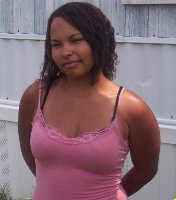
ELLE "ThatChick" JOHNSON


ELLE, also known as THAT_CHICK, has been singing and writing poetry for many years. She has been blessed to headline many packed showcases at the once famous now defunct Sweetwaters Club as well as opening for many acts including Ray, Goodman and Brown and the jazz group Pieces of a Dream. She has had the good fortune to be featured on the CD of jazz drummer extraordinaire Lenny White. She has also regularly performed on Paltalk Internet radio - which has an international audience.

Elle is currently working on projects with up and coming producers and artists. It is the music of Chaka Khan, who with her vocal skill and ability to relay her emotions with a song that made it clear to Elle that she had to sing. “Chaka Khan is the reason I sing today,” Elle responds when asked why she loves writing and performing. “Chaka Khan is the truth!” Natalie Cole, Patrice Rushen Anita Baker, Sade and Brenda Russell have also been big influences in Elle’s musical life. “Sade’s smooth throatiness talks to me – shows me it’s ok not to sing happy songs all the time, while Brenda Russell’s music proves that people really will listen if they can relate to the things I write about.

When listening to Elle you hear the smoothness of Sade, the fire of Chaka Khan, the simplistic truth of Brenda Russell’s writing style and a dash of Anita Baker’s sultry tones. It’s truly a “melting pot of emotions” for your ear.

Presently THAT_CHICK Elle hosts a radio program entitled "Taste of Romance". She is a true lover of love songs... not the same old same old love songs, but when "I love you" is said in a unique way - it gets her attention. Although recently becoming single Elle still believes in love and it shows…Most of Elle’s poetry is about love, however she also writes about life in general - up's, down's disappointments, as well as life’s high points.

Elle is currently working on a project, which will blend poetry, and soulful music that is sure to reach anyone who has a heart - a poetry/music CD that she has waited a very long time to do. Elle says “Life is beautiful...even when its raining, there is something to smile and be thankful about. Take each moment and make a memory.”

April 06, 2007

MULGREW MILLER


Mulgrew Miller is an American jazz pianist born in 1955 in Greenwood, Mississippi. In a childhood filled with early musical experiences and constant meddling in jazz piano, Miller is said to have set his mind definitely to becoming a jazz pianist after hearing a record by Oscar Peterson (a first for Mulgrew). “It was a life changing event. I knew right then that I would be a jazz pianist”. Mulgrew did indeed become a jazz pianist, and has adopted more from Peterson than his profession. Much of Mulgrew's playing has the same technical prowess so often connected with Peterson. Currently, Mulgrew maintains a working trio with Derrick Hodge on bass, and Karriem Riggins on drums. With this trio he has released two albums to date (both on the label Max Jazz Records): Live At Yoshi's Vol. 1 (2004), Live At Yoshi's Vol. 2 (2005).

Mr. Miller, has been hired as the new director of the jazz studies program at William Paterson University, in Wayne, N.J.

On May 20, 2006, Miller was awarded the honorary degree of Doctor of Performing Arts at Lafayette College's 171st Commencement

ARINE WARD

ARINE WARD, better known throughout the poetry world as Skee Wee 1908 was born November 6, 1973 to the Bishop and Mrs. James Ward, right outside Music City, TN. A 1996, graduate of TSU, with a nursing degree, a proud member of Alpha Kappa Alpha Sorority, INC. Arine heads the family business as well as maintains employment within the travel industry. Arine is single and makes her home in Houston, Texas.

Arine says she has been writing all ofher life. But within the last six months, she has taken on the challenge of recording her work. After hosting an open mic poetry hour on Paltalk.com, in the Black House of Music and Soul Jams, she saw the excitement and eagerness of poets striving for a better tomorrow. She was encouraged to step out and see which direction her work could actually flow. After speaking with a beats producer, and learning the ins and outs of the poetry world, networking began to flourish. Soon people who had no Idea she existed started inquiring of my next read. From there She became and active member of Nipps Poetic Nook on paltalk.com, Chocolate Nipps, took Arin under her wing, and together they make things happen.

When she is able, Arine does a lot of volunteer work, especially within the developmental pediatric units. Her ultimate favorite pasttime, is running. Arine loves to run. You can catch her in gyms and tracks coast to coast just running!

Currently though, she is recovering from ACL/Cartilage surgery, and with time on her hands, she has been able to pour more energy into the craft that has given her the outlet to heal and work all at the same time. Arine is currently working on her first CD Project, entitled “The Rebirth of Me” a brief history of this CD, is more of a testimonial from where she's been to the person she is today. Overall being the Bishops daughter, to being kidnapped, Arine is a survivor with a story.

March 30, 2007

MARION Q. ROZELLE


Marion Q. Rozelle aka PoeticLovette, was born in Columbus, Ohio on May 19th, 1950. She attended and graduated from East High School; afterwards she attended Columbus State College for a degree in Law Enforcement.

She has been employed with the State of Ohio for twenty-two years and as an Entrepreneur for fourteen years. Marion is the Union’s Chief Steward, Board Member Association and Volunteered Liaison within the prison system.

She married at a very young age and was blessed with five wonderful children who have blessed me again with several wonderful grand-children. Marion is currently a widow.

Her greatest fear is God.

Poeticlovette is artistic, intelligent, amusing, self-disciplined and enthusiastic. Besides poetry, she loves music, computers, motorcycles, and ventures away from home.

Marion was introduced to poetry at the age of eleven. I was listening to an old 78 record that belonged to my grandmother and a man was reciting a poem with music in the background. It captivated me so much that I wrote the poem down; I had to restart it over and over to get all the words, but I accomplished the task and to this day I can still narrate that poem from memory. Thus begin my journey into writing poetry.

In regards to music Marion is a devoted listener of jazz and old school.
The jazz artists that she enjoys listening to are Cannonball Adderly, Noel Pointer, Mary Stallings, and Roy Ayers.

The correlation between jazz and poetry is that they can be used in consistency with one to the other or as stimulation for one to the other.
Rhythm, tenor, and lyricism are the property of both and share the nuance of creativeness. Our culture is rich in the history of poetry and jazz, thus making it important to continue that trend. As well as being entertaining, they are a learning and teaching tool for our next generations to come.

VINCENT HERRING


Vincent Herring has developed into a virtuoso with a voice that is uniquely intense and vigorous with energy and direction. He is considered one of the premier saxophonists of his generation.

Vincent first toured Europe and the United States with Lionel Hampton’s big band in the early 1980’s. As he developed his musicianship he began to work with Nat Adderley a liaison that continued for nine years. Along the way he worked and / or recorded with Cedar Walton, Freddie Hubbard, Dizzy Gillespie, Louis Hayes, Art Blakey and The Jazz Messengers, Horace Silver Quintet, Jack DeJohnette’s Special Edition, Larry Coryell, Steve Turre, The Mingus Big Band, Kenny Barron, Nancy Wilson, Dr. Billy Taylor, Carla Bley, and John Hicks. Other special concert and projects have included special guest soloist engagements with Wynton Marsalis at Lincoln Center. Vincent also appeared as a guest soloist at Carnegie Hall with John Faddis and The Carnegie Hall Big Band.
While amassing these impressive credentials, Vincent continues to develop his own voice and style. In addition to the legends and peers he has worked with Vincent is inspired by a collage of diverse musical influences. Which is reflected in his original band called Earth Jazz Agents.
Vincent is also involved in Jazz education. He is currently on staff at William Patterson University as well as conducting master classes and jazz workshops at Juilliard. Vincent has also conducted master classes on jazz improvising at Duke and Cornell Universities.
Vincent has recorded 15 CD’s as a leader and can be heard on over 200 as a sideman.

March 29, 2007

DONALD BYRD


Donaldson Toussaint L'Ouverture Byrd II was born December 9, 1932 in Detroit, Michigan. He performed with Lionel Hampton before finishing high school. After playing trumpet in a military band during a term in the United States Air Force, he obtained a bachelor's degree in music from Wayne State University and a master's degree from Manhattan School of Music. While still at the Manhattan School he joined Art Blakey's Jazz Messengers, replacing Clifford Brown. After leaving the Jazz Messengers in 1956 he performed with a wide variety of highly regarded jazz musicians, including John Coltrane, Sonny Rollins, Herbie Hancock, and Thelonious Monk.

In the 1970s, he moved away from his previous hard-bop jazz base and began to record jazz fusion, Jazz-funk, soul-Jazz, and rhythm and blues. Teaming up with the Mizell Brothers, they produced Black Byrd, which was enormously successful and became Blue Note Records' highest-ever selling album. The Mizell Brothers follow-up production albums for byrd, Places and Spaces, Steppin' Into Tomorrow and Street Lady were also big sellers, and have subsequently provided a rich source of samples for hip-hop artists such as Us3.

He has taught music at Rutgers University, the Hampton Institute, New York University, Howard University, and Oberlin College. In 1974 he created the Blackbyrds, a fusion group consisting of his best students. They scored several major hits, including "Walking In Rhythm" and "Blackbyrds Theme

STEPHANE MOORE


Stephane Moore aka Brownskinpoetic is a soul child of the sixties who exited his mother’s womb with creativity on his mind had all of the influences of that era. Born on February 8, 1962 in the Deep South, he would see and hear a lot during his childhood that would fertilize his creative being. The civil rights movement was in full gear. The war in Vietnam was rolling right along, the Cuban missile crisis had everyone on edge, and the word assassination seemed to be a part of the international fabric. In other words, these were exciting times for creative types. With influences all around him, Brownskinpoetic took full advantage of what he read, saw, and heard on the evening news. Writing would become his sounding board and music was his muse. The likes of Marvin Gaye, James Brown, Willie Hutch, T.S.O.P., Curtis Mayfield, Donny Hathaway, and many others gave him fuel and loads of ammunition to write fire onto his pages,

With the help of his extended family of uncles and aunts, Brownskinpoetic was introduced to many genres of music from jazz, hard rock, blues, gospel, funk, and a whole lot of soul. During his early adulthood, brown decided to take his love for music into his other artistic passions. Photography soon became something he could not resist. Painting and sculpting would soon follow. Yes, a renaissance man in the making. While listening to a late night radio show one night, brown was introduced to the voice of Gil Scott Heron. This was his first taste of spoken word infused with jazz. The last poets came next and this is where the preverbal rubber met the road. He began looking for venues where he could dig these vibes on a real level and discovered Club Kalunba in Atlanta, a local spot where free spirits would vibe with musicians and deliver their poetry to the world.

Later on in life, brown would be introduced to pal talk, an interactive chat site where a friend named Sherykah hosted a poetry chat room. She would talk about her dreams of starting a poetry radio station on the internet which was right down brownskin’s alley. He quickly jumped on board as a radio host with a show called, POETICSOUL. Soon after, he created HOT BUTTA SOUL and ECLECTIC SOUL. This lead to brownskin getting into producing tracks for other poets as well as few singers he knew from doing collaborations.

Where does he find all of this time to be creative? And why do you think a show like Spotlight on Jazz & Poetry is so important?

He responded “My motto is if you can’t find time to do what you love, then you are wasting oxygen and SOJP will show the relationship that exists between poetry and Jazz and start the construction process of building bridges that will fill the gap that exists between generations.


This brother truly breathes art.

March 10, 2007

LAMONT CAREY


Lamont Carey was born in the heart of Southeast, Washington, DC. He is a businessman and entertainer. On stage he is a powerful performer with a delivery so electric that he has the ability to present an issue in such a way that it alters audiences’ perspective.

He has featured as an actor in the 2005 DC Hip Hop Theater Festival in the stage reading of HiddenPages. He has even appeared in several independant films as well as being featured on the HBO Hit cable series "The Wire".

Lamont is also an outstanding spoken word artist. He has featured in such places as the world renowned Lincoln Theater, Smithsonian, The Nuyorican Poets Café, The French Embassy, The Cuban Embassy, and the National Cathedral. He has toured in NC and the Virgin Islands. He has won several poetry slams and poet of 2005 by Dream In motion.. Lamont was even nominated at the NUSPA (National Underground Spokenword Poetry Awards" in the catagory "Why Didn't I think of that Piece" for "I Love My Son".

He continues to leave his mark in spoken word arena with his debut CD” IMAGINE”. This is 14-tacks of pure energy and mind traveling that listener can’t help but to brace themselves for the next emotional rollercoaster that are sure to erupt with the next track.
Lamont Carey can also diving into radio personality. He co-host a show called "Freestyle Friday" along side Marck Thompson on XM satille radio Channel 169 The Power.

Furthermore, Lamont is a true entrepreneur. He is CEO and founder of CONTACT VISITS a nonprofit organization that assist ex-offenders transition back into our communities as productive members of society. He is also the president of .SERVINGNTIME. This is an internet based business that lists profiles of current prisoner. His goal is to help them keep positive ties to the community and support systems in place so that they can find employment, housing, etc. Finally, he is the president of LaCarey Entertainment, LL.C. This is his management company where he has already assisted clients appear in several movies, TV, and plays. He also does improvisational workshops, poetry performance workshop, and teaches acting.

Yes, Mr. Carey is making an impact in our communities by working for the community.
For more info or booking contact him personally at lacareyentertainment@yahoo.com.

March 09, 2007

YUSEF LATEEF

Yusef Lateef was born William Emanuel Huddleston in Chattanooga, Tennessee. In 1925, Lateef and his family moved to Detroit, Michigan where would begin Lateef's musical career. Throughout his early life Lateef came into contact with a number of accomplished jazz musicians including Milt Jackson, Paul Chambers, Elvin Jones, and Kenny Burrell. Lateef was a proficient saxophonist by his graduation from high school at age 18, at which point he launched his professional career and began touring with a number of swing bands. In 1949, at age 29, Lateef was invited by Dizzy Gillespie to tour with his world-renowned orchestra.

Lateef first began recording as a leader in 1956 for Savoy Records, which released a number of albums under his name in the following year. By 1961, with the release of Eastern Sounds, Lateef's distinctive sound had matured. His "Eastern" influences are clearly audible in these recordings, while they remain within the bounds of approachability for most Western ears. Lateef's sound has been claimed to have been a major influence on the saxophonist John Coltrane, whose later period free jazz recordings contain similarly "Eastern" traits.

In 1992, Lateef founded YAL Records, his own label for which he records today. In 1993, Lateef was commissioned by the WDR Radio Orchestra to compose The African American Epic Suite, a four part work for orchestra and quartet based on themes of slavery and disfranchisement in the United States. The piece has since been performed by the Atlanta Symphony Orchestra and the Detroit Symphony Orchestra.
Lateef has expressed a dislike of the terms "jazz" and "jazz musician" as musical generalizations. As is so often the case with such generalizations, the use of these terms do understate the breadth of his sound. For example, in the 1980s, Lateef experimented with new age and spiritual elements. His 1987 album Yusef Lateef's Little Symphony won the Grammy award for Best New Age Album. His core influences, however, are clearly rooted in jazz, and in his own words: "My music is jazz." [1]
In 1950, Lateef returned to Detroit and began his studies in composition and flute at Wayne State University. It was during this period that Lateef converted to Ahmadiyya Islam and changed his name to the form it holds today.

In 1960, Lateef again returned to school. At the Manhattan School of Music in New York, Lateef pursued further studies in flute. He received a Bachelor's Degree in Music in 1969 and a Master's Degree in Music Education in 1970. He taught courses in autophysiopsychic music at the school from 1971, and from 1972 was an associate professor at the Borough of Manhattan Community College.

In 1975, Lateef completed his dissertation on Western and Islamic education and earned a Ph.D. in Education from the University of Massachusetts Amherst.
Lateef has written and published a number of books including a novella entitled A Night in the Garden of Love and the short story collections Spheres and Rain Shapes. Along with his record label YAL Records, Lateef owns Fana Music, a music publishing company. Lateef publishes his own work through Fana, which includes Yusef Lateef's Flute Book of the Blues and many of his own orchestral compositions.

March 04, 2007

Happy Birthday BigTrigger! (March 4, 2007)


Now this is the plan:

Stop by his webpage at 360.yahoo.com/Bigtrigger3458 OR send him greetings at sojp@nalradio.com ! (He's working tommorow and we want to make his day special...)

Happy Birthday BigTrigger -- may this year be the best year ever!

From the teams of
Spotlight On Jazz and Poetry
National Artist League Radio and
Unlimited Vision Productions!

February 12, 2007

"An Old Soul Speaks"
by: Tabitha DeGruy


February 10, 2007


Billie Holiday sings "Strange Fruit" in the background and in my own way I find comfort in the sound of her voice. In actuality, my soul has always floated more towards music from an era I believe I was meant to be in. Many (my age) will find it hard to see eye to eye when I say artist such as Billie Holiday, Frank Sinatra, Duke Ellington and John Coltrane are what made the world right for me. My family is comprised of music lovers, athletes and poets. But, the one thing we all had in common was a great love of music. Every family party was filled with great food and even greater music. Before I was born my mother and aunt Diana love and lived to be singers. They were called "The Sugar Lumps" and traveled all over meeting and working with stars like Tina Turner. My family was and will always be big on music from Earth Wind and Fire, The Commodores, Heatwave, and too many more to name.

It was my aunt Cheryl who formally introduced me to Old Blue Eyes (Frank Sinatra). My Grandfather was in love with his music, but at that age I only cared about going outside to play. It was hanging with her that I truly had the opportunity to feel what Mr. Sinatra was all about. It wasn't very long before I was in love and I do mean in love in the literal sense. His voice wrapped around my heart and never let go for one second.

It was Cheryl again who introduced me to Miss Billie Holiday. I don't even think she realized what was happening as I sat with her to watch a PBS special featuring Miss Holiday. She looked so sad and alone, so I asked Cheryl what was wrong with her. She told me in these exact words "that bitch is high!" She then explained a great deal of Miss Holidays' troubles and I then understood why she could sing of sorrow and make it sound sweet. Not sweet as in her pain was glorified, but in a way we all could relate and bond. We all go through crap in life and she expressed hers the only way she knew how. I'm no stranger to obstacles, but hearing Miss Holiday sing "God Bless The Child" made me feel like everything would be okay. You know what? She was right.

Being a poet has a great deal to do with my love for jazz, because I feel they mesh together like silk. The first jazz artist I truly took an interest in was Miles Davis, but as I got older I was introduced to many of the earlier greats. The movie "Love Jones" came out and I damn near lost my mind! What poet didn't fall head over heels for "Love Jones?" Watching Lorenz Tate flex his poetic beauty made it even greater. I heard a musical piece in that movie titled "In A Sentimental Mood" and was completely in awe. This song took me back to when dances were held in ballrooms and everyone was dressed in their very best. I've written many of my love pieces to this one song, because I could not help but to be inspired by this work of art.

Now here we are in 2007 and I turn on the radio and want to jump out of my skin. To me hip-hop is a lost art. I feel the artist of today are totally not getting what the True hip hoppers were about. Every artist wants to rap about who they killed, sexed or how much they have and own. Singers want to talk about sex, sex and more sex. It's discouraging and distasteful to those of the past and those artist of today who are struggling to bring the true art of music back. Granted we can find peace in the talent of artist such as John Legend, India Arie, Jill Scott, The Fugees (we need them back now) and Ms. Whitney Houston(say what you want she is pure greatness).

In doing my show I found that there are thousands of artist out there who truly want to sing about something of substance. This show has given me hope that one day we will no longer be force fed filth and depleted lyrics. Hearing artist such as Shenole Latimer (Jazz Musician) remind me of Mr. John Coltrane and listening to the soulful sounds of Mike Hammond (R&B Singer) can lead any female to compare him to the great Luther Vandross. I could go on and on, but the list would never end.

John Legend sings in the background now and I smile as I wrap this up. If I could go back in time I would just to stand before Miss Holiday, Frank Sinatra, John Coltrane and all of the great ones who knew how to present "true music." I would thank them for giving me a place to go when life became too chaotic. I would tell them how I appreciate the talent in which, they possessed.

I'm grateful that God gives us all special talents. I'm even more grateful that many wish to share their talent and love of music with us. Especially, the ones that have crossed my path within the past two years and the ones to come. True music without passion equals crap and I for one have had my fair share of crap. A new dish is being served up and I hope you all will join me in this harmonious feast.


Tabitha aka SunShyne

February 09, 2007

SOJP; Valentine's Day Show
"For Lover's Only"

Playlist.

Poetry is an imaginative awareness of experience expressed through meaning, sound and rhythmic language choices so as to evoke an emotional response. Poetry has been known to employ meter and rhyme.

Lyric is a category of poetry that expresses subjective thoughts and feelings, often in a songlike style or form.

The Wonderful Women of Jazz


1. Karyn Allison - "Everytime We Say Goodbye"
2. Billie Holiday - "Fine and Mellow"
3. Sarah Vaughan - "He's My Guy"
4. Diana Krall - "I'm Just A Lucky So and So"
5. Etta James - Medley; "At Last, Trust In Me, Sunday Kind Of Love"
6. Gloria Lynne - "I'm Glad There Is You"
7. Diane Schuur - "Funny, But I Still Love You"
8. Nancy Wilson - "All In Love Is Fair"
9. Anita O'Day - "Tenderly"
10. Lena Horne - "More Than You Know"
11. Nnenna Freelon - "Come Into My Life"
12. Nancy Wilson - "How Glad I Am"

The Magnificent Men of Jazz


1. Andy Bey - "Prelude To A Kiss"
2. Arthur Prysock - "I Worry Bout You"
3. Little Jimmy Scott - "I'm Getting Sentimental Over You"
4. Peter Cincotti - "The Girl For Me Tonight"
5. Tony Bennett - "My Foolish Heart"
6. Joey DeFrancesco - "They Say It's Wonderful"
7. Bigtrigger - Poem; "Visions Of You"
8. Lou Rawls - "Sophisticated Lady"
9. Joe Williams - "Everyday, I'll Fall In Love With You"
10. Johnny Hartman - My One And Only Love"
11. Little Jimmy Scott - "Someone To Watch Over me"
12. Harry Connick, Jr. - "Only You"
13. Michael Feinstein - "My Funny Valentine"

January 30, 2007

EENA LUTIG


Eena Lutig, better known in the poetry world as “Wantable,” was born on October 1, 1973 in Warstyne, Germany. Eena began writing lyrics, short stories and poetry at the age of 13. She focused more so on music by writing lyrics and songs for Producers Yamaha Music School and various recording artists. Her first book of poetry was published in 1998 and is entitled “Everyday Insanity.” She’s now searching for a publisher in Germany that will publish her latest work in English. Eena was introduced to Spoken Word by a poet named Poetically Breathless in February of 2004 after not having written or read any poetry for quite a few years. After this meeting and discovery of spoken word she realized that poetry was still a huge part of her life.

The first time that she heard spoken word she was happy to see that music and poetry blended so well together. She loved it so much that she began producing audio poetry for poets all over the world.

When Eena is not working as a Registered Nurse, you can find her writing and producing poetry audios. Wantable says “I love and appreciate talented writers and poets. Their work has a soothing effect on me. I also love the challenge of helping, encouraging and motivating others.”

Check out some of her poetry at http://360.yahoo.com/profile-CQzbF_E4dac7cTYhV_0aqw--?cq=1

LAWRENCE JONES

Lawrence Jones, originally from Philadelphia, whose family now lives in Yeadon, Pa. heads up the Brighton Jazz Allstars in England, a music education organization. he's also a wonderful friend of mine. We graduated West Philadelphia High School together.

The Brighton Jazz All-stars spreads culture through a wide range of educational and arts activities and promoting an awareness of the impact of Jazz music on the wider African Diaspora. Its main objectives are to advance public education in Jazz and World music culture by provision of educational programs and activities throughout the United Kingdom.

Lawrence graduated from Berklee College of Music in Boston, Massachusetts with the likes of Branford Marsalis, Kevin Eubanks, He has played with some of the major jazz musicians of the last century, such as South African pianist Abdullah Ibrahim and saxophonist Grover Washington Jr.

He has lived and worked in Brighton for 12 years while also maintaining his international work. Jones works as a music teacher in both sax and flute, providing inspiration for young and adult musicians. The Brighton Jazz All Stars was formed 5 years ago and has maintained a residency at The Lion and Lobster, owned by famous actor Gary Whelan. The All Stars regularly perform in festivals and events throughout the UK.

January 25, 2007

COURTNEY BRYAN


Courtney Bryan, born in New Orleans, Louisiana on August 16, 1982, is a prolific and eclectic composer, pianist, arranger, and poet. Her overall ambition in life is the “creation of uninhibited beauty.” Her compositions are wide-ranging, including Solo Works, Jazz Quartet, Jazz Orchestra, Symphonic Orchestra, and even collaborations of dancers, visual artists, writers, and actors.


Bryan currently performs in and around New York with the Courtney Bryan Trio at venues like St. Nick’s Pub, A Gathering of Tribes Gallery, and Cecil’s Jazz Club. The Courtney Bryan Trio has also headlined at the Snug Harbor Jazz Bistro and Sweet Lorraine’s Jazz Club of New Orleans, Louisiana. Bryan co-leads Duet, with vocalist TreZure Mone performing a mix of Jazz and Rhythm and Blues. She co-developed co-leads the Courtney Bryan/Ez Weiss Jazz Orchestra in New York, a Big Band organization that is composed of volunteer musicians who are particularly interested in the revival of Big Band. In addition, she freelances with various jazz and R & B artists.


Recently, the Courtney Bryan Trio featuring saxophonist Donald Harrison opened for the Curtis Fuller/Louis Hayes Quintet and the Chico Hamilton Sextet at the Guild Hall in East Hampton, New York. Also, Bryan performed as part of Stanley Cowell’s Piano Choir in the Spring of 2006. Bryan’s compositions have been commissioned by Cleveland State University’s Jazz Heritage Orchestra, Dennis Reynold’s Brass Choir, Conrad Herwig’s Scarlet Knight Trombone Ensemble, and by saxophonist Devin Phillips for his 2006 release Wade in the Water, which was titled after her arrangement. She was featured as composer with Kathy Randel’s Artspotproductions in The New Orleans Suite performed at the prestigious Contemporary Arts Center of New Orleans, Lousiana in 2005. Bryan was also recently a finalist in the Beyonce Knowles All-Girl Band competition for her B-Day tour. She has a CD entitled Quest for Freedom featuring the legendary Marcus Belgrave. AVAILABLE NOW!


Currently, Courtney Bryan is a candidate for a masters’ degree in Jazz Piano with Stanley Cowell at the Mason Gross School of Rutgers, the State University of New Jersey. She also is the choir director at Trinity Methodist Church and Monroe Community Church of New Jersey and teaches piano through the Rutgers Community Music Program. Bryan graduated with honors from the Oberlin Conservatory of Oberlin, Ohio with a bachelor’s degree in Music Composition studying with composers Jeffrey Mumford and Wendell Logan.


While in high school, Courtney Bryan attended the notable New Orleans Center for the Creative Arts under the mentorship of Clyde Kerr, Jr. During this time, Bryan was featured along with Jason Marsalis and Irvin Mayfield in Geoffrey Poister’s documentary Jazz Dreams. Courtney Bryan has performed in the New Orleans Jazz and Heritage Festival 2000-2002, in the Detroit Ford International Jazz Festival 2003 and 2004, in the Lansing Jazz Festival 2004, and in the Detroit Taste Fest 2005. She has also performed at the Cleveland Bop Stop and Nighttown of Cleveland, Ohio; the Serengeti Gallery of Detroit, Michigan, among other venues. In 2002, Bryan was selected as a NOCCA (New Orleans Center for the Creative Arts) All-Star along with such musicians as Nicholas Payton, Donald Harrison, Adonis Rose, and Clyde Kerr, Jr.
One of Bryan’s recent compositions REALIZE, REDEEM, REFORM, REPLENISH, RENEW is a collaborative work with Five Artists (Alden Young, Kiel Scott, Alma Bryan, Amy Bryan, and Zarouhie Abdalian), Four Dancers (Nic Trovato, Sherece Donalds, Pia Murray, and Karla Victum), and Five Music ensembles (Solo Violoncello, Two Trombones, World Music Ensemble The Melodic Prophets, Jazz Orchestra, and a full Symphonic Orchestra.) In addition to being chief coordinator on this project, Courtney contributed original visual artwork as well.


Courtney Bryan’s professors include Stanley Cowell, Ralph Bowen, Conrad Herwig, Jeffrey Mumford, Wendell Logan, Marcus Belgrave, Francis Walker, Dan Wall, Donald Byrd, Gary Bartz, Billy Hart, Clyde Kerr, Jr., Ellis Marsalis, Edward “Kidd” Jordan, Kent Jordan, Dean Curtis, Daniel Weilbaecher, Arthur Knight, Roger Dickerson, and the late Moses Hogan. Some groups and musicians performed with include the Gerald Wilson Jazz Orchestra, Marcus Belgrave Quartet, Troi Bechet Quartet, Clyde Kerr, Jr. Quintet, Donald Harrison Quartet, Christian Scott Quartet, Donald Byrd, Nicholas Payton, Michael Mossman, Maurice Brown, Sean Jones, Derrick Gardner, Troy “Trombone Shorty” Andrews, Sammie “Big Sam” Williams, Roland Guerin, Marion Hayden, Brian Quezerque, Jerome Jennings, Adonis Rose, James Alsanders, Jason Marsalis, Karriem Riggins, Ricky Sebastian, and Johnathan Blake.

January 17, 2007

RITA DOVE


Rita Frances Dove (born August 28, 1952 in Akron, Ohio, USA) is an African American United States poet and author. She served as Poet Laureate of the United States and Consultant to the Library of Congress from 1993 to 1995. Dove was born in Akron, Ohio in 1952. A 1970 Presidential Scholar, she graduated summa cum laude with a B.A. from Miami University and her MFA from the University of Iowa. She also held a Fulbright Scholarship at the Eberhard Karls University of Tübingen in Germany. For "America's Millennium", the White House's 1999/2000 New Year's celebration, Ms. Dove contributed — in a live reading at the Lincoln Memorial, accompanied by John Williams's music — a poem to Steven Spielberg's documentary The Unfinished Journey.

Dove is Commonwealth Professor of English at the University of Virginia in Charlottesville, where she lives with her husband, the writer Fred Viebahn. They have a grown daughter, Aviva Dove-Viebahn. She received her undergraduate degree in English in 1973 from Miami University of Ohio. She earned her Master of Fine Arts degree from the University of Iowa in 1977. Her most famous work is Thomas and Beulah, published by Carnegie Mellon University Press in 1986, a collection of poems based on the lives of her grandparents, for which she received the Pulitzer Prize for Poetry in 1987. She taught creative writing at Arizona State University from 1981 to 1989.

Dove served as Poet Laureate of the Commonwealth of Virginia. She has received numerous literary and academic honors, among them the 1987 Pulitzer Prize in Poetry and, most recently, the 2006 Common Wealth Award, the 2003 Emily Couric Leadership Award, the 2001 Duke Ellington Lifetime Achievement Award, the 1997 Sara Lee Frontrunner Award, the 1997 Barnes & Noble Writers for Writers Award, the 1996 Heinz Award in the Arts and Humanities and the 1996 National Humanities Medal

JACKIE McLEAN

John Lenwood (Jackie) McLean; was born May 17, 1931 in New York City. He was an alto saxaphonist, composer, bandleader and educator. His father, John Sr., who died in 1939, played guitar in Tiny Bradshaw's orchestra. After his father's death, his musical education was continued by his godfather, by his stepfather, who owned a record store, and by several noted teachers. He also received informal tutoring from neighbours Thelonious Monk, Bud Powell, and Charlie Parker. During high school he played in a band with Kenny Drew, Sonny Rollins, and Andy Kirk Jr. (the tenor saxophonist son of Andy Kirk).
He recorded with Miles Davis, on Davis' Dig album, when he was 19 years old. Rollins played on the same album. As a young man McLean also recorded with Gene Ammons, Charles Mingus, and George Wallington, and as a member of Art Blakey's Jazz Messengers. McLean reportedly joined the Jazz Messengers after being punched by the notoriously volatile Mingus. Fearing for his life McLean stabbed Mingus in self-defence. His early recordings as leader were in the hard bop school. He later became an exponent of modal jazz without abandoning his foundation in hard bop. Throughout his career he was known for his distinctive tone (often described with such adjectives as withering, piercing, or searing), his slightly sharp pitch, and a strong foundation in blues.
McLean was a heroin addict throughout his early career, and the resulting loss of his New York City cabaret license forced him to undertake a large number of recording dates; consequently, he produced a large body of recorded work in the 1950s and 60s. He was under contract with Blue Note Records from 1959 to 1967, having previously recorded for Prestige. Blue Note offered better pay and more artistic control than other labels, and his work for Blue Note is highly regarded.
In 1962 he recorded Let Freedom Ring for Blue Note. This album was the culmination of attempts he had made over the years to deal with harmonic problems in jazz, especially in soloing on his piece "Quadrangle." (*"Quadrangle" appears on BST 4051, Jackie's Bag, recorded in 1959). Let Freedom Ring began a period in which he performed with avant-garde musicians rather than the veteran hard bop performers he had been playing with. His recordings from 1962 on, in which he adapted the innovations of modal and free jazz to hard bop, made his body of work distinctive.
In 1964, he served six months in prison on drug charges. The period immediately after his release from prison is known as his acid period because the three albums he released during it were much harsher in tone than his previous albums.
In 1967, his recording contract, like those of many other progressive musicians, was terminated by Blue Note's new management. His opportunities to record promised so little pay that he abandoned recording as a way to earn a living, concentrating instead on touring. In 1968, he began teaching at The Hartt School of the University of Hartford. He later set up the university's African American Music Department (now the Jackie McLean Institute of Jazz) and its Jazz Studies degree program.
In 1970, he and his wife, Dollie, founded the Artists' Collective, Inc. of Hartford, an organization dedicated to preserving the art and culture of the African diaspora. It provides educational programs and instruction in dance, theatre, music and visual arts.
He received an American Jazz Masters fellowship from the National Endowment for the Arts in 2001. His stepson René is a jazz saxophonist and flautist as well as a jazz educator.
After a long illness, McLean died on March 31, 2006, in Hartford, Connecticut

January 16, 2007

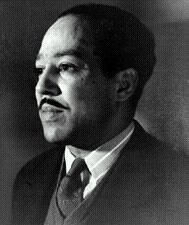
LANGSTON HUGHES


Langston Hughes was born James Mercer Langston Hughes February 1, 1902 in Joplin, Missouri, the son of Carrie Langston Hughes, a teacher, and her husband, James Nathaniel Hughes. After abandoning his family and the resulting legal dissolution of the marriage later, James Hughes left for Cuba first, then Mexico due to enduring racism in the United States. After the separation of his parents, young Langston was left to be raised mainly by his grandmother, Mary Langston, as his mother sought employment. Through the black American oral tradition of storytelling, she would instill in the young Langston Hughes a sense of indelible racial pride. He spent most of childhood in Lawrence, Kansas. After the death of his grandmother, he went to live with family friends, James and Mary Reed, for two years. His childhood was not an entirely happy one, due to an unstable early life, but it was one that heavily influenced the poet he would become. Later, he lived again with his mother in Lincoln, Illinois who had remarried when he was still an adolescent, and eventually in Cleveland, Ohio where he attended high school.

While in grammar school in Lincoln, Illinois, he was designated class poet because of, Hughes said later as an adult, his race, African Americans then being stereotyped as having rhythm. "I was a victim of a stereotype. There were only two of us Negro kids in the whole class and our English teacher was always stressing the importance of rhythm in poetry. Well, everyone knows — except us — that all Negroes have rhythm, so they elected me as class poet." During high school in Cleveland, Ohio, he wrote for the school paper, edited the yearbook, and began to write his first short stories, poetry, and dramatic plays. His first piece of jazz poetry, When Sue Wears Red, was written while he was still in high school. It was during this time that he discovered his love of books. From this early period in his life, Hughes would cite as influences on his poetry the American poets Paul Laurence Dunbar and Carl Sandburg. Hughes spent a brief period of time with his father in Mexico in 1919. The relationship between him and his father was troubled, causing Hughes a degree of dissatisfaction that led him to contemplate suicide at least once. Upon graduating from high school in June of 1920, Hughes returned to live with his father, hoping to convince him to provide money to attend Columbia University. Hughes later said that, prior to arriving in Mexico again, "I had been thinking about my father and his strange dislike of his own people. I didn't understand it, because I was a Negro, and I liked Negroes very much." Initially, his father hoped for Langston to attend a university anywhere but in the United States, and to study for a career in engineering. On these grounds, he was willing to provide financial assistance to his son. James Hughes did not support his son's desire to be a writer. Eventually, Langston and his father came to a compromise. Langston would study engineering so long as he could attend Columbia. His tuition provided, Hughes left his father after more than a year of living with him. While at Columbia in 1921, Hughes managed to maintain a B+ grade average. He left in 1922 because of racial prejudice within the institution, and his interests revolved more around the neighborhood of Harlem than his studies, though he continued writing poetry.


Hughes worked various odd jobs before serving a brief tenure as a crewman aboard the S.S. Malone in 1923, spending 6 months traveling to West Africa and Europe. In Europe, Hughes left the S.S. Malone for a temporary stay in Paris. Unlike specific writers of the post-World War I era who became identified as the Lost Generation, writers such as Ernest Hemingway and F. Scott Fitzgerald, Hughes instead spent time in Paris during the early 1920s becoming part of the black expatriate community. In November 1924 Hughes returned to the U. S. to live with his mother in Washington, D.C. Hughes again found work doing various odd jobs before gaining white-collar employment in 1925 as a personal assistant to the scholar Carter G. Woodson within the Association for the Study of African American Life and History. Not satisfied with the demands of the work and time constraints this position with Carter placed on the hours he spent writing, Hughes quit this job for one as a busboy in a hotel. It was while working as a busboy that Hughes would encounter the poet Vachel Lindsay. Impressed with the poems Hughes showed him, Lindsay publicized his discovery of a new black poet, though by this time Hughes' earlier work had already been published in magazines and was about to be collected into his first book of poetry.

The following year, Hughes enrolled in Lincoln University, PA, a HBC. Hughes received a B.A. degree from Lincoln University in 1929 and a Litt.D. in 1943 from Lincoln. A second honorary doctorate would be awarded to him in 1963 by Howard University, another HBCU. Except for travels that included parts of the Caribbean and West Indies, Harlem was Hughes’s primary home for the remainder of his life.

On May 22, 1967, Hughes died from complications after abdominal surgery related to prostate cancer at the age of 65. His ashes are interred beneath a floor medallion in the middle of the foyer leading to the auditorium named for him within the Arthur Schomberg Center for Research in Black Culture in Harlem. Many of Langston Hughes' personal papers reside in the Langston Hughes Memorial Library on the campus of Lincoln University as well as at the James Weldon Johnson Collection within the Yale University Beinecke Rare Book and Manuscript Library.

CHARLES MINGUS

Charles Mingus was born April 22, 1922 in Nogales, Arizona, but was raised largely in the Watts area of Los Angeles, California. His mother's paternal heritage was Chinese, while historical records indicate that his father was the illegitimate offspring of a mulatto farmhand and his employer's white granddaughter [1].

His mother allowed only church-related music in their home, but Mingus developed an early love for jazz, especially Ellington's music. He studied trombone, and later cello. Much of the cello technique he learned was applicable to double bass when he took up the instrument in high school.

Even in his teen years, Mingus was writing quite advanced pieces; many are similar to Third Stream Jazz. A number of them were recorded in 1960 with conductor Gunther Schuller, and released as Pre-Bird, referring to Charlie "Bird" Parker.

Mingus gained a reputation as something of a bass prodigy. He toured with Louis Armstrong in 1943, then played with Lionel Hampton's band in the late 1940s; Hampton performed and recorded a few of Mingus's pieces. A popular trio of Mingus, Red Norvo and Tal Farlow in 1950 and 1951 received considerable acclaim. Mingus was briefly a member of Ellington's band in the early 1950s, and Mingus's notorious temper reportedly led to his being the only musician personally fired by Ellington (although there are reports that Sidney Bechet was another victim).


Mingus is highly ranked among the composers and performers of jazz, and he recorded many highly regarded albums. Dozens of musicians passed through his bands and later went on to impressive careers. His songs—though melodic and distinctive—are not often recorded by later musicians, in part because of their unconventional nature. Mingus was also influential and creative as a bandleader, recruiting talented and sometimes little-known artists whom he assembled into unconventional and revealing configurations.

Nearly as well known as his ambitious music was Mingus' often fearsome temperament, which earned him the nickname "The Angry Man of Jazz." His refusal to compromise his musical integrity led to many onstage explosions, though it has been argued that his temper also grew from a need to vent frustration. Ironically, a perfect show could irritate him by closing this outlet.

Mingus was prone to depression. He tended to have brief periods of extreme creative activity, intermixed with fairly long periods of greatly decreased output.

Most of Mingus's music retained the hot and soulful feel of hard bop and drew heavily from black gospel music while sometimes drawing on elements of Third Stream Jazz and free jazz. Yet Mingus avoided categorization, forging his own brand of music that fused tradition with unique and unexplored realms of jazz. Mingus focused on collective improvisation, similar to the old New Orleans Jazz parades, paying particular attention to how each band member interacted with the group as a whole. In creating his bands, Mingus looked not only at the skills of the available musicians, but also their personalities. He strove to create unique music to be played by unique musicians.

Due to his brilliant writing for mid-size ensembles — and his catering to and emphasizing the strengths of the musicians in his groups — Mingus is often considered the heir apparent to Duke Ellington, for whom he expressed unqualified admiration.


Also in the early 1950s, before attaining commercial recognition as a bandleader, he played a number of live bookings with Charlie Parker, whose compositions and improvisations greatly inspired and influenced Mingus. Mingus considered Parker the greatest genius and innovator in jazz history, but he had a love-hate relationship with Parker's legacy. Mingus blamed the Parker mythology for a derivative crop of pretenders to Parker's throne. He was also conflicted and sometimes disgusted by Parker's self-destructive habits and the romanticized lure of drug addiction they offered to other jazz musicians. In response to the many sax players who imitated Parker, Mingus titled a song, "If Charlie Parker were a Gunslinger, There'd be a Whole Lot of Dead Copycats."

In 1952 Mingus co-founded Debut Records with Max Roach, in order to conduct his recording career as he saw fit. After bassist Oscar Pettiford broke his arm playing baseball, Mingus stepped in to replace him at the famed May 15, 1953 concert at Massey Hall. He joined Dizzy Gillespie, Charlie Parker, Bud Powell, and Max Roach in what was to be the last recorded meeting of the two lead instrumentalists. After the event, Mingus chose to overdub his barely-audible bass part. The two 10" albums of the Massey Hall concert (one featured the trio of Powell, Mingus and Roach) were among Debut Records' earliest releases. Mingus may have objected to the way the major record companies treated musicians, but Gillespie once commented that he did not receive any royalties "for years and years" for his Massey Hall appearance. The records though, are often regarded as among the finest live jazz recordings.

In 1955, Mingus was involved in a notorious incident while playing a club date billed as a "reunion" with Parker, Powell, and Roach. Powell, who had suffered from alcoholism and mental illness for years (potentially exacerbated by a severe police beating and electroshock treatments), had to be helped from the stage, unable to play or speak coherently. As Powell's incapacitation became apparent, Parker stood in one spot at a microphone, chanting "Bud Powell...Bud Powell..." as if beseeching Powell's return. Allegedly, Parker continued this incantation for several minutes after Powell's departure, to his own amusement and Mingus' exasperation. Mingus took another mic and announced to the crowd, "Ladies and gentlemen, please don't associate me with any of this. This is not jazz. These are sick people." Roughly a week later, Parker died of complications of years of drug abuse.

By the mid-1970s, Mingus was suffering from amyotrophic lateral sclerosis (popularly known as Lou Gehrig's disease), a wastage of the musculature. His once formidable bass technique suffered, until he could no longer play the instrument. He continued composing, however, and supervised a number of recordings before his death.

Mingus died January 5, 1979 aged 56 in Cuernavaca, Mexico, where he had traveled for treatment and convalescence. His ashes were scattered in the Ganges River.

At the time of his death, Mingus had been recording an album with singer Joni Mitchell, which included vocal versions of some of his songs (including "Goodbye Pork Pie Hat") among Mitchell originals and short, spoken word duets and home recordings of Mitchell and Mingus. To show how important his influence was on the jazz world, this album also featured Jaco Pastorius, another massively influential (and similarly self-destructive) bassist and composer.